







More than 250 cases of locally acquired dengue have been reported this year in Florida, according to the Florida Department of Health's Weekly Arbovirus Surveillance Report, with some in South Florida counties.
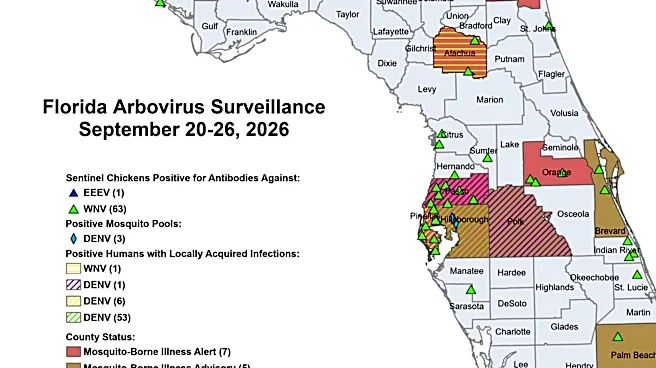
The report for the period from Sept. 20 through Sept. 26 says that "252 cases of locally acquired dengue and 20 mosquito pools have been reported from seven counties" in 2026. From Sept. 20 through Sept. 26 alone, 62 cases of locally acquired dengue were reported in Florida.
Hillsborough County, home of Tampa, saw 223 of the 252 reported dengue cases this year. Miami-Dade County saw eight, Orange County saw three, Palm Beach County saw one, Pasco County saw three, Pinellas County saw 13 and Polk County saw one dengue case.
Dengue, also known
as dengue fever or breakbone fever for the pain it causes, can present as "a flu-like illness with severe muscle aches and joint pain," along with fever and "sometimes" a rash, according to the Florida Department of Health in Miami-Dade County.
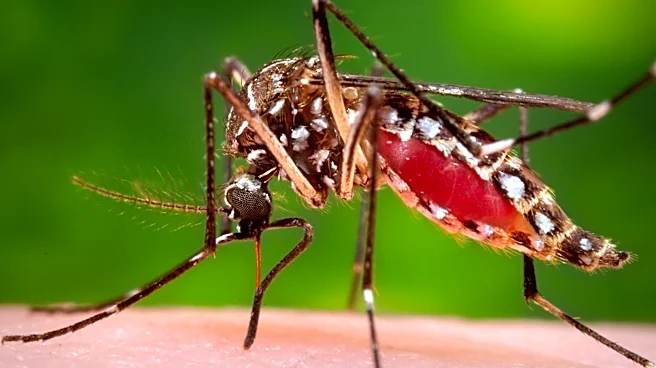
Symptoms of dengue will appear within 14 days of being bitten by an infected mosquito. Dengue is not contagious, and is transmitted via the bite of an infected Aedes aegypti mosquito.
How to best prevent mosquito-borne illnesses
In June, Miami-Dade County encouraged residents to "take proactive steps" to prevent the spread of mosquito-borne illnesses, including "frequently checking for and eliminating any standing water." That's the best protection against "container-breeding mosquitoes," said a press release by the county, which are the "likeliest species to transmit the viruses that cause dengue, chikungunya, Zika, and yellow fever," illnesses that are among those most commonly transmitted by mosquitoes.
Standing water usually accumulates after rainfall or irrigation in items like potted planters, saucers, outdoor toys, coolers and boat/car tarps, according to the release.
"As little as one teaspoon or bottle cap of water standing for more than one week is enough for mosquitoes to breed and multiply," according to a flyer provided by the FDOH.
As for individual protection, mosquito repellent can help prevent bites while outdoors, especially between "dusk and dawn," when mosquitoes are most active.
The county also suggests:
- Covering entrances to one's home, including windows and doors, with mesh screens.
- Wearing clothes with long sleeves and pant legs to "maximize skin protection."
- Regularly cleaning rain gutters to avoid water pooling within them.
- Filling up indentations in one's lawn, air conditioner drain areas and tree holes.
- Regularly replacing water in outdoor pet dishes and birdbaths.
- Requesting a mosquito inspection via the county’s online portal.
Dengue continues to surge in Florida. See counties reporting mosquito-borne illnesses
According to the Florida Department of Health, as of Sept. 26, there have been 252 cases of locally acquired cases of denguereported in seven counties, which is up from 190 reported Sept. 19.
There have also been six positive samples of West Nile virus and one case of chikungunya.
- Dengue: 252 cases
- 223 in Hillsborough County
- 13 in Pinellas County
- 8 in Miami-Dade County
- 3 in Orange County
- 3 in Pasco County
- 1 in Palm Beach County
- 1 in Polk County
- West Nile: 6 cases
- 2 in Alachua County
- 2 in Duval County (1 an asymptomatic blood donor)
- 1 in Leon (asymptomatic blood donor)
- 1 in Walton County
- Chikungunya: 1 case
- 1 in Miami-Dade County

Cheryl McCloud and C. A. Bridges of the USA TODAY Network-Florida contributed
Sarah Perkel is a South Florida Connect Reporter for the USA TODAY Network's Florida Connect team. You can get all of Florida’s best content directly in your inbox each weekday day by signing up for the free newsletter, Florida TODAY.
This article originally appeared on USA TODAY: Florida's 252 locally acquired dengue cases across these 7 counties