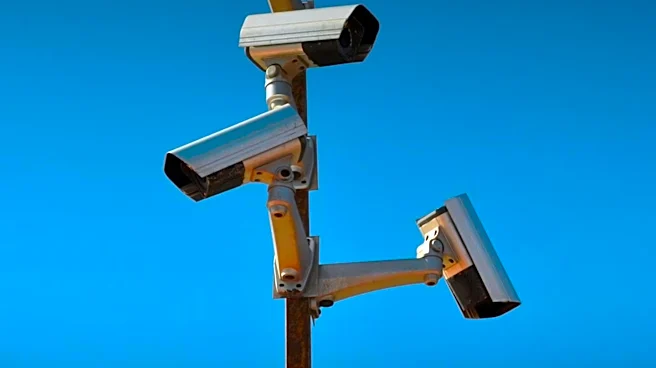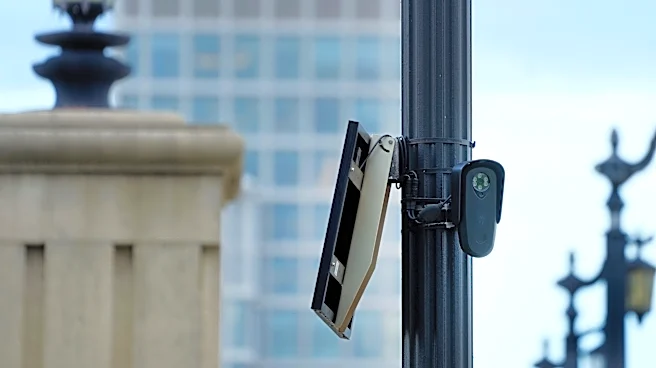









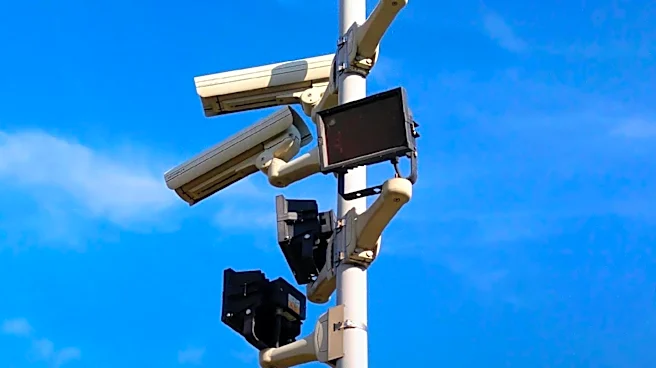
As the home of Flock Safety, the city of Atlanta and state of Georgia were early adopters of the company's automated license plate reader cameras, or ALPRs, now at the center of a nationwide conversation about citizen surveillance.
Georgia has tens of thousands of cameras
across the state and Atlanta has become one of the most surveilled cities in America, with roughly one camera for every eight residents.But in recent weeks, the story around ALPRs in Georgia hasn't been about the crimes they help solve or the benefits they may provide to law enforcement agencies. Instead, local communities have learned how the law enforcement agencies themselves have been misusing the technology to, in some cases, stalk and harass their citizens.
More than two
dozen law enforcement officials, from crime analysts to chiefs of police, have been charged with violating their oaths of office and conducting unauthorized searches within the Flock Safety system in Georgia in the past few months.
The question then becomes whether there is a problem with the emerging technology, or, if this starts with the culture of policing itself.
Flock misuse arrests in Georgia continue to grow
This week, multiple deputies in the Hall County Sheriff's Office resigned amid ongoing Flock misuse investigations.
According to the agency's "Transparency Portal," updated Sept. 2, the county uses Flock to "capture objective evidence without compromising individual privacy," and only conducts searches in Flock "to solve crimes after they've occurred."
The portal shows 61 LPR cameras in operation in Hall County, and a total of 464 search sessions conducted over the last 30 days.
Hall County, however, is just the latest jurisdiction to deal with possible Flock misuses.
Here's a look at some recent cases across Georgia:
- Three deputies, two investigators, Hall County Sheriff's Office
- Criminal analyst, Athens-Clarke County Police Department
- 911 director, Dallas Police Department
- Five police officers, Albany Police Department
- Two supervisor-level officers, Cherokee County Sheriff's Office
- Sheriff's deputy, Greene County Sheriff's Office
- Sheriff's deputy, DeKalb County Sheriff's Office
- District Attorney investigator, Effingham County Sheriff's Office
- Four officers, Richmond County Sheriff's Office
- Four officers, two civilian staff members, Savannah Police Department
- Police Chief, Braselton Police Department
- Officer, Clayton County Sheriff's Office
- Corrections officer, Georgia Department of Corrections, Eatonton
'It's a shared responsibility,' law enforcement researcher says
Kishon Hickman, Sr., now a lecturer and program director for the Law Enforcement Executive Leadership Program at Seton Hall University in New Jersey, spent more than two decades in the New York City Police Department working on investigative teams and using and teaching emerging crime-stopping technology.
Hickman studies how technology, like body-worn cameras and ALPRs, impact the relationships between law enforcement and their communities, and said while Flock Safety may be the name everyone now knows, the technology itself is not what is driving officer misconduct.
"One important question is really whether too many people have access, or whether users have more search authority than they are required to have," Hickman said in an interview with USA TODAY. He referred to the recent case of acrime analyst in Athens being fired for searching for his ex-wife's car after previously touting the Flock system's guardrails.
"What level of access do you have based on what job you have? A dispatcher should not have the same capabilities as a detective. The system administrator should have different capabilities than a patrol officer. Action should be based on the operational necessity, and not simply being an employee of the agency," Hickman said. "My position has always been that the safeguards surrounding the technology should be as powerful as the technology itself."
Hickman argued that prevention and accountability for Flock misuse then is "a shared responsibility."
Flock Safety has instituted an internal audit system that is flagging searches that may not be made without investigative need, and a recent policy change within the company sets the default for data retention to just seven days, down from the previous 30 day retention.
The company could go a step further, Hickman said. He suggested adding additional questions for investigators to answer before being able to access the Flock system, like specific case numbers, associated law enforcement numbers, which supervisor approved the search and other queries that would put up additional barriers for those trying to search the system for personal use. He suggested, however, that in times when speed is of the essence, like Amber Alerts or Silver Alerts, these question could be answered retroactively.
USA TODAY reached out to Flock Safety regarding recent law enforcement arrests and officer training, and did not receive a response.
On the law enforcement side, a multi-tier system of accountability has worked for New Jersey, and Hickman said the model could be used elsewhere.
"New Jersey (agencies have) annual reviews, it has agency certifications (and) they do their own random sampling. It goes from there to the state police, from the state police to the attorney general, and the attorney general audits the state police audit, which audits the local agency," Hickman said. "A three tiered system would change Georgia in a heartbeat."
That being said, Hickman argues that the technology has done a lot of good. Crimes like car theft, kidnapping and missing person reports have been solved quicker when officers can search the Flock database. He said it's "important to frame your concern accurately."
“Americans should be concerned, but the conversation should remain balanced. A license plate may be visible in public, but collecting thousands of sightings over time can reveal where someone lives and works, which doctors they visit, where they worship, and whether they attend a protest or political event. That is far more revealing than an officer seeing a vehicle drive past on a public street," Hickman said.
Will Georgia jurisdictions cut ties with Flock?
While more than 100 law enforcement agencies across the country have ended their contracts with Flock Safety in recent weeks over privacy concerns, the company and the state of Georgia are deeply tied to one another.
In data aggregated by USA TODAY, Georgia law enforcement agencies conduct some of the highest number Flock searches on specific vehicles per month of anywhere in the country.
In April, Flock Safety opened a 97,000-square-foot manufacturing facility in Smyrna that is intended to create more than 200 jobs over the next three years as part of a $10 million investment. The company was founded in Atlanta by Georgia Tech students, and is still headquartered in the city.
“In Georgia, we foster a business environment where innovative companies can get off the ground and grow into leaders in their industry while operating in safe communities,” Governor Brian Kemp said about the expansion. “Flock Safety is a great example of the success that approach has created, and we're proud to celebrate this milestone with them. We look forward to many years of partnership with Flock Safety in their efforts to help keep Georgians safe.”
USA TODAY reached out to Gov. Kemp's office about recent officer misconduct and did not receive a response.
The future of Flock in Georgia may ultimately come down to the governor's race, as Kemp prepares to leave office at the end of the year.
Keisha Lance Bottoms, the former mayor of Atlanta and Democratic nominee for governor, told the Atlanta Journal-Constitution in a recent platform interview she understands "people are deeply concerned about their right to privacy."
"Whatever guardrails we need to put around to make sure that these cameras are being used for purely law enforcement purposes and not personal purposes, we need to take a look at that," sure told the outlet.
USA TODAY reached out to the Rick Jackson campaign, the Trump-backed Republican gubernatorial nominee, about possible ALPR policies in his platform, and did not receive a response.
Irene Wright covers Flock Safety as the Atlanta Connect reporter with USA Today’s Deep South Connect team. Find her on X @IreneEWright or email her at ismith@usatodayco.com.
This article originally appeared on USA TODAY: Is Flock misuse in GA a technology or police problem? It's complicated