





From rocket launches to planetary discoveries, celebrate decades of advancement in spaceflight during World Space Week 2026.
The annual event recently kicked off in October and will last for a few more days, with a bevy of events planned in not just the United States, but around the world.
While the weeklong extravaganza occurs every October, this year's celebration couldn't come at a better time.
In 2026 alone, humans ventured toward the moon for the first time in half a century, while the world's largest rocket finally made it to orbit after three years of testing. In the years ahead, we could see humans land not just on the moon, but on Mars and potentially see breakthroughs in the search for habitable planets as new telescopes rove the cosmos.
Here's what to know about World Space Week as rocket launches surge across the U.S.
What is World Space Week 2026?
World Space Week, started in 1999 by the United Nations, is an annual weeklong international event recognizing advancements in space science and technology.
This year, space week is scheduled to last between Sunday, Oct. 4, and Saturday, Oct. 10, according to a press release.
Coordinated by the nonprofit World Space Week Association, the celebration features numerous space-related STEM-themed events around the world, many hosted by government space agencies like NASA and aerospace companies. In 2025, for instance, 50,000 events were hosted in 102 countries, the association said.
Rocket launches surge across US
This year's space week celebration comes as rocket launches are surging across the United States. The need for satellite deliveries and NASA's push to return astronauts to the moon under its Artemis program are both major reasons why the need for launch providers is increasing.
President Donald Trump, meanwhile, is calling for the development of more launch sites across the U.S., as well as upgrades to existing spaceports where rockets already lift off, in order to support 1,000 launches per year. Meeting the ambitious benchmark would mean that launches would more than quadruple from today, when about 200 rockets get off the ground per year.
Today, orbital rocket launches in the U.S. take place in Florida, Texas and California – all coastal states where rockets can fly over open water rather than populated cities.
And in the years ahead, major commercial launch providers like SpaceX and Blue Origin are looking to increase operations across the U.S.
'Rocket revolution' theme highlights spaceflight breakthroughs
That projected rise in launches is a big reason why this year's World Space Week's theme is "rocket revolution," according to organizers. No longer is orbit only the realm of major space agencies and larger aerospace contractors; these days, even smaller spaceflight startups can send spacecraft to Earth orbit – and beyond.
“It recognizes how increased space access and falling launch prices have stimulated the space ecosystem and exciting new space applications,” Dennis Stone, president of the World Space Week Association, said in a statement.
Spaceflight has come a long way since the dawn of the space age in the 1960s, when rockets were generally designed to fly just one time. These days, SpaceX's pioneering method to recover and reuse rocket boosters has not only made manufacturing spacecraft cheaper, but has also led to faster turnaround times between missions.
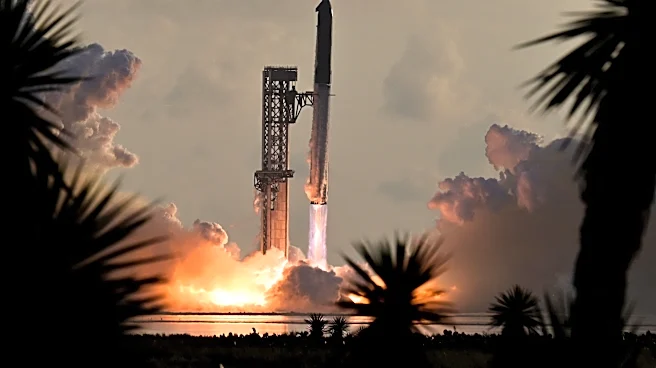
SpaceX, which tech mogul Elon Musk founded in 2002, is also developing its Starship rocket to be the first fully reusable launch vehicle – meaning both the booster and upper-stage that flies in space can fly multiple times. At the end of September, Starship – the world's largest rocket, at more than 400 feet tall – reached orbit for the first time.
Pokémon teams up with ESA
Among the activities planned during World Space Week is a partnership between the European Space Agency and Pokémon, according to a press release.
The collaboration not only features a Pokémon space-themed exhibition and Pokémon GO event in Europe, but saw ESA astronaut Sophie Adenot take a Pikachu plush to the International Space Station. Adenot, in fact, is on her way back home as of Oct. 7 after departing the ISS with the rest of the Crew-12 mission.
Find an event near you
World Space Week features hundreds of events in 100 nations through Oct. 10. Click here to find an event near you.
Eric Lagatta is the Space Connect reporter for the USA TODAY Network. Reach him at elagatta@usatodayco.com
This article originally appeared on USA TODAY: World Space Week 2026 celebrates a year of rocket launch milestones