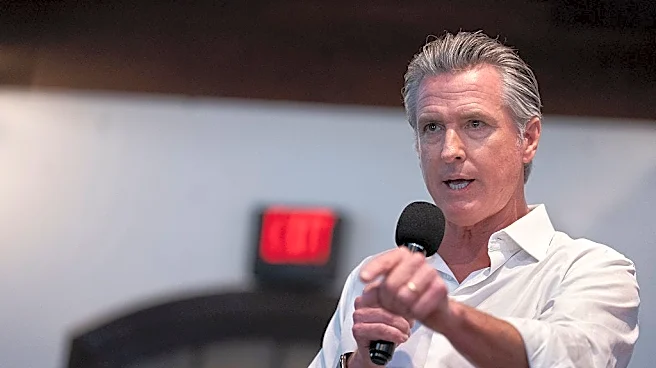







For California gun owners who may not have heard, over the weekend Gov. Gavin Newsom signed ten new gun safety bills into law, many aimed at strengthening gun safety protections and improving firearm training standards.
This comprehensive gun safety package is the latest move in Newsom and other state leaders' attempts to have California lead on gun safety by improving enforcement of existing firearm prohibitions, expanding safe-storage tools, supporting survivors and communities, and addressing emerging threats from new technologies.
However, gun-rights activist organizations like the National Rifle Association of America argue that several of the bills signed into law are ultimately an "attack on law-abiding gun owners."
Perhaps the most contentious
law signed into law was Senate Bill 948, which will require California residents who purchase a new firearm to take a four-hour safety class and a live-fire shooting exam to obtain a firearm safety certificate. The law takes effect in January 2029.

Additionally, starting in January 2028, folks moving to California from other states will need to obtain a firearm safety certificate within 180 days of arriving, or they will receive a misdemeanor.
The bill's author, Jesse Arreguín (D-Berkeley), says its approval builds on California’s strong "common-sense laws" and creates "consistent safety standards" for gun owners in the state. But the NRA criticized the law, arguing that it ultimately places the "burden" of regulation on citizens "while doing nothing to address crime."
Beyond new training standards, several laws expanded local law enforcement agencies' ability to restrict firearms or ammunition when addressing gun violence or people's suffering from a mental health crisis.
Specifically, Assembly Bill 1974, authored by Catherine Stefani (D-San Francisco), allows local law enforcement agencies to create voluntary firearm storage programs, which allow gun owners to temporarily surrender firearms during periods of crisis like mental health challenges or family emergencies.
Other bills, like Assembly Bill 1753, authored by Stefani, expand existing laws on victims of domestic violence and protective orders. The law strengthens restraining-order enforcement by requiring individuals who have demonstrated "dangerous behavior" to surrender both their firearms and ammunition if they are the subject of a protective order. It also allows courts to modernize procedures so victims of protective orders can participate in hearings remotely and electronically.
"This bill tackles the problem from multiple angles. It strengthens firearm surrender requirements, improves coordination between courts and law enforcement when someone is illegally armed in violation of a protective order, registers more protective orders in law enforcement and background check databases, and ensures that people convicted of dangerous misdemeanors fail background checks," Stefani said in a press release.
"Too often, survivors get a protective order and assume they're safe, only to find that the system meant to back it up is broken. This bill closes the gap between what the law promises and what survivors actually experience."
In the pursuit of maintaining California's leadership in gun laws and safety, legislators continue to expand the tools and resources state agencies can use when enforcing the state existing firearm laws.
"California has been a leader in gun safety because survivors, advocates, researchers, law enforcement, legislators and communities have continued to come together to turn hard-earned lessons into action," Newsom said in a press release. "Today’s laws continue that work – using data, prevention and proven tools to help keep firearms out of dangerous situations and support communities affected by violence."
Here are the laws Newsom signed as part of his comprehensive gun safety package:
- Assembly Bill 1743 allows local governments, state agencies, public universities, and certain private research institutions to request data the Department of Justice collects on firearms that have been stolen, recovered, illegally possessed, or used in crimes.
- Assembly Bill 1753 expands existing laws on victims of domestic violence and protective orders. The law strengthens restraining-order enforcement by requiring individuals who have demonstrated "dangerous behavior" to surrender both their firearms and ammunition if they are the subject of a protective order. It also allows courts to modernize procedures so victims of protective orders can participate in hearings remotely and electronically.
- Assembly Bill 1943 requires schools to provide parents with a standardized "Secure Firearm Storage" notice at the beginning of the school year, which explains the dangers of unsecured firearms, California's child-access prevention laws, and safe-storage requirements in hopes of preventing child suicide and accidental shootings.
- Assembly Bill 1974 allows local law enforcement agencies to create voluntary firearm storage programs, which allow gun owners to temporarily surrender firearms during periods of crisis like mental health challenges or family emergencies.
- Assembly Bill 2047 will require 3D printers sold or transferred in California to be equipped with "firearm blocking technology" designed to detect and prevent the creation or printing of illegal ghost guns or gun components. The California Department of Justice will be required to establish and publish the standards for the "firearm blueprint detection algorithms."
- Assembly Bill 1753 strengthens restraining-order enforcement by requiring individuals who have demonstrated "dangerous behavior" to surrender both their firearms and ammunition if they are the subject of a protective order. It also allows courts to modernize procedures so victims of protective orders can participate in hearings remotely and electronically.
- Assembly Bill 2378 creates an Office of Community Violence Intervention within the Board of State and Community Corrections to oversee and support California's Violence Intervention and Prevention Grant Program.
- Assembly Bill 2636 expands California's juvenile justice system by requiring courts to take into consideration whether a minor is suitable for deferred entry of judgment, a diversion program focused on rehabilitation, if they were charged with carrying a loaded firearm.
- Senate Bill 948 expands California's firearm safety certificate requirements, requiring California residents who purchase a new firearm to take a four-hour safety class and a live-fire shooting exam to obtain a firearm safety certificate. People moving to California from other states must obtain a firearm safety certificate within 180 days of arriving.
- Senate Bill 1220 expands California's list of offenses that trigger a 10-year firearm prohibition. Specifically, an individual who was convicted of crimes involving firearms with altered, removed, or obliterated serial numbers or identifying marks will be barred from possessing or acquiring firearms for a decade after conviction. If they are caught possessing a firearm, they can face a fine and imprisonment.
Noe Padilla is a Northern California Reporter for USA Today. Contact him at npadilla@usatodayco.com, follow him on X @1NoePadilla or on Bluesky @noepadilla.bsky.social. Sign up for the TODAY Californian newsletter or follow us on Facebook at TODAY Californian.
This article originally appeared on USA TODAY: What you need to know about the new gun control laws Newsom signed