




Despite his moral deficiencies, President Donald Trump has long counted White evangelical Christians among his most loyal constituencies. But as his popularity hits all-time lows, even their support appears to be slipping.
An October Pew Research Center survey found that 58% of White evangelical Protestants approve of Trump's job performance, down from 78% when his second term began.
Democrats are making a concerted effort to court these voters, but they’re neglecting the issue most important to them: abortion.
That’s why 73% of White evangelicals still favor Republican House candidates, according to the same survey, and just 12% back Democrats. Winning them over would require Democrats to soften their hardline support for abortion and accept pro-lifers
into their coalition.
Democrats have an opening with religious voters

Democrats are right that there's an opportunity here, at least in theory. By handcuffing itself to Trump, the Republican Party ceded its claim to being the morally superior party.
With his infidelity, constant lying and misogyny, Trump has ushered in a new era of what passes for acceptable behavior in the party of family values.
His endorsements have made the problem worse.
Trump backed Texas Attorney General Ken Paxton, now the Republican nominee for the U.S. Senate, over incumbent Sen. John Cornyn in the primary. Paxton was impeached by the Texas House in 2023 on corruption charges, though the state Senate acquitted him, and his wife filed for divorce on "biblical grounds."
In 2022, Trump-backed Georgia Senate nominee Herschel Walker's campaign sank in part under allegations of domestic abuse and children with multiple women out of wedlock, and claims that he had paid for women to get abortions.
These are the most egregious cases, but far from the only ones.
The Republican Party hasn't just retreated from family values in picking candidates, but in its messaging, too. The word "abortion" appears just once in the party's 2024 platform: "We will oppose Late Term Abortion." The 2016 platform devoted more than 750 words to the issue. The 2024 version devoted about 90.
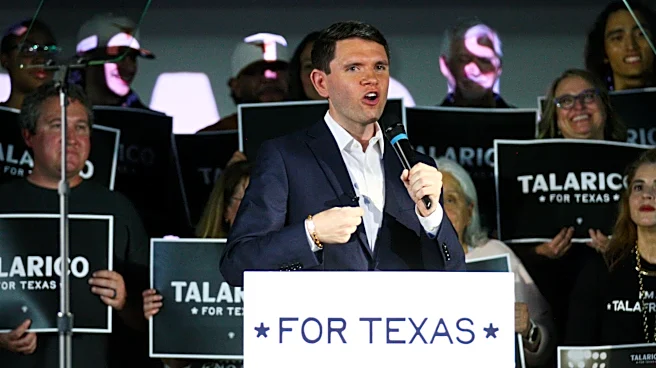
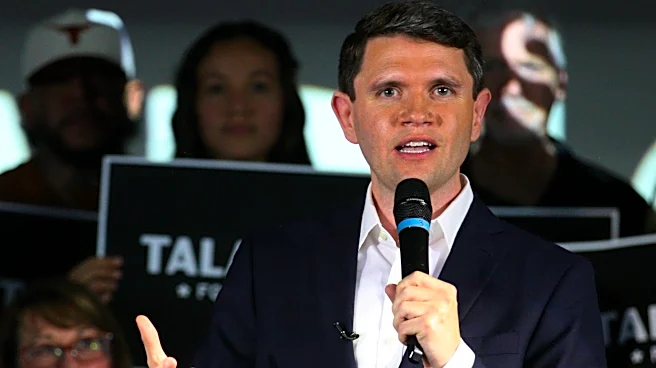
Those glaring inconsistencies are why Democrats see an opportunity. A growing wave of them is trying their hand at appealing to these voters, most notably James Talarico, the Democratic Senate nominee in Texas. Talarico is a Presbyterian seminarian who has made his faith a prominent part of his campaign. Against Paxton's poor moral character, he just may become the first Democrat to win statewide office in Texas since 1994. Polls show the race is a toss-up.
But Texas' Senate race may have much more to do with Paxton being a uniquely bad candidate than with the religious left suddenly making inroads. Although their support is dropping, White evangelicals remain the only major religious group in which most still approve of Trump.
Democrats are missing the opportunity in front of them
Despite his bankrupt moral character, Trump first won the presidency on the backs of religious voters who held their nose to vote for him. How did he do it? By promising to appoint pro-life justices who would overturn Roe v. Wade, the 1973 Supreme Court decision that established a constitutional right to abortion. And he delivered: All three of his appointees voted to overturn Roe in 2022.
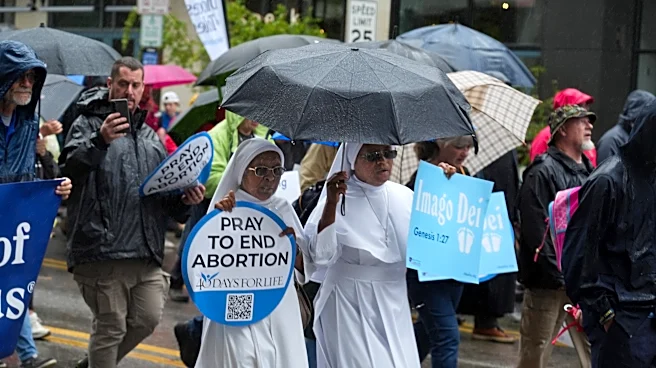
Those convictions haven't faded. According to Pew Research Center, 74% of White evangelicals say abortion should be illegal in all or most cases, as do 42% of Catholics and 35% of White Protestants who aren't evangelical. These may not be single-issue voters, but abortion is a hard conviction to abandon for the sake of switching parties.
Democratic politicians, even the new wave of religious ones, won't change on abortion.
Talarico says he wants to find common ground with pro-life Texans, and at an Oct. 15 CNN town hall, he told a Catholic voter that "the Bible is silent on the issue of abortion." But he supports codifying Roe, which protected abortion on demand through viability, a far looser standard than most of Europe, where the most common limit is 12 weeks.
Others making Talarico's pitch are taking the same approach, shaping their religious views around their abortion stance rather than the other way around.
The Democratic Party's 2024 platform calls for restoring Roe and repealing the Hyde Amendment, which bars federal funding for most abortions. It names no restriction on abortion the party would accept, and you'll struggle to find a national Democrat who will openly advocate drawing a line at any point. The closest you'll get is Dan Osborn, the Democrat-backed independent running for Senate in Nebraska, who calls himself "personally pro-life." But like Talarico, he supports codifying Roe.
Pro-life Democrats felt shut out of the party during the 2024 election. When Democrats for Life of America launched in 1999, it counted as many as 43 House Democrats as allies. Today, the group can hardly find any. Since then, the party still hasn't widened its tent to draw in pro-lifers who might otherwise vote Democratic, if only it didn't take such a militant line on the issue.
Democrats don’t need to abandon their abortion-rights positions, but opening the party to diversity of thought on the issue could pay off electorally, especially as Republicans retreat from the pro-life cause. Winning over pro-lifers who feel taken for granted would require Democrats to soften their stance. They won’t, and until they do, their gains with religious voters will be modest at best.
Dace Potas, a law student, is an opinion columnist for USA TODAY. Follow him on X: @DacePotas
This article originally appeared on USA TODAY: Trump is losing evangelicals. Democrats still can't win them | Opinion