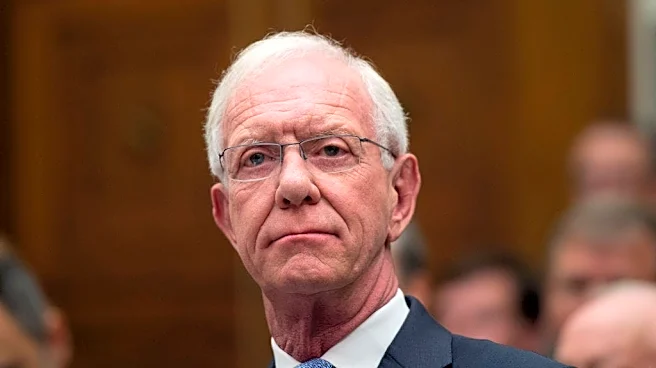








Capt.Chesley "Sully" Sullenberger III is opening up about what lies ahead for him and his family after his recent Alzheimer's disease diagnosis.
Speaking with "Good Morning America" on Wednesday, Sept. 23, the 75-year-old former airline captain compared navigating the early stages of the disease with the emergency landing he made on the Hudson River 17 years ago.
"I've done harder things than this before," Sullenberger said. "We had to devise a plan, execute that plan flawlessly for the first time, never having done it before, and save every life in 208 seconds. Had even one person not survived, I would have considered it a tragic failure; I would have felt deeply for the rest of my life."

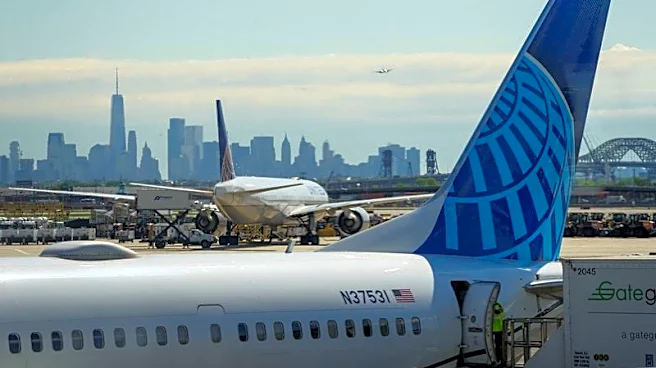
In 2009, Sullenberger was piloting an Airbus A320 passenger
aircraft that had just departed LaGuardia Airport in New York when the plane suffered bird strikes, disabling both its engines. Sullenberger famously ditched the airliner in the Hudson River just off Manhattan in an event still remembered as the "Miracle on the Hudson." All 155 passengers and crew aboard were safely evacuated.
Sullenberger explained that he and his family were "doing the same thing" now, including focusing on the highest-priority items first and ignoring "everything we don't have time to do."
The famed aviator revealed in July that he had been diagnosed with early-stage Alzheimer's disease, a neurodegenerative disorder characterized by abnormal biological processes in the brain that often leads to cognitive decline. Sullenberger was originally diagnosed in August 2025.
Sullenberger and his wife, Lorrie, said they, like "a lot of families," initially planned to keep the diagnosis private; however, they later decided to speak out in the hope of helping others.
"And I said to Sully one day, this is a disease, not a character flaw. I think we need to talk about it more openly. And maybe other people can do the same," Lorrie said.
Capt. Sully on his initial reaction to diagnosis: 'Why? Why me?'
Sullenberger, who is receiving monthly infusion treatments to slow the condition, reflected on the wave of emotions he and his family experienced upon receiving the diagnosis: "We felt all those emotions, the shock, the anger. Why? Why me?"
He is now one of approximately 7 million Americans living with Alzheimer's, which, according to Sullenberger, means that he and his family are "not by any means alone" and are, in fact, part of a "community who are trying to make the best of a bad situation."
Sullenberger said some of the first signs of the disease were forgetting things he normally wouldn't, including people's names and event dates, with his wife adding that the symptoms were easy to dismiss in the beginning because they were so minor.

"An early diagnosis is so critically important," Sullenberger said. "If you have doubts, get tested, because the sooner you act, the more options there are, the better the outcome is likely to be."
Despite receiving treatment and spending quality time with loved ones, Sullenberger has still found time to cement his legacy, as he is slated to be inducted into the National Aviation Hall of Fame on Sept. 24.
Ahead of the induction ceremony, Sullenberger shared that his greatest concern was "that this is my last flight."
"But if this has to be my last flight, I'm going to go out using full afterburner," Sullenberger said.
Contributing: Edward Segarra, USA TODAY
This article originally appeared on USA TODAY: Capt. Sully shares greatest concern after Alzheimer's diagnosis