




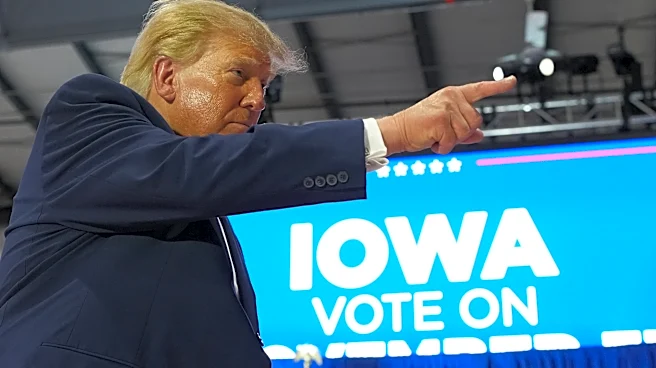

On the eve of Election Day a record number of Americans have already passed judgement on President Donald Trump and the Republican-controlled Congress.
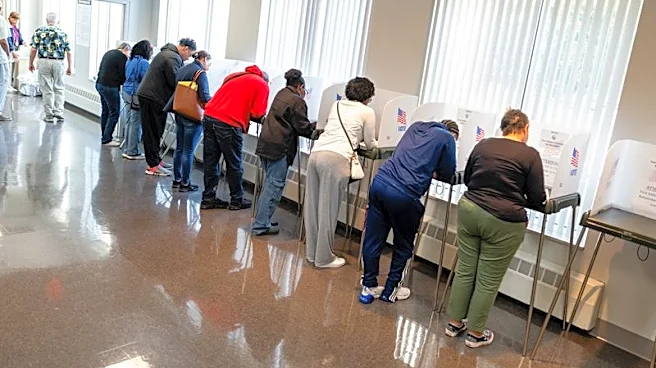
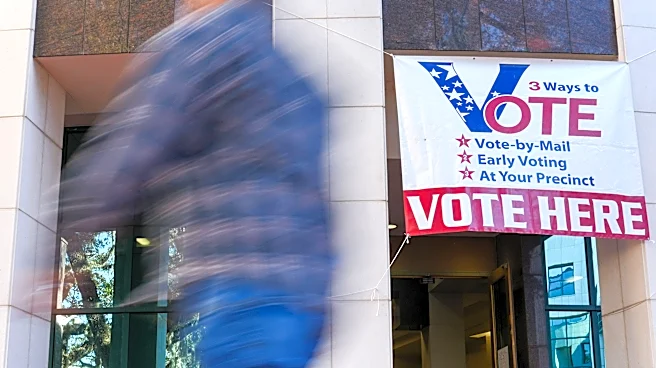
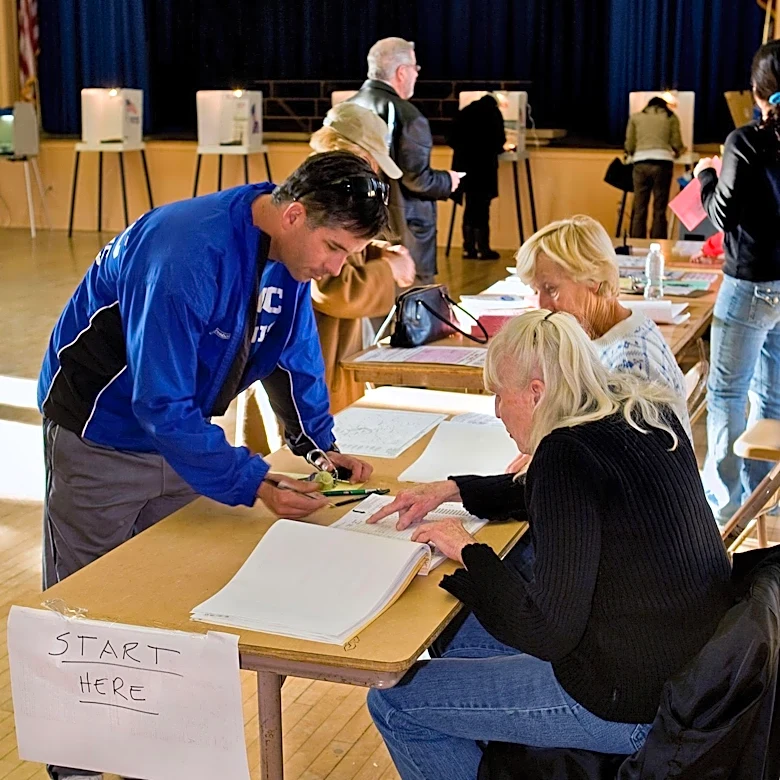
Roughly 54 million voters cast their early ballots over this past weekend ahead of the Nov. 3 election, according to the University of Florida Election Lab.
The deluge offers a glimpse into a forecasted wave election that many experts believe could sweep Democrats in power for the president's final two years in the White House.
Every state has different rules on compiling voters' age, race or party affiliation with some providing no demographic statistics at all. But it does reveal important voter behavior and some demographics that paint a clearer picture about who is more motivated in the 2026
midterms.
Michael McDonald, a political science professor who runs the Election Lab, said the initial outlook indicates a younger, more diverse and politically independent electorate is showing up.
"I can confidently say that the 2026 election will be the most diverse midterm electorate in U.S. history," in an Oct. 28 post on X.
But the data alone, much like the various polls, cannot predict the outcome of who will be in charge of the House and Senate next year, McDonald and others have warned.
Here's a look at the big takeaways from the early voting totals.
A lot more people are showing up than in 2022

For starters, 8 million more people took advantage of the early in-person and mail-in ballot options over the weekend than during the last 2022 midterms, which gave Republicans control of the House during former President Joe Biden's term.
Political observers are marveling at those numbers and note how they surged in places with more competitive Senate contests, such as Ohio, Maine and Michigan.
In Texas, Democrat James Talarico and Republican Ken Paxton have locked horns in arguably the most watched race of this year's cycle. The early totals show more than 7.7 million people have cast early ballots, which surpasses the Lone Star State's high mark of 40% turnout during the 2018 midterms.
"Their record for a midterm election is 8.3 million total. So they're just over about 600,000 or so ballots away from their highest turnout ever... Election Day hasn't even happened yet. That's remarkable," David Becker, executive director of the Center for Election Innovation and Research, said during CBS' Face the Nation on Nov. 1.
Same goes for Georgia, where more than 2.8 million voters have showed up already representing a 13% increase compared to 2022; Michigan with more than 2.3 million marking a 26% increase; and South Carolina where about 1.1 million have shown up compared to approximately 620,000 four years ago which is a whomping 75% increase.
Records were also broken in North Carolina, where Democrats are hoping former Gov. Roy Cooper can flip a GOP-held Senate seat against former RNC Chair Michael Whatley. The Tar Heel State began sending out early voting mail-in ballots Oct. 15 and combined with in-person about 2.8 million have reportedly showed up already.
That is a 31% increase compared to the midterm election four years ago, Western Carolina University political scientist Chris Cooper said in an Oct. 31 post on Substack.
"Voter turnout was higher on every day of early voting than on the comparable day in 2022," he said.
'Bloodbath': Democrats, independents turnout is up while GOP is down

Far more Democrats than Republicans made their voices heard in the early voting process with some states outpacing their 2024 presidential totals, the preliminary data show.
Of the 54 million ballots cast, about 43% were from Democrats and 32% were from GOP voters, with the about 25% coming from independent or "unaffiliated" voters.
Keep in mind that these statistics are limited to the 27 states that report party affiliation. It also reflects the voter's registration rather than their exact choice on the ballot.
But some Republicans are already expressing nervousness about the low GOP turnout, especially given Trump's unpopularity among those showing up more. An AP-NORC poll released Oct. 8, for example, found 25% of U.S. adults approve of his handling of the economy, with just 9% of Democrats and 23% of independents agreeing.
"I am deeply, deeply worried. What we're seeing across the country is massive Democrat turnout," Sen. Ted Cruz, R-Texas, during an Oct. 30 episode of "The Verdict," his podcast.
"Democrats are showing up. They are energized. They hate, hate, hate Donald Trump. If the election were over today, if just the early votes that have been cast so far were counted, Republicans would lose massively. It would not be close. We would lose both the House and Senate. It would be a bloodbath."
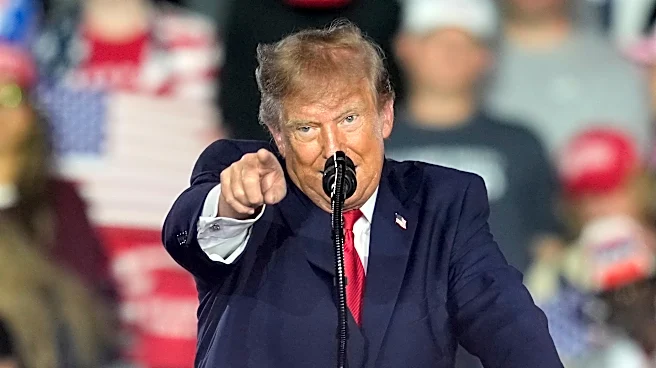
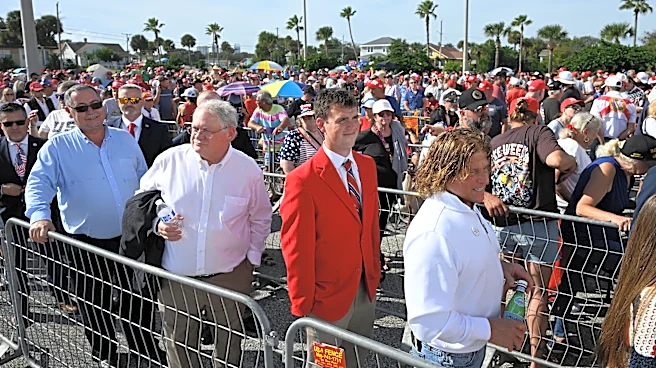
For the past several weeks Trump and his allies have been zig-zagging across the nation, focusing heavily on conservative strongholds in order to motivate their base. He is set to speak at the Reflecting Pool in Washington, D.C., capping off a blitz of last-minute appearances in states where Republicans face competitive challengers.
GOP voters historically have swarmed Election Day when tens of millions of Americans will likely to flock the polls as well, but experts say the early voting patterns mirror past trends.
"It would be highly unusual for Election Day to be dramatically different than in the past, so I would not hold out hope for a huge Republican wave to make up for their in-person early voting deficit where we are seeing a lack of Republican early voting engagement," McDonald said on his Substack.
Racially diverse and younger voters fueling turnout

The United States is becoming a more racially and ethnically diverse nation, and that's showing up in our elections as a higher percentage of Black and Hispanic voters make up the electorate.
Of the handful of states that submit race and ethnicity information from early voting totals there is a noteworthy uptick among voters of color, while voting among White people lags behind and remains similar to 2022 levels.
Hispanic turnout in Texas is especially noteworthy given it has exceeded the 2024 presidential levels, fueled largely by younger voters, Tom Bonier, a Democratic data and polling expert, told USA TODAY in an October interview. In the state's predominantly Hispanic counties, analysts say they are finding turnout to be higher than the statewide average.
Trump and the GOP will need to hold their gains among Hispanic voters, who helped fuel his 2024 victory but has soured on the administration especially over its strict immigration enforcement campaign.
The Pew Research Center found Trump's approval among Hispanic voters sits at 24%, which is down from 38% in February 2025.
Among Black voters, who make up a larger share of the South electorate, there is reported anger of Trump's redistricting war that carved up many majority-Black congressional districts. That is could help to fuel a surge being seen in southern states such as Georgia, North Carolina and South Carolina, where there's a Senate race surprisingly within the margin of error.
The Election Lab shows Black early voting accounts for about 32% of Georgia's turnout thus far, which is about three percentage points better than during the 2022 midterm.
Even that small jump, however, can be significant given the Peach State's toss-up status, particularly in its closely watched race for governor between Democrat Keisha Bottoms, a former Atlanta mayor, and Republican Keith Jackson, a healthcare CEO.
In South Carolina, for instance, the numbers show Black voters making up about 27% of the electorate which is significantly higher than in past cycles overall.
McDonald said by all indicators this midterm should be a good one for Democrats and that figures coming from these states show elevated engagement from those demographics.
"Since the Democratic coalition is more diverse, their higher engagement levels will yield a more diverse electorate," he said.
This article originally appeared on USA TODAY: What early voting does and doesn’t tell us about the 2026 midterms