





On a recent flight from San Francisco to Paris, Dan Skilken was a no-show.
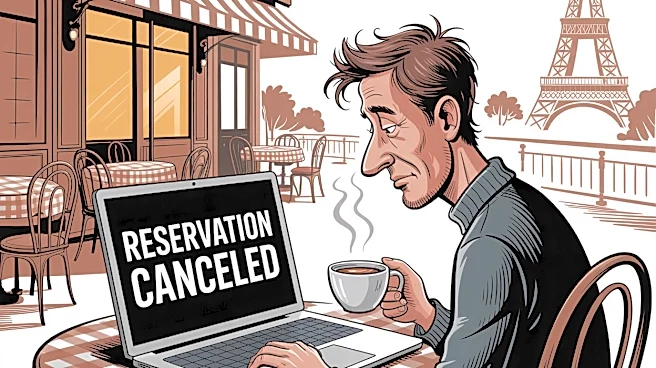
It wasn't his fault. The first leg of his flight to Denver was delayed by weather. His airline rebooked him on another flight to Paris, but someone pushed the wrong button, and the airline believed he had missed his connecting flight.
"We figured it out when I went online to check our return reservation while in France and discovered we had no tickets," he said.
Airlines automatically cancel your reservation when you miss a leg of your flight.
Check out Elliott Confidential, the newsletter the travel industry doesn't want you to read. Each issue is filled with breaking news, deep insights and exclusive strategies for becoming a better traveler. But don't tell anyone!
Fortunately,
Skilken is no newbie. He runs a travel insurance website and understands the ins and outs of the travel industry. He talked to an airline representative in Paris, who quickly restored his tickets. The European Union this week agreed to bar airlines from canceling your return ticket or charging extra when you miss an outbound leg, though the change isn't expected to take effect until next year.
It would be easy to dismiss his problem as a one-off, but I can't. I've been seeing more "no-show" cases lately – and many cost travelers dearly because they have to pay for new tickets or hotel rooms. It's made some skeptical travelers wonder whether travel companies aren't using "no-shows" to generate a little extra cash.
"No-shows are a bigger issue than people think," said Brian Raffio, a senior travel coordinator for a tour operator that specializes in Africa. "Not only is it a logistical nightmare, but it holds significant revenue implications."
Raffio said travelers don't understand that companies such as airlines, cruise lines and tour operators are not selling a physical product, but a specific date and time to use that product. They can't resell it once the time passes.
But are no-shows also an opportunity for the travel industry to make more money?
Are some no-shows nonsense?
Sometimes, travel companies get no-shows wrong, and it's an error that I've seen a lot lately.
Consider what happened to Teresa McGee recently when she flew from Detroit to Charlotte on American Airlines. McGee, a caregiver from Matthews, North Carolina, flew her outbound trip without incident. But when she tried to fly home, an agent told her she didn't have a ticket.
“They couldn’t give me a reason,” McGee said.
Eventually, she found out that American had incorrectly labeled her a "no-show" – even though she had a boarding pass that proved she'd flown the first leg of her flight.
"I tried to explain this to American Airlines numerous times," she said.

The airline told her she had to buy a new ticket for $572, which she did. But then it refused to refund her original ticket, and her credit card company sided with the airline when she tried to dispute the charges.
I asked American Airlines about the mix-up, and it offered her a full refund of the new ticket without explanation. But this kind of thing has repeated itself so many times that I've begun to wonder if no-shows haven't become a new revenue stream for travel companies.
'It's not about maximizing profits'
Are no-shows a way to earn more money? Travel companies vehemently deny it.
"It's not about maximizing profit," said Alex Foti, president of Bretton Woods Vacations, a vacation rental company in New Hampshire. "It's about fairness."
He says no-shows are rare in his business, but when they do occur, his company refunds any fees directly tied to services not rendered, such as cleaning fees or optional charges like pet fees. But the rental amount itself is nonrefundable.
But it can get complicated. For example, some rental companies will offer a partial refund if they can re-rent the property. Others won't, so if they rent the property twice, they keep all the money.
Airlines take a more sophisticated approach. They overbook flights, betting that some of the passengers won't show up. When they don't, the airlines keep their airfares.
But falsely claiming that their customers didn't show up for an outbound leg is definitely a red line.
How do you avoid losing your money in a no-show mixup?
You don't have to be the next no-show statistic. Here are a few pro tips for keeping your money.
- Stay connected. Flight schedules can change quickly. "Avoiding no-shows today requires agility and preparedness," said Louise Truman, founder of the sustainable travel company Plotpackers. She recommends downloading your airline's app for seamless travel updates. "It’s a lifesaver when things change unexpectedly," she said.
- Keep your boarding pass. A boarding pass is a confirmation that you took a flight. And I have to be honest, these flight no-shows are troubling. At the very least, take a photo of your boarding pass to prove that you were on an outbound flight – you may need it later as proof you were on the flight.
- Get insurance. Travel insurance can cover you in some circumstances. "If you miss your flight, cruise, or hotel stay because of a travel delay or missed connection, travel insurance can usually provide coverage," said Terry Boynton, co-founder and president of Yonder Travel Insurance.
- Ask about extenuating circumstances. That's the advice of Shehryar Khan, who owns a vacation rental in Seattle. He says that when someone has to cancel at the last minute because of bad weather or health issues, he can offer a refund. "We do this because the relationship with the guest is more important than the specific booking," he said.
Are no-shows a travel industry conspiracy?
So are the travel industry's evil bean counters trying to make money by incorrectly labeling you as a no-show? As I review the cases, I'm inclined to chalk them up to innocent errors made by travel companies.
In other words, there's probably not a no-show conspiracy.
That being said, you should take every step you can to protect yourself from being a no-show. Keep your boarding passes, call ahead if you think you might be late checking in – and never, ever, assume everything will be fine. Otherwise, you could end up losing your room, your place on your tour – or having to buy a new airline ticket.
Christopher Elliott is an author, consumer advocate, and journalist. He founded Elliott Advocacy, a nonprofit organization that helps solve consumer problems. He publishes Elliott Confidential, a travel newsletter, and the Elliott Report, a news site about customer service. If you need help with a consumer problem, you can reach him here or email him at chris@elliott.org.
This article originally appeared on USA TODAY: Why airlines may say you were a no-show – even if you boarded