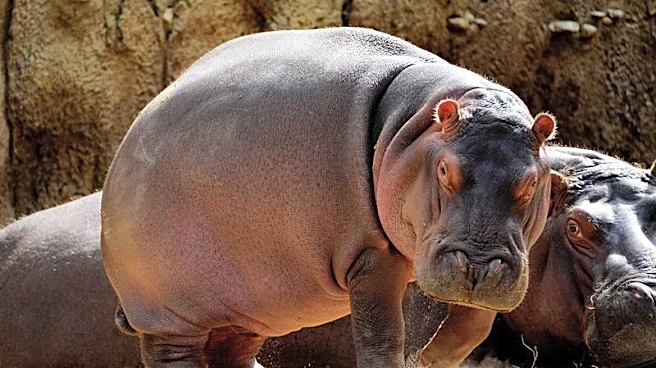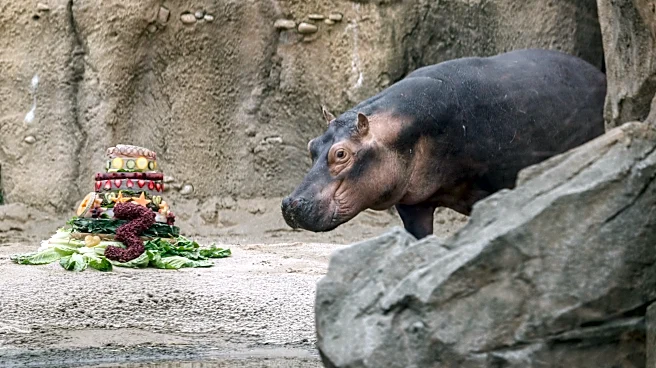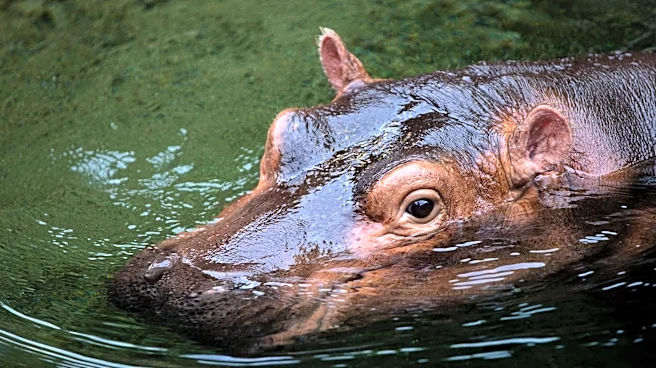





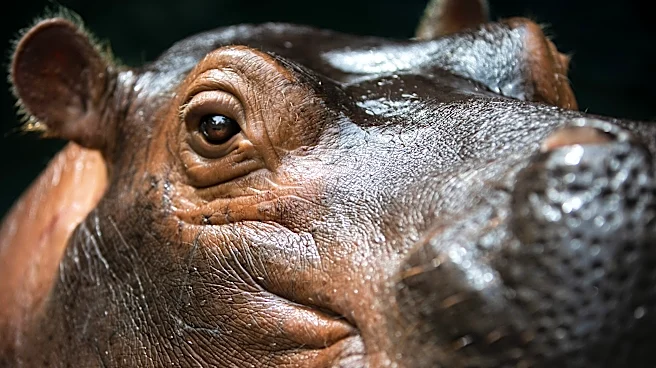

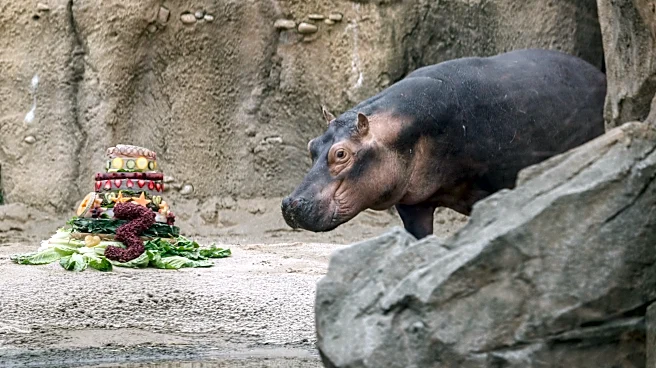
Fiona the hippo at the Cincinnati Zoo & Botanical Garden died on Nov. 19 after her care team tried several ways to locate a knit hat in her system. But surgery was not an option.
Fiona, 9, died on Thursday, Nov. 19, after ingesting a portion of a hat that fell into her enclosure on Nov. 8, according to zoo officials. The zoo said it provided supportive care to save Fiona, but efforts were unsuccessful.
"The vet staff tried everything they could to help her after she ingested a hat that ended up in her habitat by accident last week," the zoo said in an Instagram post on Nov. 19. "Despite multiple attempts to move the hat out of her system, it was ultimately too much to overcome."
Here's why doctors couldn't provide surgery, plus more to know about
the beloved hippo's heartbreaking death.
Why did Fiona the hippo die?
Fiona died because she swallowed a significant portion of a knit hat that fell into her enclosure, Hippo Cove, on Nov. 8, zoo officials told the Cincinnati Enquirer, part of the USA TODAY Network.
Fiona did not pass the hat through her digestive tract and experienced a drop in appetite, according to a video the zoo posted on Instagram. Surgery was not an option, but Fiona received an enema with lots of fluids and anti-nausea medicine. She was also sedated for a colonoscopy with a 9-foot camera and placed on a vibration plate typically used for horses in hopes the vibrations would initiate movement in her digestive tract. However, the zoo's care team could not retrieve or remove the hat.
How did the hat get into Fiona's enclosure?
A child dropped the hat into Fiona's enclosure, which was then caught by a fan and catapulted through a 1-foot gap above the 12-foot-tall viewing window into the habitat, Michelle Curley, communications director for the zoo, told the Cincinnati Enquirer.

Why couldn't the doctors do surgery on Fiona?
There are several reasons why Fiona couldn't undergo surgery. First of all, a hippo's digestive systems are multichambered, making removal of any object difficult, Dr. Jack Kottwitz, large animal clinical services professor at Michigan State University, told the Cincinnati Enquirer.
If the hat were in Fiona's stomach, surgeons would have needed to maneuver a massive, multichambered barrel full of fluid and food to find it. If the hat were in her intestines, her stomach would have still be hard to shift aside to reach hidden loops of intestine. Colic surgery, which treats abdominal pain in horses is already difficult on a 1,000-pound horse, Kottwitz said. But with Fiona weighing closer to 2,600 pounds, the surgery would have been that much harder.
Hippos are also "notoriously difficult" to anesthetize, often moving around while under anesthesia, Kottwitz said. This makes an often complicated procedure even more tedious.
Hippos' thick skin − over 2 inches thick in some places − also makes surgery difficult, Kottwitz said. Surgeons might have had to make one incision to explore a portion of Fiona's body before closing it up and looking elsewhere. There was the possibility that multiple incisions would have been necessary to locate the hat.
If Fiona had had incisions, she would have needed to stay out of the water to let them heal properly post-operation, Kottwitz added. But spending the majority of their time in the water is important, as it helps hippos stay cool and prevents their skin from drying out and cracking, according to Britannica.
Why was Fiona the hippo famous?
Fiona the hippo quickly grew to internet fame because of her premature birth. Fiona was the zoo's first newborn hippo and smallest premature hippo known to survive in human care.
In January 2017, Fiona's mother, Bibi, received the first-ever ultrasound performed on a Nile hippo. Fiona was born six weeks prematurely, 25 pounds lighter than the smallest Nile hippo ever recorded.

Fiona's struggle to survive captivated audiences beyond Cincinnati, providing inspiration for children's books, an ice cream flavor, clothing, a line of beer, fan tattoos and even a Facebook "show." Millions followed updates on her growth through social media posts as she gained weight and reached developmental milestones.
How long can hippos live?
In the wild, hippos can live up to 40 years and in captivity, up to 50 years, according to National Geographic. Fiona the hippo was only 9 years old.
Contributing: James Powel, Gillian Stawiszynski and Thao Nguyen, USA TODAY
Greta Cross is a national trending reporter at USA TODAY. Story idea? Email her at gcross@usatoday.com.
This article originally appeared on USA TODAY: Why Fiona couldn't have surgery: more questions answered in hippo death