





Halloween means carving pumpkins, dressing up in costume and eating bright, bordering-on-radioactive colored candy. But as more brands release artificial dye-free versions of their classic sweets, that last holiday tradition may be changing.
Health and Human Services Secretary Robert F. Kennedy Jr. and his "Make America Healthy Again" movement have focused on banning artificial food dyes from the nation's food supply. In April 2025, Kennedy announced the phasing out of eight petroleum-based synthetic dyes, and many brands have been announced plans to follow suit or have already rolled out reformulated versions of their products.
With spooky season in full swing, I decided to try some out myself. I compared three candies you know and love − Skittles,
Starbursts and M&Ms, all from parent company Mars − to their new dye-free versions.
Here's what I found.
Artificial dye-free Skittles
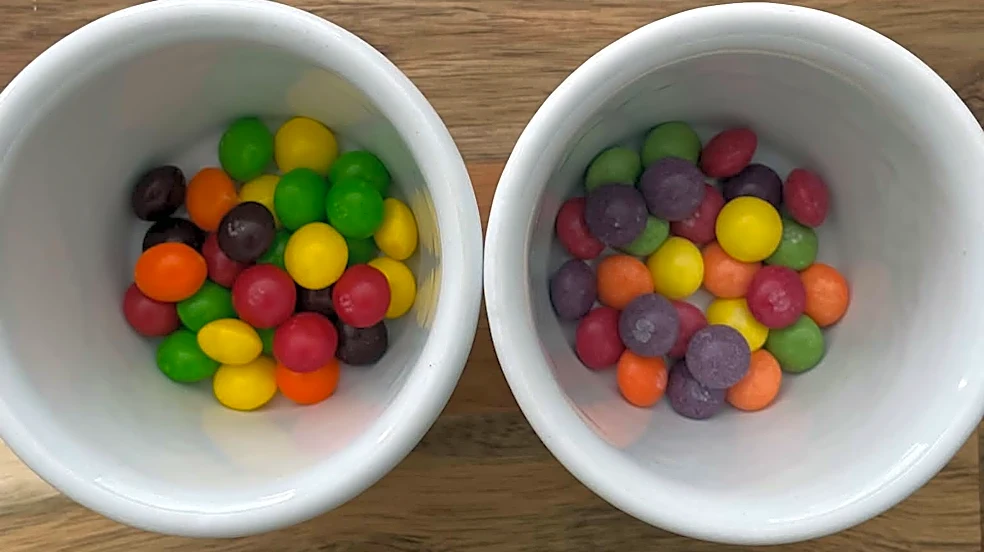
If you've ever confused the grape-flavored Skittle for brown, the artificial dye-free version will make things much clearer with its lighter, clearly purple exterior.
The trend continues with the other colors, too. The dye-free red, orange, yellow and green are all lighter with an almost chalky or cloudy-looking finish compared to their more saturated, shiny original counterparts.
In terms of taste, there was no detectable difference. In some bites, the texture seemed a bit different (dye-free being firmer, original slightly softer) but hardly noticeable − especially if you're mindlessly popping handfuls into your mouth.

Artificial dye-free Starbursts
Both versions of these sweets were securely snuggled inside identically colored wrappers. But once opened side-by-side, the color matching was a Star-BUST.
Similar to the Skittles, the dye-free versions were lighter than the iconic pink, red, orange and yellow sugary squares we're used to seeing.
Despite the less saturated color, the taste of the dye-free versions didn't pale (get it?) in comparison to the originals. Nor was there a detectable texture difference.

Artificial dye-free M&Ms
If you're a fan of cool, confident Blue or intelligent, businesslike Brown of the M&M candy characters, you'll be disappointed opening up a bag of artificial dye-free M&Ms − both colors are missing!
Parent company Mars previously warned about this omission in a news release, noting the blue and brown M&Ms were not replicated in dye-free versions. The company assured the original mix is still available for those looking for all the classic colors.
Of the remaining dye-free colors, half were a close match to the originals (red and yellow) while green and orange were more muted − just a duller candy shell of their bolder, former selves.
Appearances aside, the changes had no impact on the taste − both were a crunchy, chocolatey delight.

Are these dye-free candies available now?
Don't expect to see the candies we tried in your Halloween basket this year. While all were launched by parent company Mars in summer 2026, they're currently only available for purchase through Amazon, so you don't have them on your store shelves.
Plus, they're only available in family size bags, meaning most of them (besides the Starbursts) aren't individually wrapped for trick-or-treaters.
In terms of future availability, Mars said additional items and timelines would be shared once "effective, scalable solutions" are identified.
Are other brands dropping dye-free candy?
Yes, more brands have committed to release dye-free versions of their candy − but exact timing and availability is less clear.
The Hershey Company (the brand behind Twizzlers, Jolly Ranchers, Reese's Pieces and Sour Strips) announced in 2025 they would remove artificial colors "in response to evolving consumer preferences and changing state laws."
But shoppers will start to see Hershey offerings transition to colors from natural sources beginning in 2027, the brand told USA TODAY.
This article originally appeared on USA TODAY: I tried artificial dye-free M&Ms, Skittles and Starbursts. What you need to know