


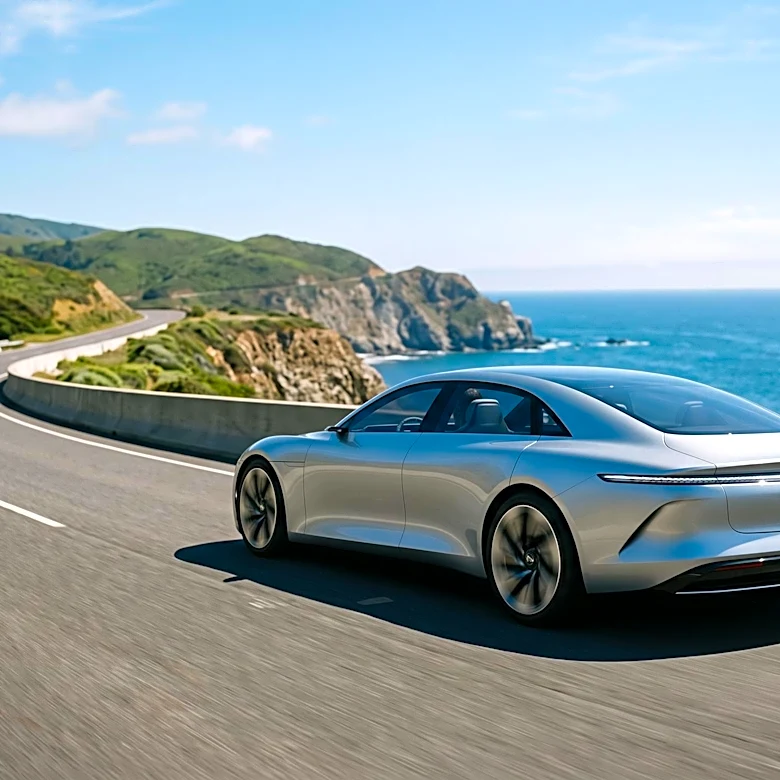




I have tested dozens of cars in 2026 and I pay special attention to safety features during test drives. Modern safety features are capable of everything from warning drivers of potential collisions to braking for them and stopping the vehicle completely.
Thanks to advancements in technology, some of the best safety features are standard. Here are three of the most important safety features I look for as an expert car reviewer who tests vehicles in different classes, segments, and price ranges.
Blind-spot monitoring makes driving safer and easier
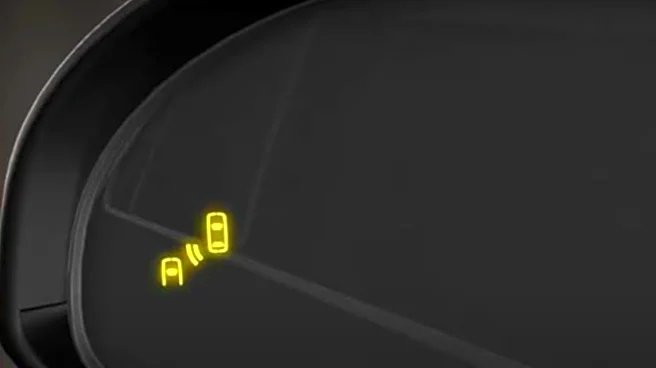
Blind-spot monitoring is one of my favorite car safety features because it comes standard on many new car models and offers great utility. This feature uses radar or ultrasonic sensors to detect other vehicles in your rear blind spots and alongside your vehicle while
driving.

This feature is especially helpful during highway driving because it allows for safer and easier lane switching. Blind-spot monitoring helps me drive with confidence because, if a vehicle is in the lane I want to switch into, a light flashes or an alert sounds, prompting me to wait before switching lanes.
Blind-spot monitoring is one of the many advanced safety features that have become universal in recent years. Some base model vehicles omit this feature to cut costs, but it's worth a trim upgrade if you're looking for an extra layer of driving safety for your family vehicle or teen driver.
Forward collision warning keeps drivers alert
Forward collision warning is an advanced driver-assistance system (ADAS) that scans the road ahead as you drive. This system is extremely useful for commuters who regularly travel in stop-and-go traffic.
It utilizes a front-facing camera and sensors to measure distances between your car and vehicles or obstacles in its path. The feature also warns drivers when their vehicle is approaching an object quickly or when you follow a car too closely.
Forward collision warning may not be necessary for every driver, but it's a good feature to have because it can prevent sudden-stop collisions and ultimately help drivers avoid or mitigate accidents. I've found this feature to be extremely sensitive in some new vehicles, but keeping a safe distance from other motorists is preferable to being dangerously close to a collision.
Like blind-spot monitoring, forward collision warning is an additional safety measure that gives drivers a heightened level of awareness on the road through advanced tech.
Automatic emergency braking can help drivers avoid some collisions
Have you ever parked just a little too close to an obstacle or another vehicle? Automatic emergency braking can help avoid major collisions as well as mild bumper taps.
Many vehicles equipped with automatic emergency braking allow drivers to toggle the setting on and off if they find it to be a nuisance during parking situations because of its sensitivity.
While blind-spot monitoring and forward collision warning help keep drivers alert, automatic emergency braking can prevent accidents by braking quickly before a collision occurs. The system isn't perfect, but it can protect drivers, passengers, and their vehicles in certain accident scenarios such as sudden stops on highways or encounters with unseen obstacles.
The National Highway Traffic Safety Administration finalized a Federal Motor Vehicle Safety Standard requiring automakers to equip all cars and light trucks with automatic emergency braking starting in 2029, to "reduce crashes and save lives."
We've listed some of the safest vehicles of 2026 for new car buyers looking for their next ride.
Charles Singh is an Autos Connect Reporter for The Tennessean, part of the USA TODAY Network. Contact him at CSingh@Gannett.com.
This article originally appeared on USA TODAY: I test cars for a living. These are 3 safety features I never skip