





It would be nuts to hand your car keys to a 16-year-old and wish them luck as they hit the highway with zero practice or experience driving.
We just don't do that. Instead, we teach them how to check their mirrors, stay within the speed limit, merge into traffic, and pay attention to everything else happening around them. Even after that, they start with a learner's permit, an adult in the passenger seat, and plenty of time behind the wheel before mastering the road on their own.
Why don't we do that with money?
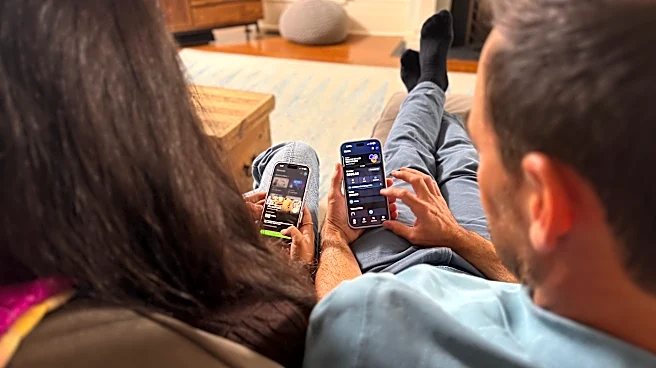
That's the pitch behind a new generation of banking apps for teens, from Greenlight and Step to Cash App and Chase. Each one aims to give kids a more well-rounded financial foundation than what many of us had growing up. (I don't think
I learned the value of credit until my mid-30s.) With these new apps, teens can save, spend, send money, earn rewards, and invest, all with parents watching from the passenger seat.
The newest teen account soft-launched earlier this month and officially rolled out today. It’s from OnePay, the fintech backed by Walmart.
What sets it apart, OnePay Product Lead Anthony Cassano told me, is the combination of credit-building, investing, rewards, and savings earning up to 3.35% APY, all without a monthly subscription fee or extra hoops to unlock the savings rate. At 18, teens can also transition into their own adult OnePay account with those tools already in place instead of starting over somewhere else.

The high cost of low, or no, credit
Most families have pieced parts of this together, bit by bit, like I did with my daughter. I added her as an authorized user on one of my credit cards when she left for college at 18. Seven years later, we still share that card for emergencies while she's in law school. Even so, I had to co-sign for her first two apartments and help her buy a car.
Vince Shorb, CEO of the National Financial Educators Council, a financial education provider, says reaching adulthood without much credit history can make borrowing more expensive, make it harder to qualify for loans or apartments, and leave young adults dependent on parents or roommates who can qualify.
"It delays independence," he told me. "In addition, it costs you a lot more in the meantime."
How much more? Not having credit history doesn't automatically make someone a subprime borrower, but Experian's latest numbers show the used-car APR is 8.81% for a prime borrower versus 19.10% for someone in the subprime range. Do the quick math on an average used-car loan, and it comes out to roughly $9,000 more in interest over the life of the loan.
Shorb also thinks kids should get this kind of financial education in school. We spend years teaching kids subjects they may rarely use once school ends, he says, while personal finance affects nearly every part of adult life: security, relationships, health and emotional well-being.
What it pays to know at 18
OnePay's Cassano told me his own early years shaped what he's building now. "My family didn't come from much, so growing up in a single-mother household, my mother always said, 'Anthony, we might not have money, but I have a great credit score.'" He says he watched her stretch every dollar on the strength of it. "I've seen the impact of that in my adult life. Yes, get everyone saving. Yes, help them learn to invest. But it's such a credit-based economy. That's the main thing."
Here's how the new teen accounts work: A parent opens their kid's account from their own OnePay app. The teen gets their own login (they'll need a phone number, and a free Google Voice line works if they don't have a phone yet), a physical card, and checking and savings. Parents set up a weekly allowance, add money to a savings goal, and, if they choose, turn on stock and ETF trading.
From there, teens can take it all for a spin. They can spend, watch the balance, save toward something special, and even send money to approved friends. Parents can monitor the account and can tap the brakes anytime.
What if Mom or Dad messes up their own credit?
If a teen’s riding on a parent's credit account, what happens if the parent misses a payment or hits hard times?
Cassano says OnePay’s Builder Card also limits that risk. The teen becomes an authorized user on the parent's card, and the payment history accumulates while they're a minor. Nothing gets reported for the teen under 18. Once they turn 18, verify their Social Security number and stay opted in; OnePay reports the account's full age and the last two years of payment history. A teen who started at 13 shows up with an account at least five years old and two years of on-time payments instead of a blank file.
It seems like they’ve thought of everything, but you're seeing the part I am, right? OnePay gets something out of this too — a customer who could start at 13 and stay in its financial ecosystem for years. The company sees that continuity as a feature, while parents need to make sure it’s truly what works best for their family.
A credit file isn't a money education
Sara Rathner, a credit card expert at NerdWallet and a mom herself, told me parents don't need to race to add a middle-schooler to a card. Starting at 13 instead of 16 or 17 doesn't necessarily provide a meaningful scoring advantage, and some issuers won't report a minor's activity at all.
"It's important, but more important is teaching kids how credit cards work," Rathner said.
Rathner likes teen accounts where a kid gets an allowance, spends with a card, and sets a savings goal, because that's how money works in real life now. But her favorite teaching tool might be the easiest one of all: Let them learn from their mistakes.
"There's no lesson quite as effective as a little bit of buyer's remorse," she said.
That makes a lot of sense. I’ll never forget my dad teaching me how to parallel park, or my mom reacting to my first dented bumper either. Just like teaching our kids how to drive before handing over the keys, money deserves some real-world practice too.
Jennifer Jolly is an Emmy Award-winning consumer tech columnist and on-air contributor for "The Today Show.” The views and opinions expressed in this column are the author's and do not necessarily reflect those of USA TODAY. Contact her via Techish.com or @JennJolly on Instagram.
This article originally appeared on USA TODAY: Teens get learner's permits before driving. What about for money?