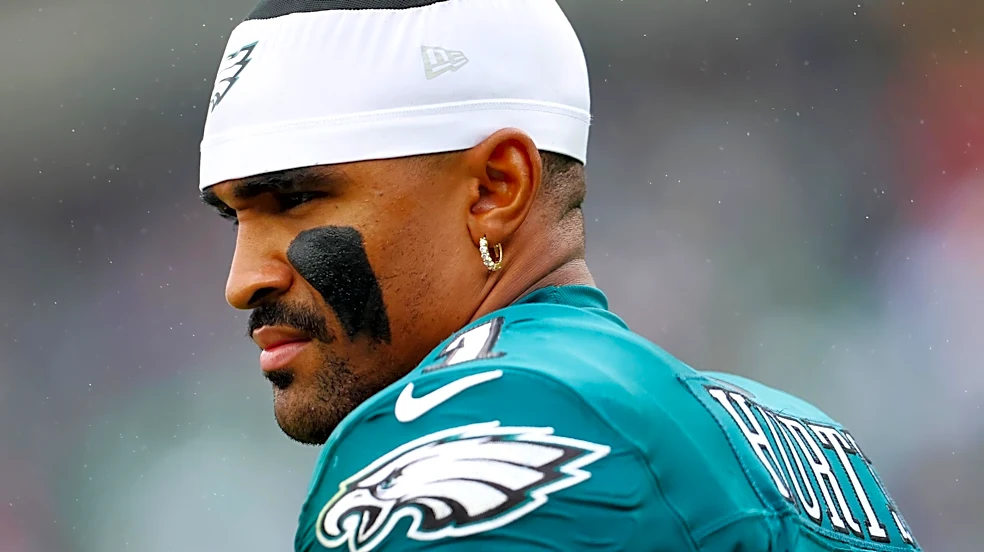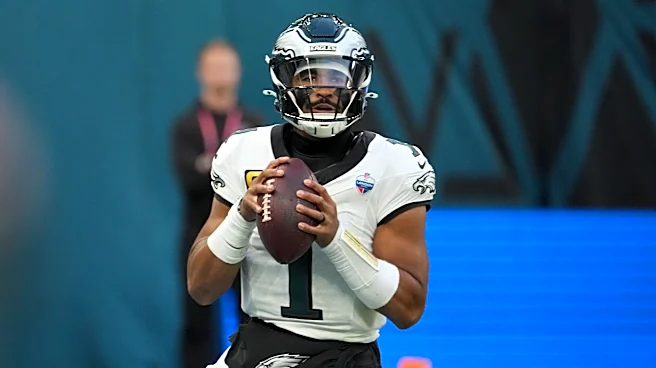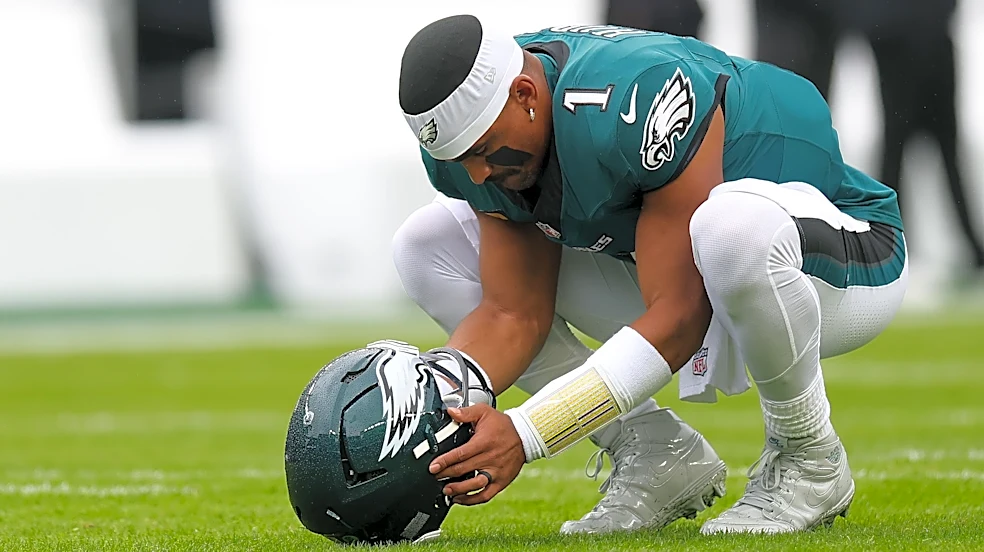



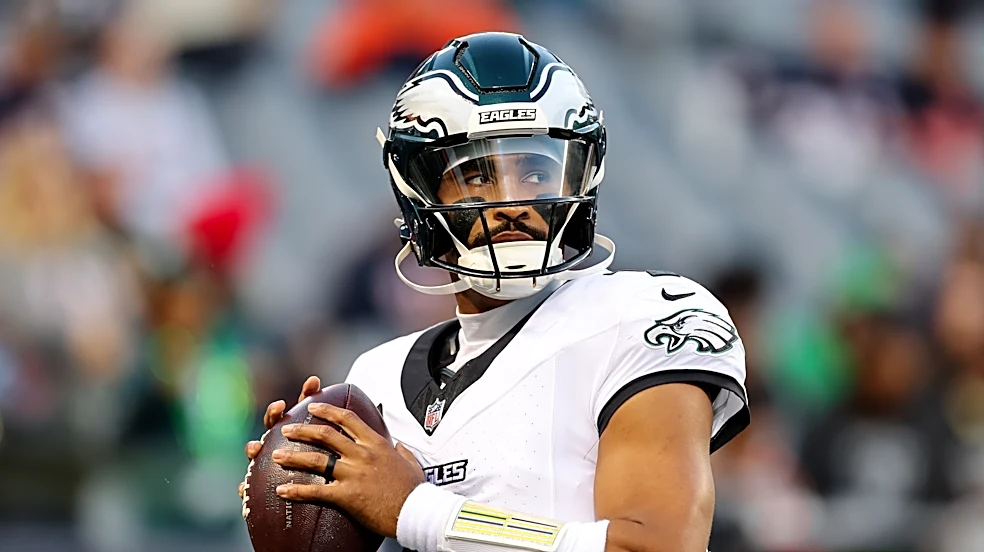
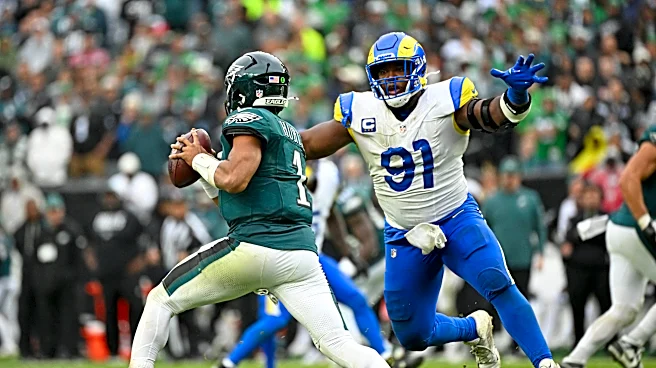


A blood clot in Jalen Hurts' calf will keep the Philadelphia Eagles quarterback sidelined indefinitely.
The team announced on Saturday, Oct. 17, that it placed Hurts on injured reserve, meaning he'll miss a minimum of four games.
Hurts already had been ruled out for Philadelphia's Week 6 matchup against the Carolina Panthers, and the team did not share a return timeline.
Hurts has what the team described as a "superficial blood clot" in his calf area, which is believed to have developed after he was cleated in a loss to the Los Angeles Rams at Lincoln Financial Field on Oct. 4. Hurts was treated for the issue after reporting it a few days later but was cleared to play in London on Oct. 11, a game the Eagles dramatically dropped to the Jacksonville
Jaguars.
The Eagles (2-3) are on a three-game losing streak entering the game against the Panthers. Here's what to know about Hurts diagnosis.
What is a superficial blood clot?
Superficial blood clots in the leg differ from deep-vein thrombosis (DVT), but according to medical experts who specialize in blood clotting, should be taken seriously.
“People often don’t think about it in athletes and people that don’t have a lot of the other risk factors, so I think getting the attention out there to symptoms that people should be evaluated with is important for both athletes and non-athletes alike,” Dr. Jordan Schaefer, a hematologist at the University of Michigan Health System and associate professor of internal medicine at the University of Michigan Medical School, told USA TODAY Sports.
Superficial blood clots will often cause redness, pain or a cord-like lump that can be felt beneath the skin, according to Schaefer. All blood clots carry the risk of breaking loose and moving toward the lungs, which could result in a pulmonary embolism, a potentially fatal event. Schaefer said superficial clots matter not only because of the symptoms, but also because 10 percent of patients experience the clot moving to the deep-vein system and becoming more serious.
The Eagles said a follow-up ultrasound on Oct. 14 revealed movement in the small blood clot in Hurts' leg.
Superficial blood clot treatment options
There can be some variability in terms of the recovery depending on individual circumstances, Schaefer said.
“A lot of times, what we’re doing, is kind of following people closely over time,” Schaefer said. “It’s not like a one-time visit and then you’re done. It’s often reassessment in how you’re feeling and a physical of how the leg looks. Is that swelling and redness and exam getting better?”
Patients with more extensive clots or those at higher risk for progression may require anticoagulation medication – blood thinners – for approximately 45 days.
If Hurts is being treated with blood thinners, Schaefer said, his recovery timeline would be more complicated because football is a contact sport. Blood-thinning medications increase the risk of serious bleeding with traumatic injuries, including internal bleeding.
“Oftentimes, we want to catch these things kind of early,” Schaefer said. “It can get, potentially, worse.”
Who will start in Jalen Hurts' place?
Tanner McKee, now in his fourth season, is expected to start in Hurts' place. McKee has only played in six regular-season games but has generally played well. He has a 1-1 record in two starts, both inconsequential Week 18 games, but has an overall career passer rating of 95.7.
Nate Davis contributed to this report.
This article originally appeared on USA TODAY: Jalen Hurts goes on injured reserve. Experts warn blood clot can be serious