



WASHINGTON – A new Supreme Court term will get off to a fast start when the justices on Oct. 5 take up a landmark case about climate change that could have broad implications for local governments to tackle national issues.
In other politically charged cases that will be debated over the next few months, the court – which has a 6-3 conservative majority − is expected to continue expanding rights for both gun ownersand religious groups.
The Trump agenda may also dominate the Supreme Court again this year. The justices will continue weighing in on Trump administration policies – including on President Donald Trump’s hardline approach to immigration − in cases that will get full arguments before the court.
And in addition to debating in December a Republican
push to enforce strict Arizona voting laws, the court may be asked to quickly settle election-related disputes that pop up around the November midterms.
“Everyone’s eyes are on the election,” said Cecilia Wang, national legal director for the American Civil Liberties Union. “You can expect emergency applications to go up to the court relating to the election.”
Here’s a look at what’s ahead.
`About as big as it comes'
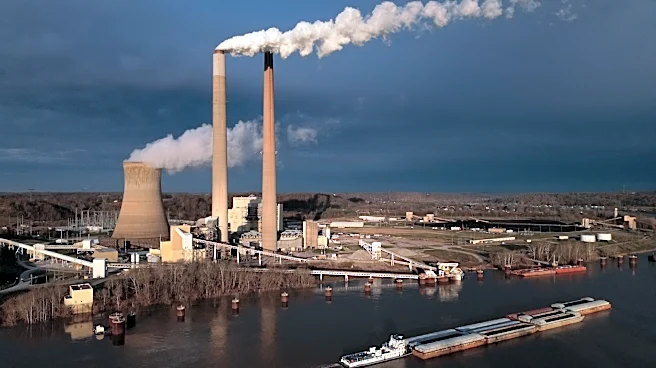
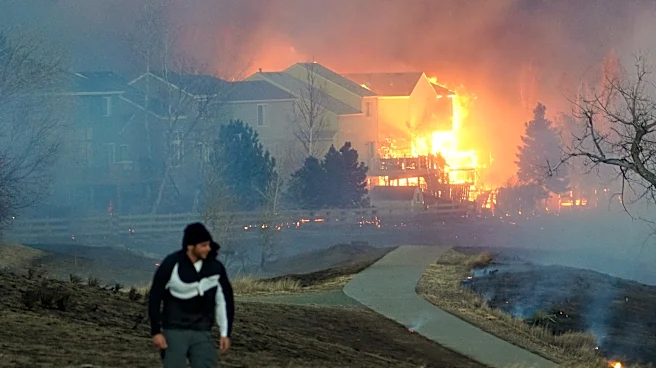
The first case the Supreme Court will hear when the justices return from their summer break is one of the biggest of the term: Whether local governments may seek damages from fossil fuel companies for harms caused by climate change.
Dozens of lawsuits similar to the one being considered from Boulder, Colorado, have been filed across the country. Billions of dollars are potentially at stake. And climate change is one of the most significant issues facing not just the nation, but the world.

The case could also affect the ability of states and local governments to go after other types of activity that originate outside their borders. Bridget Fahey, an expert at the University of Chicago Law School on the ways federal government and states interact, said that could also include attempts to control artificial intelligence.
“Even though it’s about climate change, which feels about as big as it comes, I do feel it’s a bit of a proxy case for another major regulatory question that we’re going to see in the coming years, which is state AI regulation,” Fahey said.
Republican attorneys general hope the court will use the case to broadly prevent states from effectively forcing policy changes for the rest of the country.
“We don’t think that there’s a role for one state to regulate the activities that are happening in another state,” said Michael Williams, the solicitor general for West Virginia. Williams helped write a filing from Republican attorneys general opposing Boulder’s lawsuit.

Testing the separation of church and state
In November, the justices will decidewhether the Catholic Church can exclude children of gay parents from a taxpayer-funded preschool in Colorado, another opportunity for the conservative court to build on recent high-profile rulings affirming the rights of religious groups.
Several of the previous cases also came from Colorado, including the court’s ruling that the state’s ban on "conversion therapy" for young people infringed on the free speech rights of a Christian counselor.
That trend suggests the Catholic Church is likely to win, said Roman Martinez, a partner at Latham & Watkins who has argued frequently before the court.
“Colorado, on the other hand, does not have a great track record in these cases,” he said during recent remarks at Georgetown Law’s Supreme Court Institute.
The justices may add an even bigger battle over the separation of church and state to its plate.
A coalition of multifaith families backed by the ACLU have askedthe court to decide whether Texas can require public schools to display the Ten Commandments.
The Louisiana-based 5th U.S. Circuit Court of Appeals – the most conservative appeals court in the country – upheld Texas’ law despite a 1980 Supreme Court decision striking down a Kentucky law that’s nearly identical to Texas’ requirement.
Five or ten years ago, legal experts would have assumed that the Supreme Court would slap down the appeals court ruling, said Genevieve Lakier, an expert on the First Amendment at the University of Chicago Law School. But because the court has consistently been expanding the First Amendment’s right to freely exercise religion, she said, it’s unclear whether the justices will get involved.
“This is going to be very illuminating if it doesn’t,” she said.

Gun rights challenge to AR-15 bans
In December, the justices will debate whether state and local governments can ban possession of semiautomatic rifles like AR-15s as a response to mass shootings.
The combined cases from Illinois and Connecticut may be the most important Second Amendment cases since the court’s landmark 2008 ruling that the Second Amendment protects an individual's right to possess firearms for traditionally lawful purposes, according to Don Verrilli, a former solicitor general under President Barack Obama.
While the court has now ruled on whose rights are protected and where weapons are allowed, this case focuses on which firearms are covered by the Constitution, Verrilli said during a discussionof the upcoming term at Georgetown Law’s Supreme Court Institute.

Because millions of Americans own AR-15s, Verrilli is among the legal experts who predict the court will say they cannot be banned.
But he nonetheless thinks the case casts doubt on whether the court’s recent rule that modern gun regulations can’t stray too far from historical weapons regulations to pass constitutional muster is the right approach.
“This case, of all of the Second Amendment cases so far, at least in my mind, puts that question really starkly,” he said.
Blockbuster Trump cases?
Following a term that was packed with major rulings on Trump’s policies, the justices will vet two practices important to the president’s crackdown on immigration.
The court will decide whether the administration can detain millions of immigrants without giving them a chance to seek bond and whether it can deport immigrants to countries other than their own without letting them argue that they could be persecuted or tortured there.

Those cases are not as big as some of the Trump issues decided last term, which included the court’s rejectionof the president’s sweeping tariffs and his attempt to redefine birthright citizenship.
But the court has picked only about half the cases it will consider this term, and more challenges to Trump policies are likely to be added, said Erwin Chemerinsky, dean of the law school and a professor of law at the University of California, Berkeley.
Those could include a dispute about Trump's new tariffs and clashes between congressional Democrats and the administration that are expected if Democrats take control of the House or Senate in the November elections.
“I just think, given the Trump administration and the times we live in,” Chemerinsky said, “every term is going to have blockbuster cases.”
This article originally appeared on USA TODAY: Trump. climate. AR-15s. The Supreme Court is about to go back to work