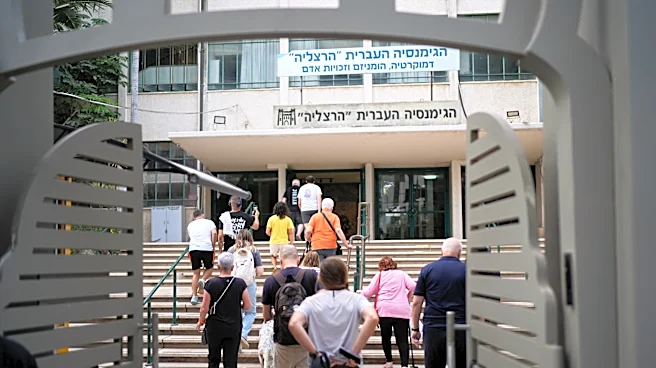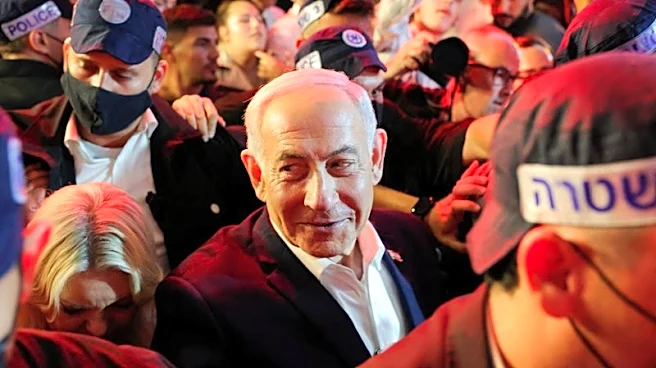




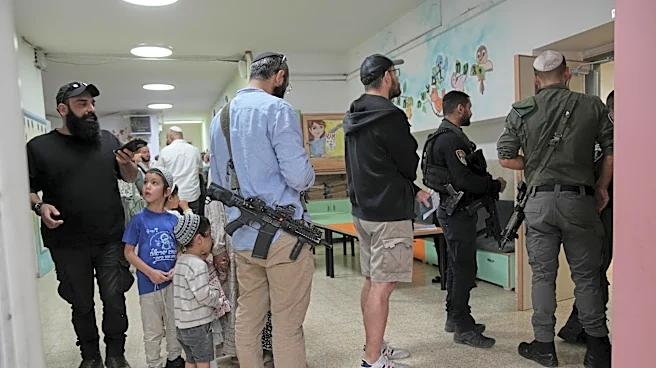
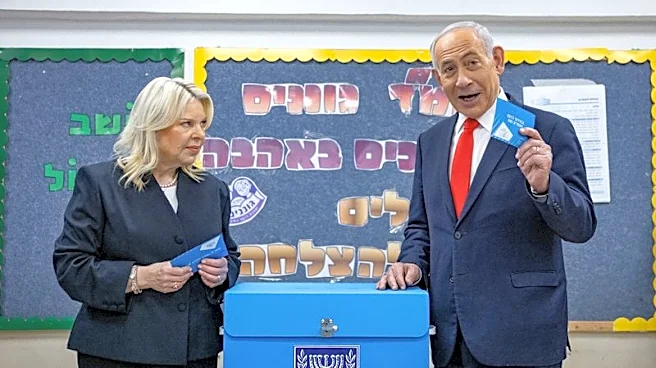

TEL AVIV − No clear winner emerged in Israel's first election since Hamas' Oct. 7, 2023, attacks, according to a series of exit polls from Israeli broadcasters.
The vote was not a referendum on the war in Gaza, the occupied West Bank or any of the other five fronts Israel says it is fighting on. It was a look inside itself. Israelis spoke. But it's still too early, and hard, to hear what they're saying.
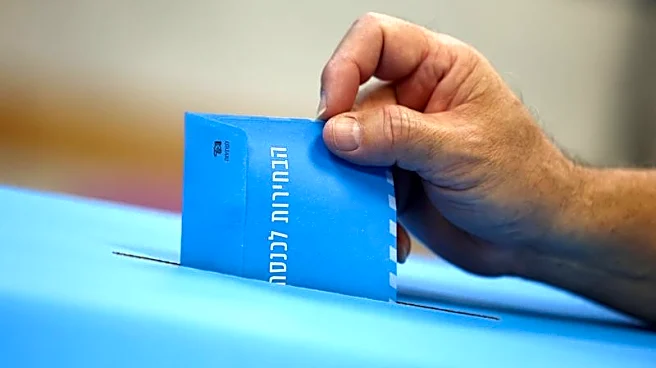
A series of exit polls published by Israeli broadcasters on Oct. 27 showed that, even as voter turnout hit a record-high with at least 80%, neither of the main political blocs led by Prime Minister Benjamin Netanyahu or former Israel Defense Forces chief Gadi Eisenkot were projected to have a clear path to forming a new government.
Oct. 7, Netanyahu, and future of Jewish state in focus
The exit polls, if accurate, indicated that Eisenkot’s bloc will be largest group, with 52 seats. That's ahead of the projections for Netanyahu's ruling coalition, expected to win 50 seats. That means there is likely to be days, weeks or even months of political wrangling as Netanyahu and Eisenkot try to cut deals with other parties to get over the line to 61 seats in Israel's parliament, the Knesset, to form a government.
Here are the main takeaways from the night ahead of preliminary results, due as early as Wednesday.
What Israelis voted on
There is broad consensus in Israel, no matter which party voters support, over the need for robust security and a hawkish approach to military activities against Hamas in Gaza, Palestinian militants in the occupied West Bank, Hezbollah in Lebanon, Houthi rebels in Yemen, Iran-backed groups in Iraq and Syria, and Iran itself.
But a large part of the electorate is demanding answers from Netanyahu over the Oct. 7 security failures that saw 1,200 people killed and 251 taken back to Gaza as hostages. "Mr. Security," as Netanyahu has long branded himself, has refused to authorize a state-backed investigation into what went wrong, why and who is to blame.

'We've been given the answers to what happened," said Ruby Chen, whose 19-year-old son Itay was killed defending civilians near Gaza. He was the youngest American hostage held in Gaza.
"But the how − how did this happen? No answers."
What else did Israelis cast ballots on?
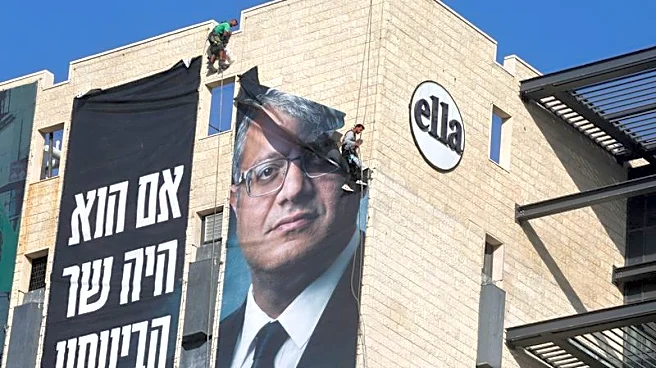
Israel's politics have long been politically fragmented. There are more than a dozen parties seeking representation in the Knesset. They run the gamut from Netanyahu's right-wing Likud party to controversial national security minister Itamar Ben-Gvir's ultra-nationalist Otzma Yehudit party, from ultra-Orthodox parties like United Torah Judaism to Ra'am, an Arab Israeli party that focuses on improving living standards for Israel's Arab citizens.
Many of the parties both align and diverge on some core issues, such as whether ultra-Orthodox Israelis should be forced to serve in the military, or if Netanyahu's reforms to Israel's judiciary in the name of pushing decisions back to elected representatives amounts to the gutting of checks on executive power. In fact, Israel's labyrinthine political landscape makes U.S. politics look almost quaint and one-dimensional by comparison.

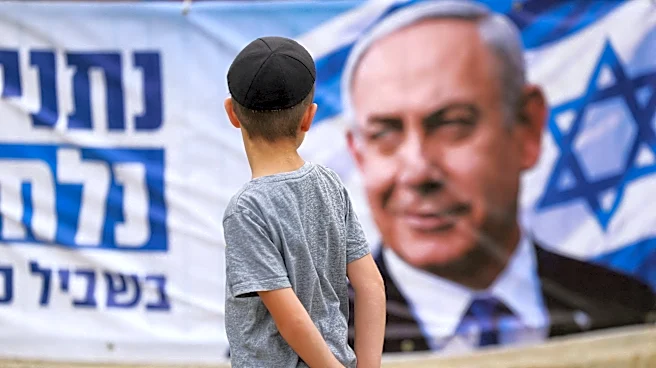
Netanyahu has been Israel's prime minister for 19 of the past 30 years, and during that time, Israel has been dragged to the right to satisfy his nationalist and religious coalition partners.
The vote, too, was a referendum on that, and, ultimately, what kind of country Israel should be.
"Younger voters are thought to be more hawkish, more right-wing because of their formative experiences of Oct. 7," said Jonathan Rynhold, a political scientists at Israel's Bar-Ilan University.
"On the other hand, they have done a lot of reserve duty in the military, and there is huge anger at this government for trying to pass a law that would give the ultra-Orthodox a blanket exemption from serving in the army."
The Trump factor
Every U.S. president going back to the formation of the Israeli state in 1948 has been pro-Israel, supplying it with weapons, vowing to defend it and viewing it as an indispensable Middle East ally.
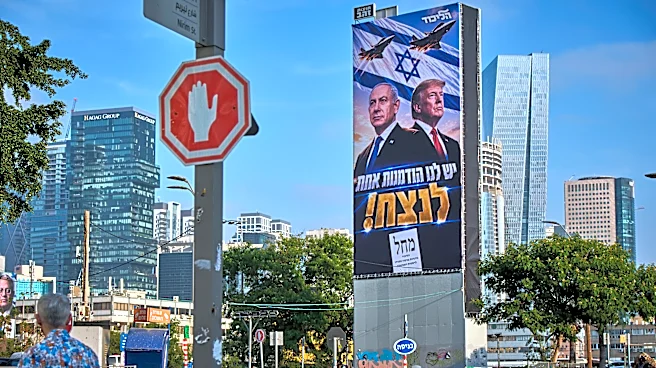
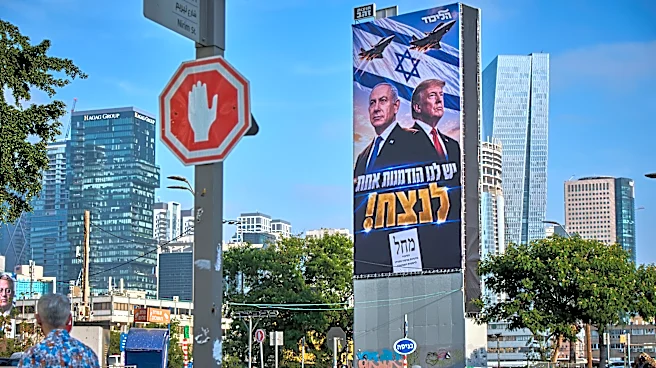
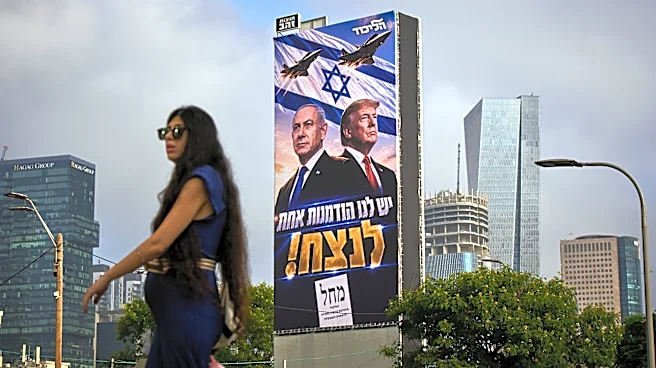
President Donald Trump has, arguably, been the friendliest of all by backing and joining Israel's decades-old quest to bomb Iran and destroy Tehran's nuclear program. It's a point that many Israeli politicians, including Netanyahu, routinely make. Trump and Netanyahu also appear to like working together. They have personal chemistry.

If Netanyahu is ousted as prime minister, it's not clear how Trump will take to Eisenkot or another opposition Israeli leader, such as Naftali Bennett, a former prime minister, and Avigdor Liberman, a former defense minister.
"The most crucial question, by far, is who will be Israel’s prime minister during Trump’s last two years in office?" said Ophir Falk, a foreign policy adviser to Netanyahu. "Who will best cooperate and coordinate with the president to finish the job in Iran and expand peace in the region?" he said.
What wasn't on the ballot?
The vote was largely seen through the prism of domestic issues.
The war in Gaza, the plight of Palestinians in the occupied West Bank, Palestinian statehood, Israel's international reputation − these hardly featured in the campaigns at all.

"There is notable continuity across Israel’s political mainstream regarding Iran, Lebanon, and the Palestinians," wrote Giorgio Cafiero, CEO of Gulf State Analytics, a Washington, D.C.-based geopolitical risk consulting firm, in an analysis for The New Arab news outlet in early October.
"This month’s election, therefore, is unlikely to fundamentally change how Tel Aviv approaches the region."
What happens next?
If neither Netanyahu’s bloc nor the opposition secures a parliamentary majority, Netanyahu will remain caretaker prime minister as efforts to form a new government continue.
President Isaac Herzog will task the party leader he believes is most likely to succeed with forming a government.
If no candidate can assemble a coalition capable of securing parliament’s confidence, new elections will be held, restarting the process.
Kim Hjelmgaard is an investigative journalist covering global stories for USA TODAY, from living rooms to conflict zones. He is based in London.
This article originally appeared on USA TODAY: Israel's election ends in apparent deadlock, exit polls show