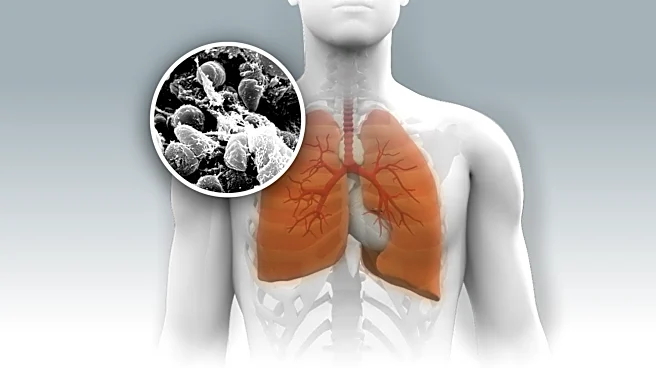










The death of a laboratory worker at a Russian anti-plague research center has raised concern over the possible spread of pneumonic plague, a severe lung infection that can progress rapidly and spread between people.
The U.S. State Department said it was "aware of reports of a fatal case of suspected pneumonic plague" and that it was monitoring the situation along with the Centers for Disease Control and Prevention
, a spokesperson said.The lab employee was identified as a woman in her late 20s who worked at the Irkutsk Anti-Plague Institute of Siberia. That’s according to Rospotrebnadzor, a health and consumer protection agency in Russia.
Where was the suspected plague outbreak in Russia?
Can't see our graphics? Click here.
Russia has isolated dozens of people following the lab worker’s death,
according to Igor Kobzev, the governor of Irkutsk Oblast. The worker was diagnosed with a pneumonia of “unknown” origin. Those quarantined have shown no sign of infection as of Oct. 5.
Pneumonic plague symptoms explained
The plague is an infectious disease caused by the Yersinia pestis bacteria, which can be found in wild rodents, small mammals and their fleas.
There are three main clinical forms of plague infection, according to the World Health Organization:
- Bubonic: The most common form, caused by flea bites.
- Septicaemic: Can multiply rapidly in the bloodstream.
- Pneumonic: The most virulent form, with a short incubation period.
Pneumonic is the most dangerous form and can spread from person to person, causing severe outbreaks.
According to the CDC, pneumonic plague develops when bacteria spread to the lungs of a patient. It typically causes fever, chills, body aches, weakness and swollen lymph nodes. Symptoms can appear in less than 24 hours and rapidly progress to severe breathing problems and coughing, sometimes with blood.
While the plague is dangerous, it can be treated effectively with common antibiotics if it is detected early enough.
How does the plague spread?
According to the WHO, plague can spread through the bite of infected fleas, direct contact with infected tissues or inhalation of infected respiratory droplets.
People infected with Yersinia pestis often develop symptoms after an incubation period of one to seven days.
Plague can be a very severe disease in people. It has a case-fatality ratio of 30% to 60% for the bubonic type, and it is always fatal for the pneumonic and septicaemic kinds when left untreated, according to the WHO.
The illness is infamous for killing at least 25 million people in Europe and Eurasia in the 14th century global pandemic known as the Black Death.
Where has plague been reported in recent years?
The WHO has documented nearly 4,000 suspected and confirmed plague cases between 2019 and 2025. The organization says the disease has caused outbreaks in Africa, Asia and South America, although most human cases have been concentrated in Africa, particularly in the Democratic Republic of the Congo and Madagascar.
CONTRIBUTING Miles J. Herszenhorn/USA TODAY
This article originally appeared on USA TODAY: What is the plague? What to know after the suspected Russia case