





Gunfire tore through a homecoming crowd outside Florida A&M University’s football stadium Oct. 24 at night, wounding 12 people, half of them children, in one of Tallahassee's worst mass shootings.
Eleven of the victims were shot, police said, and the twelfth, the grandmother of one of them, was hurt while fleeing. The youngest was 11 years old. One is a FAMU student. By the morning of Sunday, Oct. 25, five had been released from the hospital and six remained, one of them in critical condition, according to the Tallahassee Police Department. Officials have not released their names.
"It is especially heartbreaking to know that children are among those injured," Tallahassee police chief Lawrence Revell said at a news conference shortly after midnight.
No one had been arrested as of Sunday morning, and the police had not identified any suspects or persons of interest. Investigators believe the shooting grew out of a physical fight between two or three people, Revell said, but the police have not said what set it off.
The gunfire erupted just before 8 p.m. ET near Perry and Manatee streets, behind Bragg Memorial Stadium. About two hours earlier, over 20,000 fans had filled the stadium to watch the Rattlers lose to Arkansas-Pine Bluff, 31-28, and the surrounding streets were still crowded with students, alumni and families.
Homecoming is one of the biggest weekends of the year at FAMU, a historically Black university of nearly 10,000 students, and a week of events had drawn alumni and families back to campus. The whole capital was busy that night, with Florida State University having hosted Georgia Tech earlier in the day and Halloween parties underway across town, the Tallahassee Democrat, part of the USA TODAY Network, reported.
Within seconds, Perry Street became a crush of people running in every direction, some knocked to the ground and trampled, others crouching wherever they could find cover. Jayden Dubois, a FAMU student, told WCTV that he heard gunshots and was trampled in the rush. When he got up, Dubois said, someone was lying on the ground next to him.
Officers ran toward the gunfire without knowing where the shooters were or how many people had been hit, Revell said. The crowd was so thick that ambulances and patrol cars could not reach the wounded.
"We had officers who were picking up victims and carrying them in their arms to transport because they couldn’t get through the mass of people," he said.
The police declared the scene secure at about 9:45 p.m. ET. By then, FAMU had warned people to stay away from the stadium and Perry Street or to shelter in place if they were nearby. The university later said its campus was safe.
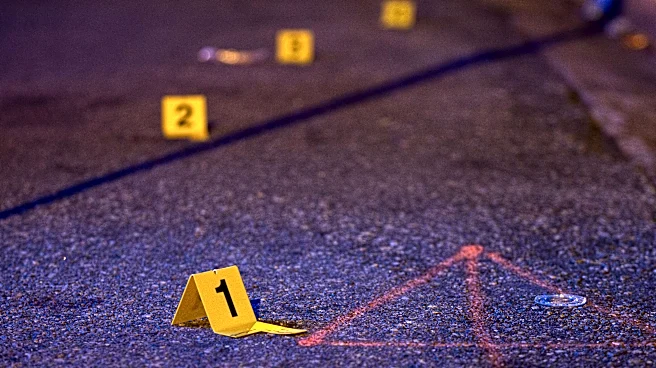
Detectives, sergeants and forensic teams were still combing the scene in the early hours of Oct. 25 as the department’s Violent Crimes Unit took over the investigation. The police have not offered a motive, but Revell said investigators were determined to find those responsible and get answers for the families.

Tallahassee Mayor John Dailey called the shooting a "truly horrific and heartbreaking tragedy" on social media.
"Tonight and in the days ahead, the FAMU family is not alone," he wrote. "Our entire community stands with you."
Tallahassee, a city of about 200,000, has endured several high-profile shootings in recent years. In April 2025, a gunman killed two people and wounded six others at Florida State University’s student union, about two miles from the Oct. 24 shooting. In 2022, one person was killed and eight were wounded when gunfire broke out among a crowd outside a liquor store near the FSU campus after a football game.
Shootings have also shadowed homecoming celebrations at several other historically Black colleges in recent years. In 2024, gunfire broke out during homecoming weekend at Tuskegee University in Alabama, and a week later, one person was killed and four others were wounded during homecoming weekend at Albany State University in Georgia.
This article originally appeared on USA TODAY: Mass shooting outside FAMU stadium wounds 12, including 6 children