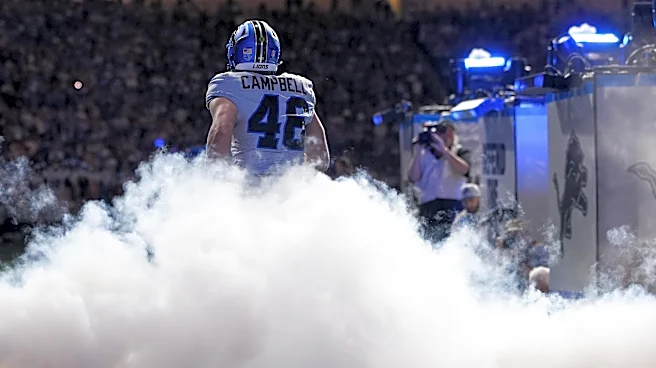



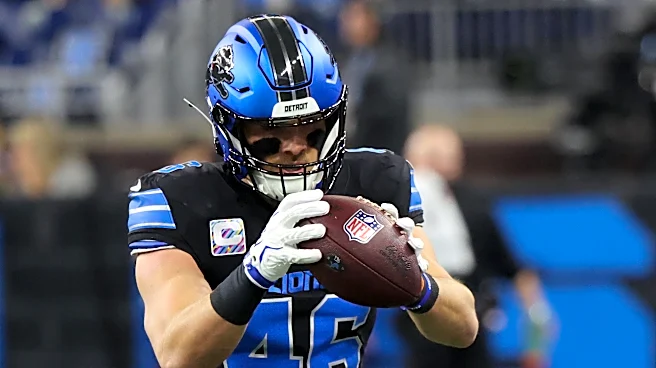
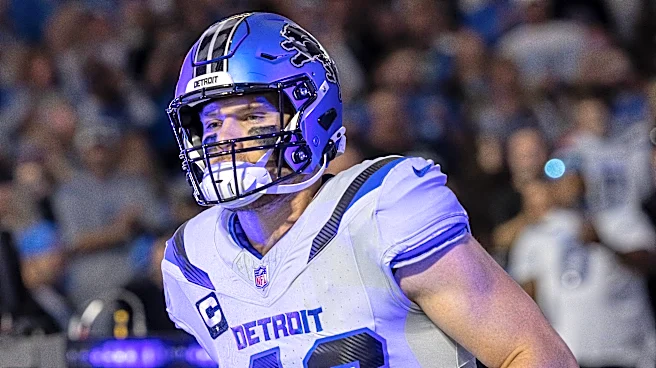
The Detroit Lions returned to the field on Sunday, Nov. 7, for the first time since team captain Jack Campbell sustained a severe neck injury after making a tackle a week earlier.
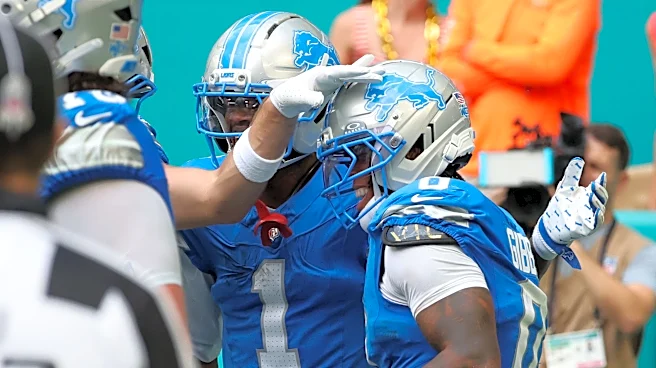
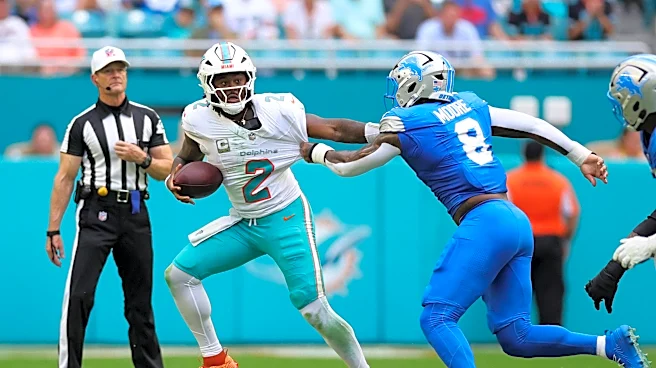
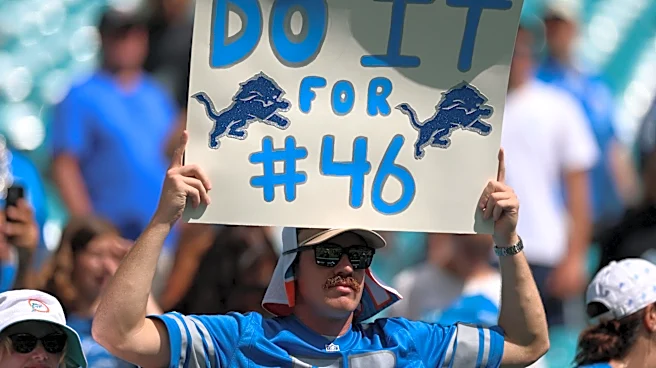
The Lions defeated the Miami Dolphins 19-9 on the road and dedicated the win to Campbell.
"Kinda felt like we owed it to him in a sense," Lions head coach Dan Campbell, who is not related to Jack Campbell, said. "It's all we could do. He'll take the prayers, but he doesn't want the pity. He didn't want wasting time thinking about it. Certainly doesn't want us to not play our best ball and lose a game. So that's what we could do. And we wanted to honor him."
The Lions announced they were placing the linebacker on injured reserve on Nov. 7 as he continues to recover. While
his recovery timeline is unknown and likely will be long, CBS side reporter Melanie Collins said Sunday that Jack Campbell hopes to return to the field.
"He is determined to get back on this football field, telling Dan Campbell: 'Just make sure the house is taken care of until I can get back,'" Collins reported on the CBS broadcast of the game.
What is Jack Campbell's condition?
Campbell announced in a statement on Wednesday, Nov. 4, that he has full movement in his lower body. He is continuing to make progress with movement in his upper body.
It was the first concrete update on Campbell's condition since the injury occurred on Sunday, Nov. 1. Prior to Campbell's statement, the team had issued more general updates, saying that preliminary results were positive.
What happened to Jack Campbell?
Campbell went down with a neck injury after tackling Vikings tight end T.J. Hockenson.
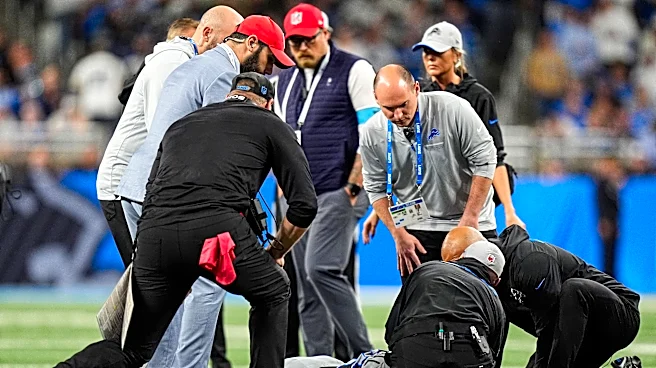
He stayed down as the training staff and medical personnel surrounded him and a cart arrived. Campbell was loaded onto a backboard before the cart took him off the field. He was transported to a local hospital to be evaluated for a neck injury after exiting the team's Week 8 win over the Vikings.
The Lions announced late Sunday night that Campbell was resting and was scheduled to remain in a local hospital overnight for continued evaluation and monitoring.
Rare diagnosis could explain Jack Campbell's recovery update, spine experts say
Medical experts surveyed by USA TODAY Sports said the available information about Campbell’s recovery could only be qualified as good news – while offering a window into why might the linebacker have regained movement in his lower body before his upper body.
Dr. Darryl Lau, a neurosurgeon at NYU Langone’s Spine Center where he’s the director of spinal neurosurgery research, said that the spinal cord appears to be intact based on public updates. While Lau hasn't seen Campbell's medical information, he said Campbell having movement in his arms and legs is another optimistic factor.
The injury occurred because of the hyperextension of Campbell’s head and neck area as he collided with the left hip of Minnesota Vikings tight end T.J. Hockenson. That hyperextension can “ding” the spinal cord, according to Dr. Betsy Grunch, a neurosurgeon based in Georgia with more than 1.3 million followers for her Instagram account “@ladyspinedoc.”
Grunch said a hit like that could damage the central part of the spinal cord and cause swelling that asymmetrically affects the arms more than the legs, as Campbell's statement described. Both doctors said the result is a rare injury called “central cord syndrome."
Another explanation, Lau said, is that Campbell experienced spinal shock – a sudden trauma that is suppressed in the spinal cord. The inflammation resolves itself and the paralysis goes away. Patients typically recover in a day or two, Lau said.
What is Central Cord Syndrome?
Central cord syndrome “looks like a pretty severe spinal cord injury” and certainly can be serious, Lau said. In some cases, Grunch said, it can be extremely painful, with the arms and hands becoming sensitive to touch. A patient’s grip is severely diminished. It’s common in people with spinal injuries who have fallen forward and land on their forehead and extend backward, similar to the action exhibited by Campbell’s head and neck at impact.
“I think it’s great news (if it’s central cord syndrome) because it’s an incomplete spinal-cord injury,” Grunch said, “and if he’s already recovering as quickly as reported, then it’s quite possible he can make a full recovery.”
The center part of the spinal cord contains the nerve fibers that execute arm function, Lau said. The leg function fibers are more on the outside of the spine, Grunch explained, “which is weird, but it is a pretty classic presentation of that type of a spinal cord injury,” she said.
This article originally appeared on USA TODAY: What happened to Jack Campbell? Latest on Lions LB's injury recovery