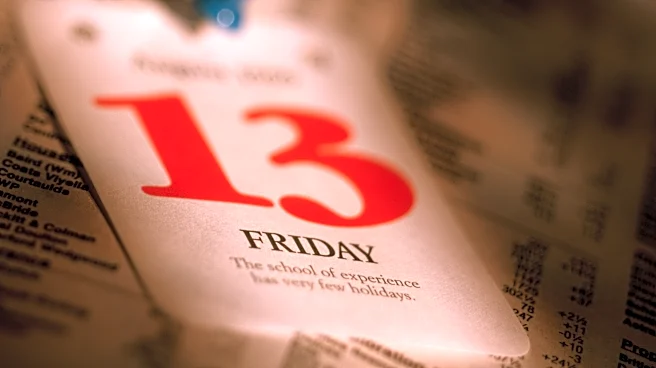








Knock on wood, step around that ladder and keep an eye out for black cats. Friday the 13th is back, and it's the last one for awhile.
Nov. 13 is the third and final Friday the 13th of 2026 (after February and March) and three in a row is rare. The triple play won't happen again until 2027, according to TimeandDate.com.
Whether you're superstitious or not, Friday and the number 13 have each been considered unlucky for centuries, Live Science reports, with roots in the Bible and Norse mythology. Combining them into one especially cursed day is a new idea which caught on in the early 20th century, and Hollywood locked it in with one of horror's best-known slasher franchises.
Here's what to know about the date, where the superstition comes from and
when you'll have to face it again.

When is the next Friday the 13th?
After this week, the next Friday the 13th is in August 2027. Then there's a gap of more than a year until October 2028, just in time for Halloween.
Every year has at least one Friday the 13th and never more than three. In 2026, there were three, in February, March and November. That exact pattern won't repeat until 2037.
Why is 13 considered unlucky?
The number 13 has had a bad reputation of it own for centuries. Fear of it even has a name: triskaidekaphobia, according to Merriam-Webster. Fear of Friday the 13th specifically is called paraskevidekatriaphobia, Britannica notes. That fear is so universal that many hotels and high-rises skip the 13th floor and some leave out room 13.
Some trace the number’s reputation to the Bible, the BBC reports. Judas Iscariot, the disciple who betrayed Jesus, is traditionally described as the 13th guest at the Last Supper, the night before the crucifixion.
Norse mythology has a similar story. Twelve gods were at a dinner party in Valhalla when Loki, the trickster god, arrived uninvited as the 13th guest. The gathering ended with the death of Balder, a beloved god.
Christians in medieval Europe also linked 13 to witchcraft, according to Live Science. A witch’s coven is traditionally said to have 13 members.
13 in pop culture
The number’s reputation makes it handy for writers who want to hint at trouble ahead.
In “Harry Potter and the Prisoner of Azkaban,” Professor Sybil Trelawney, the eccentric Divination teacher, hesitates to join a Christmas dinner with 12 people already at the table. She warns that when 13 people dine together, the first to stand up will be the first to die. Fans have long pointed out that there may already have been 13 people at the table, and they argue the scene foreshadows a major character’s death. We won’t spoil who.
Then there’s the obvious one. The “Friday the 13th” franchise, which began in 1980 and has grown to a dozen films, made hockey-masked killer Jason Voorhees a horror icon as he stalks camp counselors at Crystal Lake. (Spoiler for a 46-year-old movie: Jason isn’t the killer in the original. His mother is.)
Why is Friday considered unlucky?
These days, Friday is the day most Americans look forward to. That wasn’t always so. For centuries, Friday was considered the unluckiest day of the week.
Christian tradition holds that Jesus was crucified on a Friday, and in Britain, Friday was traditionally the day executions were carried out by hanging, according to the BBC.
Put an unlucky day together with an unlucky number and you get a date that still makes people uneasy, even if they’re only using it as an excuse to watch a scary movie.
Julia Gomez is a Trending reporter for USA TODAY and covers space phenomena, scientific studies and natural disasters. Connect with her on LinkedIn, X, Instagram, and TikTok: @juliamariegz, or email her at jgomez@gannett.com
This article originally appeared on USA TODAY: Friday the 13th: Superstitions, history and what's next