



Wildlife cannot survive without habitat – a truth most Americans understand instinctively. A species may be legally protected, but if its nesting grounds are bulldozed, its wetland home drained or its migration corridors severed, extinction becomes only a matter of time.
For more than five decades, that simple reality has shaped how the Endangered Species Act has protected America's wildlife.
Yet, with the stroke of a pen in July, the Trump administration significantly weakened the ability of that statute to protect species’ habitat. And recently the administration announced another set of actions to weaken the act, including eliminating the presumption that a species designated as threatened should automatically receive key protections, and watering
down the central role that science is supposed to play in identifying which habitats are critical to a species’ survival.
As if this multifaceted attack on America’s wildlife and wild lands was not concerning enough, President Donald Trump signed two executive orders on July 13 that reduced the size of Bears Ears National Monument and Grand Staircase-Escalante National Monument by roughly 90%.
American people value wildlife
These actions are remarkable and unfortunate for many reasons, not the least of which is that they are clearly contrary to what the American people want.
The Endangered Species Act remains one of the nation's most successful – and most popular – environmental laws because Americans understand that abundant wildlife is part of our shared inheritance and our responsibility as stewards of our lands and waters.

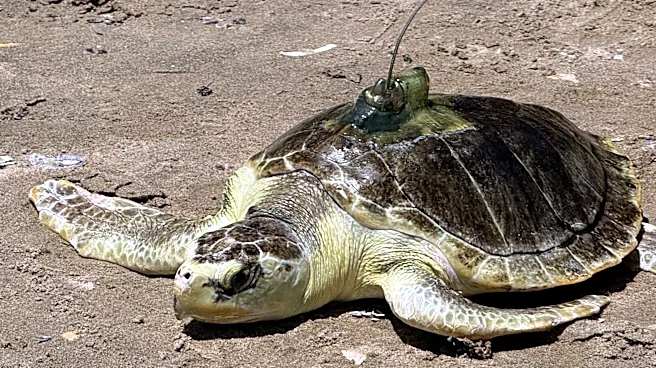
They believe that future generations deserve the opportunity to experience monarch butterflies, sea turtles and countless other species in the wild, not just in photographs or museums. They also want our spectacular public lands to be protected from rampant development.
However, the administration’s recent actions are also noteworthy because they demonstrate that the fate of America’s wildlife and wild lands is increasingly determined by our nation’s swinging political pendulum rather than enduring scientific principles or our core values.
A number of the policy changes noted above were also made by the first Trump administration, only to be reversed and restored just a few years later by the Biden administration.
In short, America's approach to wildlife conservation has become increasingly vulnerable to, and dependent upon, election cycles.
Take partisanship out of protecting wildlife
America’s wildlife deserves better. Grizzly bears do not become less threatened because a new administration takes office. Rice's whales do not require less habitat because political priorities and energy preferences change.
The ecological and cultural importance of national monuments does not diminish on a president’s whim. And the science guiding wildlife conservation does not fundamentally change every four years. Politics, however, does.
Conservationists should vigorously challenge decisions that weaken existing wildlife protections. Defenders of Wildlife is doing exactly that in court. But if our ambitions begin and end with reversing today's rollbacks, we will miss a larger opportunity.
We reject the premise that conservation should be a flashpoint in today’s culture wars or a plank in one political party’s platform but not the other’s. The visceral, nonpartisan response to proposals to sell off federal public lands – and the widespread concern over efforts to reduce protections for national monuments – demonstrates that conservation remains a deep-seated value capable of bringing Americans together, even during this highly polarized moment.
We must build on this common ground.
The goal, therefore, should not simply be to reverse specific policy changes detrimental to America’s wildlife and wild lands. It must be to create a durable conservation framework that is informed by the best available science and capable of meeting the profound ecological challenges of the 21st century.
New threats demand different tools, stronger partnerships and more innovative approaches – all of which will require a new openness to working with anyone serious about advancing conservation.
Administrations will come and go, but the fate of America's wildlife should never depend on which way the political pendulum is swinging. Beginning now, let’s all commit to put politics aside and build lasting solutions for America’s wildlife and wild places.
Andrew Bowman is the president and chief executive officer of Defenders of Wildlife. His career has been focused on advancing bedrock conservation laws and protecting places for wildlife to thrive.
This article originally appeared on USA TODAY: US wildlife depends on our elections. That's the problem. | Opinion