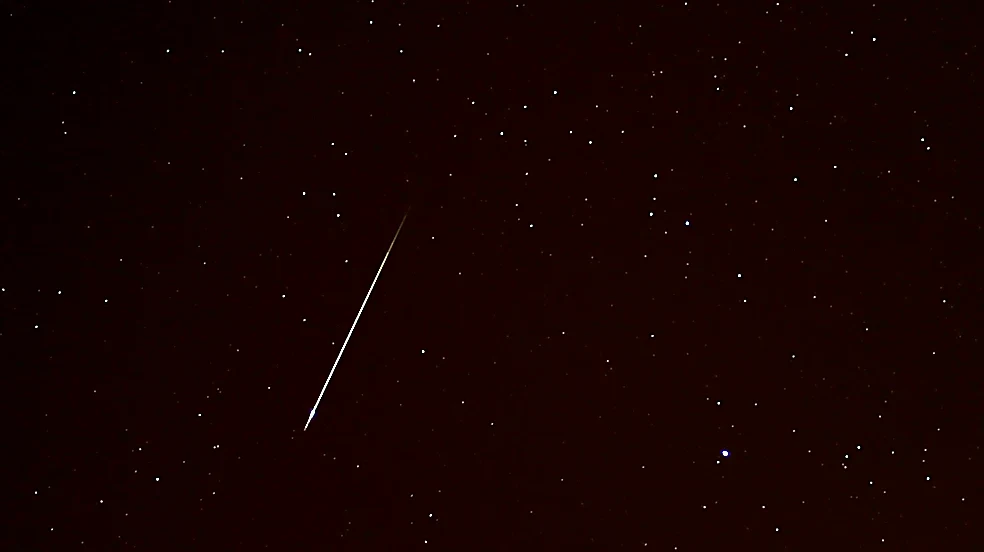








The Orionid meteor shower, or the Orionids, will peak soon, giving astronomers and stargazers a show.
The meteor shower will soon peak, meaning it will produce the most meteors, or shooting stars, around this time, according to NASA. It can produce between 10 and 20 meteors per hour.
It's also considered to be one of the most beautiful meteor showers, according to NASA. The agency also states that the shower produces bright, fast meteors that travel at around 41 miles per second and leave behind "trains," which look like trails or tails of light that glow in the night sky.
The meteor shower is created by debris left behind by Halley's Comet, per NASA.
Here's what to know.
When will the Orionid meteor shower peak?
The meteor shower will peak on the night of Wednesday, Oct. 21, into the morning
of Thursday, Oct. 22, according to NASA and the American Meteor Society. While the shower peaks in mid-October, it will continue until Nov. 7.
When is the best time to view the Orionid meteor shower?
NASA says the best time to view the shower is a few hours before dawn.
During its peak, it will produce the most meteors, giving folks more chances to see shooting stars produced by the shower.
But there is a catch. In 2026, the peak will occur days before the full moon, on the night of the waxing gibbous moon, so the moon's light may interfere with the show and drown out the shower's dimmer meteors.

Will the Orionid meteor shower be visible in the US?
Yes. The Orionid meteor shower will be visible in both the Northern and Southern Hemispheres after midnight local time, per NASA.
Where should you face to see the Orionid meteor shower?
The Orionid meteor shower appears to originate from the Orion constellation, in the southeast sky, according to NASA. However, meteors will be visible across the night sky and can appear in any direction.
For the best view, those in the Northern Hemisphere should lie flat on the ground or sit in a chair with their feet facing southeast. Go to an area away from city lights to ensure the lights won't wash out the meteors.

Do you need any equipment to see the Orionid meteor shower?
No, onlookers will not need any equipment to see the meteor shower. In fact, you don't even need a telescope or binoculars, according to NASA.
A telescope can limit your view of the night sky. You want to ensure you have a clear view of the entire night sky, especially since multiple showers are occurring simultaneously, and a falling star can come from any direction.
If you do decide to try to watch the Orionid meteor shower, make sure you do the following:
- Check the weather and cloud coverage in your area to make sure conditions are optimal to view the meteor shower
- Find a dark location away from light pollution
- Give your eyes 20 to 30 minutes to adjust to the dark
- Avoid looking at phones or bright lights
To be as comfortable as possible, dress appropriately for the weather, use bug spray, and bring a blanket, sleeping bag or a reclining chair to lie down on.
2026 meteor show schedule
Here is a list of other major meteor showers happening for the rest of the year, according to the American Meteor Society:
- Southern Taurids - Sept. 20 to Nov. 20; peaks on the night of Nov. 4
- Northern Taurids - Oct. 20 to Dec. 10; peaks on the night of Nov. 11
- Leonids - Nov. 6 to Nov. 30; peaks on the night of Nov. 16
- Geminids - Dec. 4 to Dec. 17; peaks on the night of Dec. 13
- Ursids - Dec. 17 to Dec. 26; peaks on the night of Dec. 21
- Quadrantids - Dec. 28 to Jan. 12; peaks on the night of Jan. 3
Julia Gomez is a Trending reporter for USA TODAY and covers space phenomena, scientific studies and natural disasters. Connect with her on LinkedIn, X, Instagram, and TikTok: @juliamariegz, or email her at jgomez@gannett.com.
This article originally appeared on USA TODAY: The Orionid meteor shower starts to peak tonight. Where to see it