







A powerful eruption from the sun could produce a dazzling northern lights display across parts of the United States later this week, according to the National Oceanic and Atmospheric Administration's Space Weather Prediction Center.
The sun released a fairly powerful solar flare early Tuesday, Aug. 25, followed by a coronal mass ejection, a large cloud of solar material that is forecast to pass near the Earth by Friday, Aug. 28, Fox News reported. According to the Space Weather Prediction Center, the ejection or CME could increase the chances of colorful auroras after sunset if conditions line up.
NOAA has issued a G1, or minor, geomagnetic storm watch for Thursday, Aug. 27, and a G2, or moderate, storm watch for Friday, Aug. 28. The agency said
Friday's higher storm potential is tied to the expected arrival of solar material released during Tuesday's eruption.
Exactly how bright the aurora becomes, and how far south it can be seen, will depend on how the incoming solar material interacts with Earth's magnetic field, according to Space.com.

Where could the northern lights be visible?
According to the National Oceanic and Atmospheric Administration's Aurora Dashboard, the northern lights could be visible across multiple states, including but not limited to the "northern and upper Midwest states from Idaho to New York."
The forecast could change, along with the number of states that could see the lights. Tonight's chances for geomagnetic activity remain low but are expected to increase Thursday and Friday.
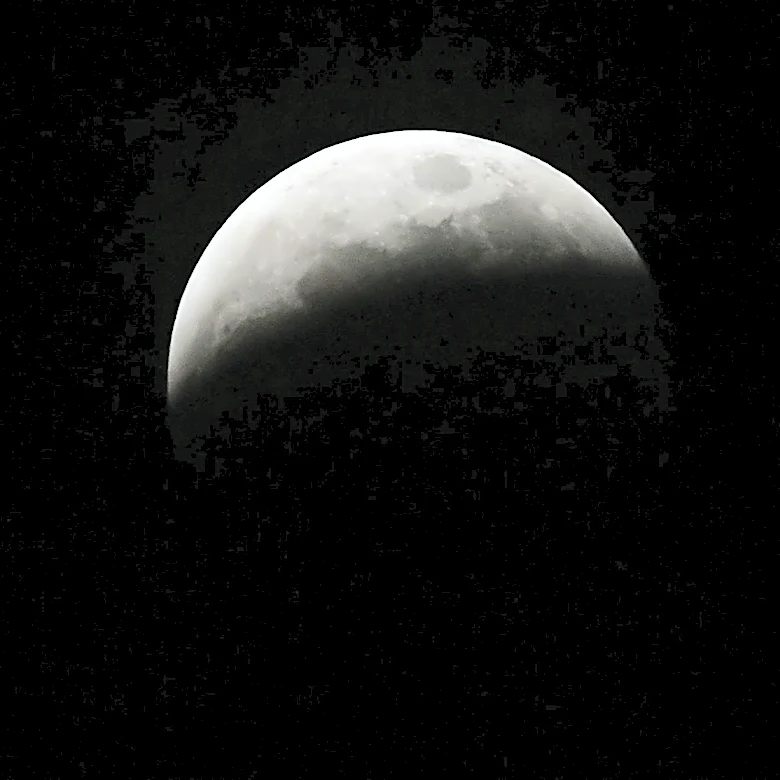
If the northern lights are seen in some states, it could be extra special due to a partial lunar eclipse also happening Aug. 27 and Aug. 28.
Why are the northern lights more likely this week?
According to NASA, solar flares are powerful bursts of energy released from the sun. They are classified from A to X, with M-class flares ranking as the second-strongest category.
Tuesday's solar flare was classified as an M6.9, putting it in the upper range of the 1-9.9 moderate M-class scale. Forecasters say the CME could pass near Earth on Friday, increasing the chances of a geomagnetic storm and a brighter northern lights display.
What are the northern lights?
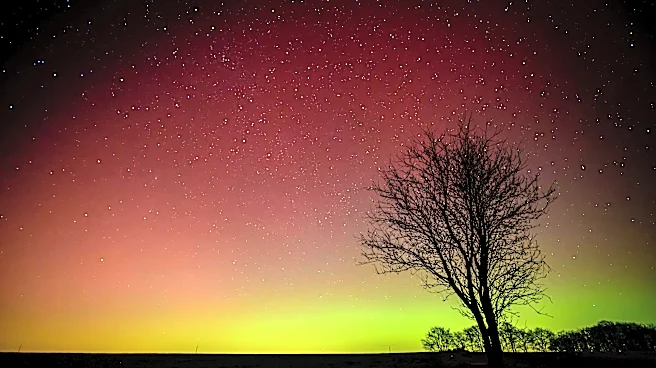
The northern lights, also known as the aurora borealis, are colorful displays that occur when charged particles from the sun collide with gases high in Earth's atmosphere, according to NASA. Oxygen typically produces green and red colors, while nitrogen can create blue, pink and reddish-purple hues.
How to improve your chances of seeing them
NOAA and astronomy experts recommend viewing the aurora from a dark location away from city lights with a clear view of the northern horizon. If the lights appear faint, try using your smartphone's night mode, which can often capture colors that are difficult to see with the naked eye.
Reporter Anthony Thompson can be reached at ajthompson@usatodayco.com, or on X @athompsonUSAT.
This article originally appeared on USA TODAY: Powerful solar flare could spark northern lights this week