


SOUTH WILLIAMSPORT, PA — It all started for Karl Ravech in Needham, Massachusetts, before and after dinner, on fields and courts with friends, playing what he calls “runaround sports.”
“I get asked, ‘How'd you get into broadcasting?’ ” Ravech says. “And a lot of people got into broadcasting because they watched the event and wanted to emulate a broadcaster. That was never me. I was outside running around.”
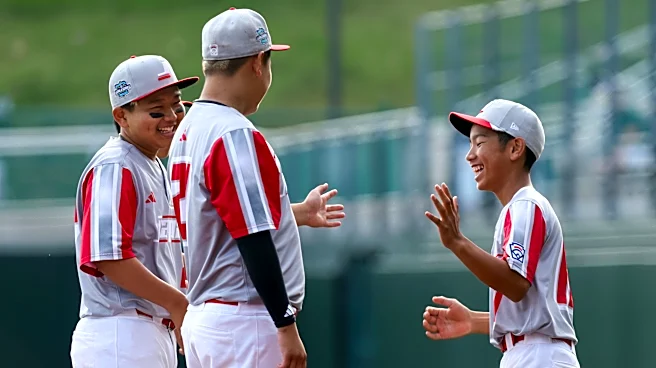
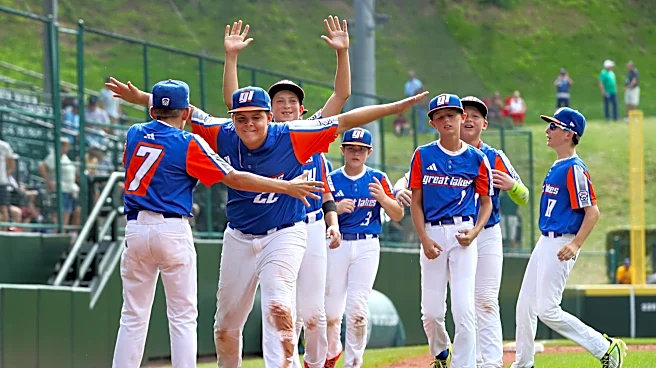
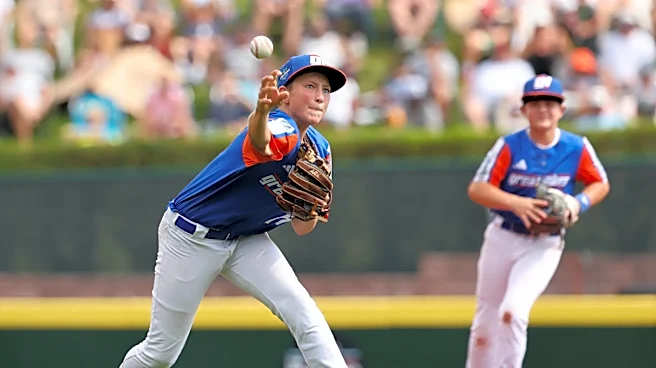
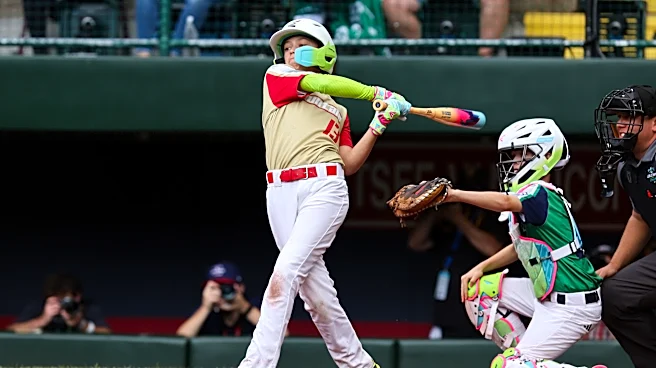
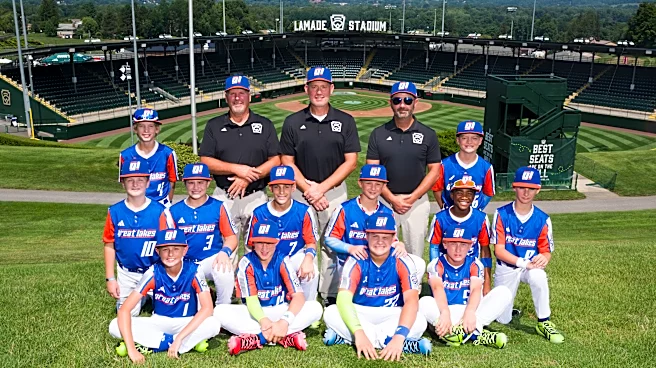
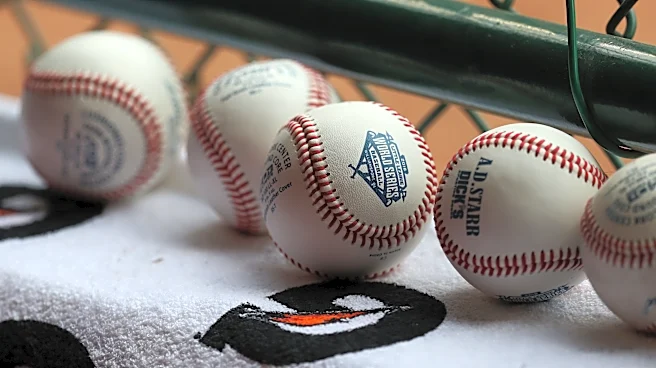
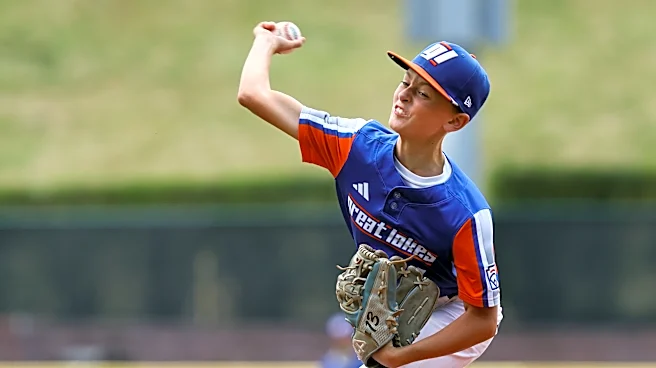
It will end, at least for now, in this picturesque setting where 12-year-olds are doing pretty much the same thing at an event Ravech has called for 21 years.
“ESPN treated me really well,” he tells USA TODAY Sports. “I got a chance to cover the major league World Series for two decades, College World Series I've called for a long time, and Little
League World Series. So I see it at every level, and I always say Little League is my favorite event because there's just so much joy associated. It's the fun of the sport, which is what it's intended to be.
“It's playing with your pals that you grew up with, you go to school with. It's sportsmanship, it's not do or die, nobody's gonna get fired. Nobody's gonna get let go because they didn't make a play. You're still learning, you're still impressionable at that age.”
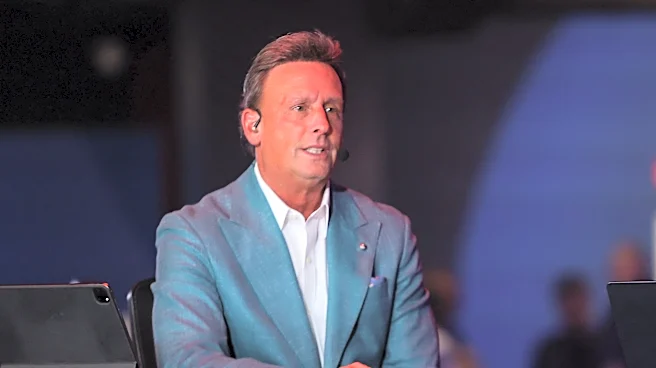
Ravech is now 61, and after 33 years of entering living room and dens and devices around the world broadcasting sports, he expects Sunday’s Little League championship game between Nevada and Curacao on ABC to be his last with the network. He was part of ESPN’s layoffs last month.

“Given the opportunities that I've had, to cover the events that I've had, to be so associated with a sport, the idea that I got to ESPN in 1993 and I'm sitting here in 2026, and apparently looking for work elsewhere, I'm not nearly as attractive as an employee if I didn't have all the experiences,” he says. “I just learned so much about so many people, worked with incredible teammates.”
Ravech spoke with us about his career and shared his thoughts on youth sports, which he has developed a passion for as a broadcaster and dad.
Authenticity is 'most important,' as a broadcaster and a parent
Ravech says he has always tried to be the same person as he is on your screen.
“Authenticity is the most important characteristic of any broadcaster,” he says. “I've never been a shtick person, and I think people appreciate that side of it. … We're condiments to the meal. A steak is what you're coming to eat. And that's the role and goal to me of a play-by-play guy. This thing has afforded me the opportunity to just interact with people, to meet people, to cover a game that I love, respect the people that are involved in it, never be too judgmental about anybody because you learn when it comes to a pitching change, whether it's Little League baseball, college or Major League Baseball, (coaches) know their players a lot better than I do, and the fans do.”
The task gets trickier to restrict yourself from influencing the story as a parent observing your kid play. We want to be part of coaches’ decision-making and we challenge them – sometimes loudly – when they make decisions that don’t benefit our child.
There are exceptions, of course, but many coaches grow to learn their teams, and there interactions with your kids can be life-altering if you give them a chance.
Ravech has two sons, Sam, 31, and Max, 26. Sam has followed him into broadcasting. In his office, he has a picture of Max and him at the Little League World Series when his younger son was 8 or 9.
“Sam came up to visit earlier this week and Max is coming up over the weekend to be here,” Ravech says. “So I'm grateful they're coming up. They said, ‘Should we come, would you like us to come?’ My first reaction is you don't need to do that. They’ve seen me do the TV thing, but I realized to share in what very well may be the last Little League World Series, it means something to them. They know it means something to me.”
He treasures how when he hosted Baseball Tonight and they were boys, his program didn’t start until 10 p.m. ET. Their Little League games often started at 6 or 7. He would leave the studio after the production meeting in the Connecticut studios and still make their baseball and soccer games.
He could make every one of them on the weekends.
“I didn't live vicariously through them because I played sports as a youngster,” he says, “but boy, I respect and love the love and the pride that parents have watching their kids perform. I would just guard them against living their life through their kids. This is their journey. Let them experience their journey, let them make choices, don't force them into a sport just because you played it. They're smart enough to let you know when they're 9, 10, 11 like, wow, I can see Max really likes lacrosse. Max really likes soccer. Max may not like baseball or basketball. That's on them.
“I love seeing parents that have their heart and their head in the right place.”
Finding community in a locker room, and outside the studio
As he started out as a television reporter and anchor in Binghamton, New York, and Harrisburg, Pennsylvania, and then moved to ESPN in 1993, Ravech grew to love the clubhouse culture of sports.
“That's probably one of the great aspects of being in the job that I've been in is when you get to see the way that kids, young adults, and grown men get along once you're inside a clubhouse, and their willingness to accept the differences, their willingness to deal with language barriers, their willingness to accept some guys have bad days, and that's OK and we're gonna lift them up," he says. "That spirit about men, I think, we can do a better job of as male parents.”
He started out as an overnight "SportsCenter” anchor, with co-hosts like Craig Kilborn, Steve Levy, Mike Tirico, Gary Miller and Linda Cohn. He did it at 2 or 2:30 a.m. ET to serve the West Coast. He fed off the camaraderie of his colleagues, but would come to realize he was taking the relationship with his audience for granted when he was in the studio.
“You're inside a box with three camera people, two analysts, a researcher, and that's it,” he says. “So, the intimacy of the room is sort of who you think you're appealing to, talking to, performing to. You never consider the millions of people over that length of time that are actually watching.”
He started to realize, as his career went on and he got out to travel all over the country and to Australia, Scotland, South Korea and other places, that “it is a full supermarket of unbelievable experiences with people that I truly love doing exactly what I love.”
It’s come full circle for him since ESPN’s high-profile layoffs earlier this summer. ESPN president Jimmy Pitaro said in an all-staff memo, obtained by USA TODAY Sports, that most of the job cuts are a result of its acquisition of the NFL Network.
“I think the suddenness of it, the way that it went down, shocked a lot of people,” Ravech says. “It surprised me, but again, it's the nature of the business, which is ever-changing, and I've been incredibly touched and have an enormous amount of gratitude for those people who have been willing to reach out, whether it's via text, email, social media or certainly here in person.
“I've gotten some amazing phone calls and voicemails from people that I didn't expect to get it from. So it's really heartwarming. I hope my boys look at the comments and it's not just about your broadcasting ability. It's about who you are as a person.”
Karl Ravech thanks his broadcast crew as he signs off of ESPN's MLB coverage for the final time. pic.twitter.com/0LVLQyGpwS
— Awful Announcing (@awfulannouncing) August 24, 2026
During the MLB Little League Classic on Aug. 23, at Bowman Field in Williamsport, the Braves’ Chris Sale and Brewers’ Garrett Mitchell offered on-air messages that told Ravech, in his words, “I know this is painful, but thank you.”
“The idea that they're willing to kind of put their arm around somebody, who they become, I guess, intimate with only through a screen, on a TV or a phone or an iPad, is really wonderful,” he says.
That’s a wrap for from Williamsport. We have a special team that truly loves this event! Bittersweet leaving, especially knowing this is @karlravechespn last ride. Ravy, thank you for what you have meant to the sport of baseball over the last 33 years. Your voice is synonymous… pic.twitter.com/v0IvFAcz04
— Chris Burke (@ChrisBurke02) August 27, 2026
The weekend has come full circle at Lamade Stadium, which hosts the Little League World Series. It traces back to those days in the boxy studio in Bristol, Connecticut, when it felt like he was only with his colleagues.
“Every time I've left Lamade Stadium, there are people who are hugging me and taking pictures and saying, ‘It's not gonna be the same,’ and how much they're gonna miss me,” he says. “My wife, to her credit has said, “Look, it's OK to take your flowers and listen to what they're saying, 'cause these people sincerely mean it.’ None of that stuff ever occurred to me, but I also never thought it would be over in 2026. I thought I'd be coming back for years to come.”
What's next? You play the long game, and you earn respect
Ravech has a podcast called Dirt From The Dugout in which he discusses youth sports issues with sports figures. He is passionate about kids not specializing in sports before age 13, and how being a star when you’re really young doesn’t necessitate you’ll be one when you’re 15.
“I think a lot of the older folks love to kind of live vicariously through them,” he says. “And I think they sort of use their experiences as a way to hope that the present and future for youth sports is as pure as it was when they played, and clearly that's not the case.
“I think the parents are caught between a rock and a hard place. I don't necessarily think it's their fault, but I think that they're drinking the Kool-Aid on ‘you have to get involved in these travel teams and select teams if you want your child to maybe play beyond youth sports.’ I would argue that's not the case. I've seen enough kids start at a young age being really good athletes. And if you're that good, those good teams will find you. Now, the argument's gonna be, well, ‘The better way to create it is to get involved with these travel teams.’ To me, you should play with your friends, you should play with your schoolmates, you should play with your neighbors until you're 12.
“If you take the joy out of youth sports, you can conceivably poison a kid's mind as they grow older and you just never want to do that. Make sure it's fun.”
Ravech played baseball and tennis as a kid, then basketball and soccer through high school. He would “slam dinner down” and go back out and play sports.
He has wanted to be a part of the Little League World Series because watching it, with a friend, a child or grandchild, stimulates stories about the best parts of sports.
He says he could involve himself in youth sports more as a messenger about the tone we need to take with it as parents. We don’t always have to be so serious.
“All of the things that appeal to me about sports, more so than some of the stuff going on now at the professional and collegiate level, is why I would always love to come to Williamsport to see what these kids are doing,” he says. “And the beautiful part is that this is an international event with the international language of baseball.”
Ravech will soak it all in one last time Sunday before he decides what he will do next.
“I haven't given too much thought to it,” he says. “It's a little fresh, and I'll be honest with you, there's a part of me that, at least in the short term, can get behind the idea of you've just worked 33 straight years and you ended up, certainly, on the latter half, traveling all over the place. So, the idea of not seeing an airport appeals to me.
“But it's contrasted by the idea of not seeing Jimmy Dykes or a Kyle Peterson and Chris Burke, and I'm limiting it just ’cause I'm kind of randomly throwing names out, but not being around them. … I'll miss the people I love and the work that I love, but I'm looking forward to a little break. There will be a next.”
Steve Borelli, aka Coach Steve, has been an editor and writer with USA TODAY since 1999. He played baseball in high school, rowed in college and spent 10 years coaching his two sons’ baseball and basketball teams. He and his wife, Colleen, are now sports parents to a college and high school baseball player. His Coach Steve column is posted weekly. For his past columns, click here.
This article originally appeared on USA TODAY: 'There will be a next': Karl Ravech shares booth memories upon ESPN exit