


LONDON –Prince Harry is opening up on depression, loss and the powerful effects of grief.
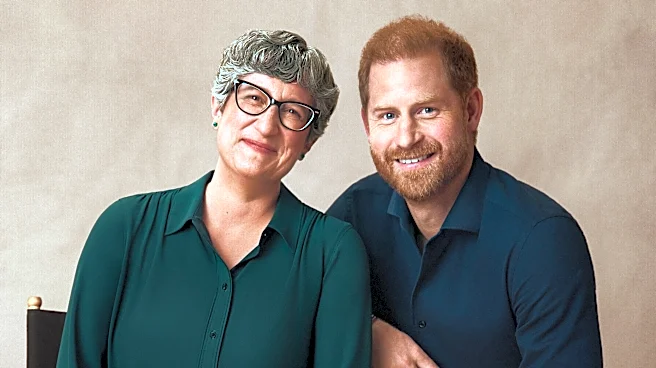
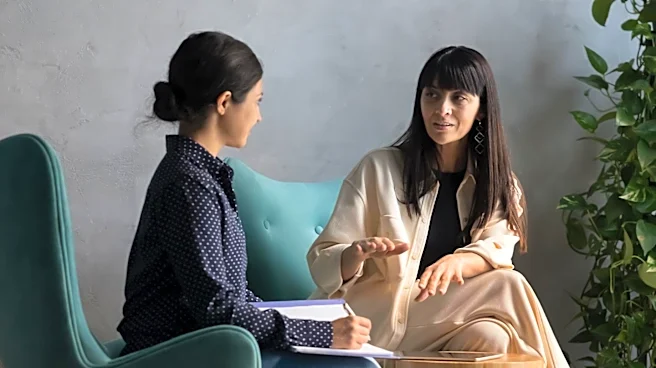
Harry spoke out on grief, depression and Princess Diana in a new MasterClass on grief, created by the Duke of Sussex and neuroscientist Dr. Mary-Frances O'Connor, which went live Oct. 8. In the episode, titled "Redefining Grief: Building Resilience Through Loss," the pair pledge to share tools to help others navigate painful experiences, drawing on their own deeply personal journeys of losing their mothers and O'Connors research into the science of bereavement.
"Men are encouraged not to grieve," the duke says in the first episode. "I think men and young boys are brought up to believe that crying is weakness, crying is unacceptable, crying is not what men do."
But he dismisses that way of thinking. "You have to be able to cry," he says, describing himself as someone who "suppressed his emotions for 20 years," which had a negative impact on his mental and physical health.
In the MasterClass, footage flashes back to 1997, showing a 12-year-old Harry at the funeral of his mother, Princess Diana. The duke says he spent years "hiding the pain" and assuring people he was "fine" when really, he was experiencing an "emotional shutdown."
Harry also recalls joining the British army, saying that military life was a "perfect distraction" and that he spent years in an "adrenalized state" amid the depths of grief, before experiencing panic attacks.
USA TODAY understands that the MasterClass was filmed in California over the summer. The release comes ahead of World Mental Health Day on Oct. 10.
Here are the key takeaways from Harry's sitdown with O'Connor.
Prince Harry: It felt 'disloyal' to Princess Diana to be 'happy'
Speaking about life after the death of his mother, who died in a Paris car crash in August 1997, Harry says he spent "so long emotionally numb to a large extent, because I felt disloyal and guilty for the possibility of being happy and joyful without her."
He recalls thinking he "had to be sad" as a way "to prove to her that I missed her."
The duke says he later discovered amid "a huge mental shift" that his mom would have just wanted him to be happy.
Harry says days after Diana's death, "thousands of people" came to pay tribute to the princess outside London's Kensington Palace. "We went out to go and greet them," he says adding that crying strangers were "showing more emotion" than he and older brother, Prince William, could.
"It felt very very strange," he says, revealing he felt "guilty" for not being able to react the same way.
Diana has 'turned up' for me in the last 6 years, Harry says
As the prince and O'Connor discuss the loss of both their mothers, O'Connor explains that she still feels deeply connected to hers.
"It takes work," Harry says, reflecting on when he feels closest to Diana. "It depends on how aware of her I am.
"A lot has happened in my life in the last six years and she has turned up at moments where it makes complete sense," Harry said smiling, though he notes those moments "are fleeting." He expressed a desire to "work harder" at connecting to Diana more.
Harry and Meghan relocated to Britain in late August after spending six years overseas, mainly in Meghan's home state of California. It's been a turbulent time for the pair who have faced privacy and security concerns, public scrutiny and tabloid intrusion amid an ongoing rift within the royal family.
"It makes me laugh out loud," Harry says when he sees signs from his mom. "This is not a coincidence, there is no version where this is anything else but you. I feel it as an energy and also it's visual," he says adding that he often looks to Diana for guidance when he feels lost.
"I do find when times are tough, I'm like, 'Hi, I need some help here, guide me in the right way.'"
Prince Harry 'slipped into depression' following relocation to Canada
In the MasterClass, Harry tells O'Connor what life was like after he and wife Meghan relocated to Canada in 2020, with their son Archie. The family, he says needed "space" to think. Their move came amid their bombshell announcement that they had decided to step back from their roles as working royals.
“Being in Canada, away from the stressful environment where presumably my body was just pumped full of adrenaline, within two or three days, I experienced this adrenaline crash, something that I'd never experienced before," he says.
"It was as if I needed stress in order to get the adrenaline to make my brain function because I became useless around the house," he recalls. "I actually slipped into depression for about two weeks and I felt like I couldn't function without adrenaline."
Harry forgot what Diana's laugh and voice sounded like
Harry explains that as he shut down emotionally, he buried not just bad memories but also good memories connected to his mother.
"I forgot what my mom sounded like. I forgot her laugh. I couldn’t really visualize what she looked like without looking at a photograph of her," he says.
"It took me a long time to find my path to resilience. I didn't cry when I was told my mom died, only at her burial, and then not again for nearly two decades," he admits, sharing that at the time he considered not crying as "strength."
"I was a 12-year-old boy with no permission to fall apart and no roadmap for how to heal," Harry says.
This article originally appeared on USA TODAY: Prince Harry 'slipped into depression' after royal exit with Meghan