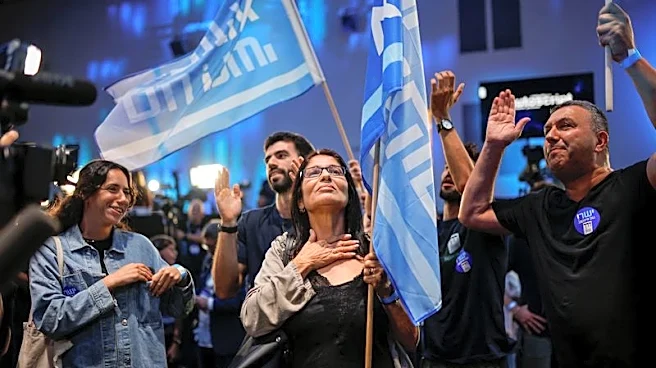



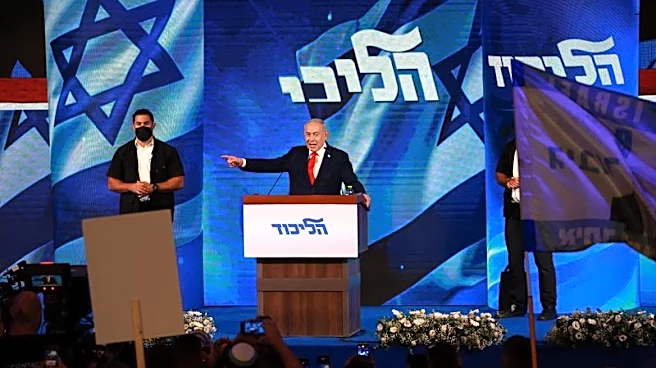


Israelis went to the polls for the first time since the Hamas attacks of Oct. 7 in an election that is viewed as one of the most consequential in years.
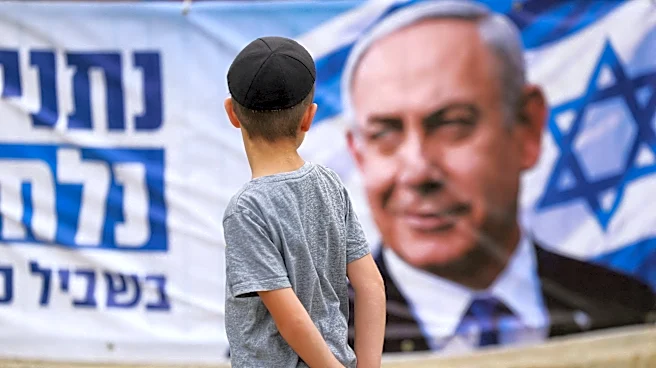
The outcome, still undecided as polls closed Oct. 27, will determine the fate of Prime Minister Benjamin Netanyahu, a key ally of U.S. President Donald Trump and a leader who has reshaped Israel during more than 19 non-consecutive years in power.
Trump is closely linked to Netanyahu after both countries attacked Iran in February, recently endorsing him as a “Warrior Prime Minister.” The campaign put Trump’s face alongside Netanyahu’s under images of fighter jets on billboards in Tel Aviv.
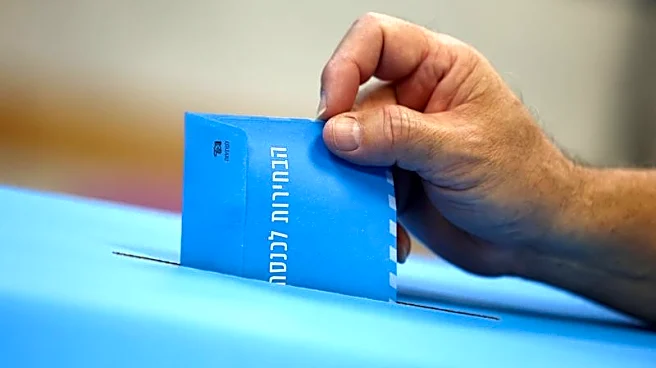
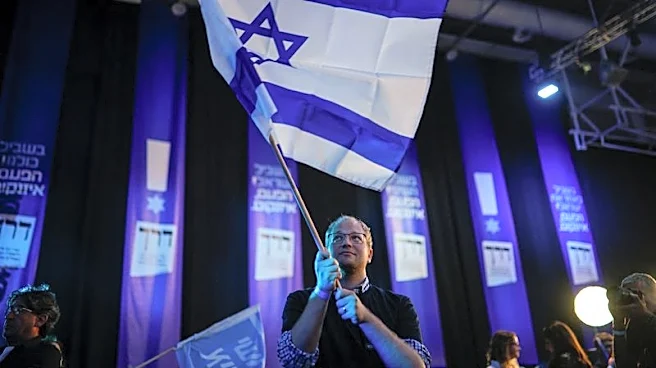
Long lines formed outside polling stations in Israel on Oct. 27. The vote was expected to be a referendum on Netanyahu's
right-wing coalition of nationalist and religious parties, his handling of the Hamas attacks and the ensuing wars in Gaza, Lebanon and Iran.
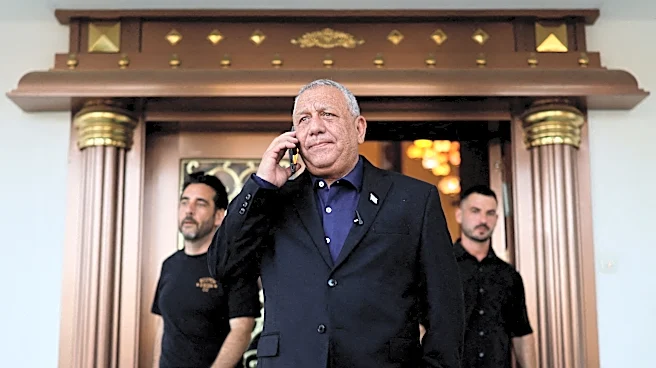
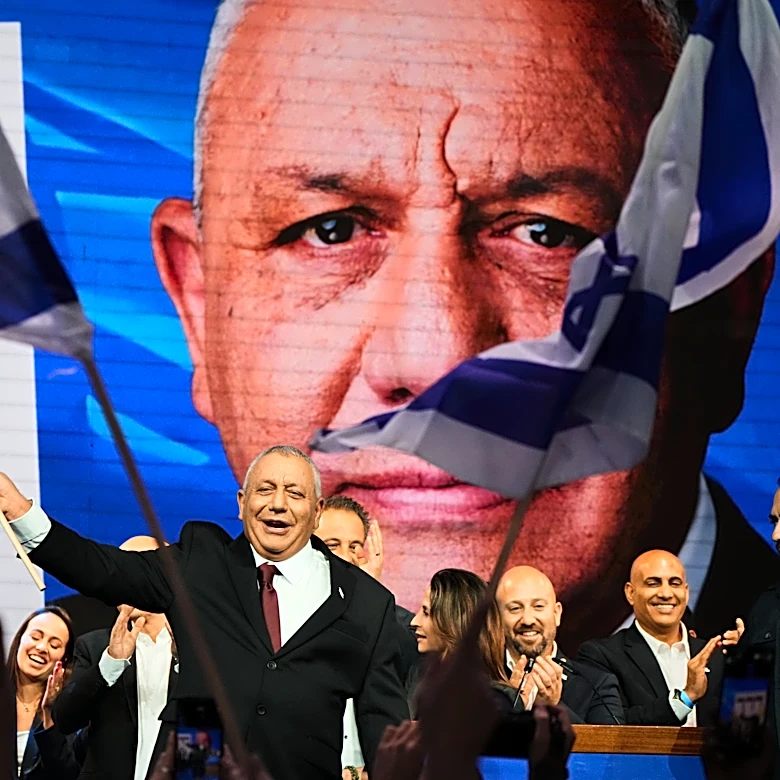
Opposing him is former Israeli military chiefGadi Eisenkot, who leads a more centrist party bloc. His coalition is viewed as putting greater emphasis on democratic institutions and checks on power.

Many Israeli voters view the election a potential watershed moment for the future of a divided country, with debates over war, judicial independence, military service for ultra-Orthodox Jews, democratic traditions and policies that have deepened its international isolation.
The election also carries stakes for the United States, whose Congressional midterm elections are just a week away. As the Trump Administration struggles with an unpopular war that has driven up gas prices, Trump and Netanyahu have hinted at more strikes.
Why the results could be complicated
With a large and early turnout in voting, opinion polls had shown a close race. But it will take time to determine the winner.
That’s because Israelis cast votes for parties, not candidates. Parties must win at least 3.25% of votes to win seats in Israel's 120-seat parliament, known as the Knesset. No party is expected to win an outright majority.
The decisive phase comes as leaders bargain with other parties to assemble a majority of 61 seats, according to the Council on Foreign Relations.
That could take weeks or months. If neither Netanyahu nor Eisenkot can form a governing coalition, Netanyahu could stay on until another election is held.

Trump could end up with a diminished Netanyahu and an Israel paralyzed by another drawn-out political standoff as he pushes to move past the war, Axios reported.
Netanuahu has cast the war in Iran as unfinished business shared by the two nations.
"Donald, we have a job to finish," Netanyahu said in a video of a telephone conversation with Trump that he posted on social media, apparently referring to Iran, USA TODAY previously reported. "We'll finish it together. We'll finish it, and no one else will do it."
How Israeli-Americans are flying to Israel to vote
It’s estimated that tens of thousands of Israelis living in the United States and other countries expected to fly in for the election, according to AID Coalition, a U.S.-based nonprofit focused on Israel's democracy.
"It doesn't matter what side of the political spectrum you're on, everyone views these elections as going to be critical," Jonathan Barsade, AID Coalition's president, told The AP.

One dual-national Israeli citizen who lives in the United States and returned to Israel to vote said that if Netanyahu's hawkish bloc returns to power, he is not sure he will ever come back, USA TODAY previously reported.
He said the Israel he knows and loves would be gone, having effectively devolved into a coldhearted security state without sufficient judicial oversight. He asked not to be identified for fear of a backlash from fellow Israelis.
Maya Ben-Meir, an Israeli musician in New York, told the Times of Israel that many in her circle want to oust Netanyahu, for, among other things, opposing a state inquiry into the Oct.7 invasion and not taking responsibility.
“Whoever’s in charge in Israel affects Jewish life all over, throughout the globe,” she said.
Other issues facing whatever coalition leads the country include settler violence in the West Bank, debate over Gaza’s reconstruction and a controversial move to reduce the power of the judiciary.
Israel has more than 7.3 million registered voters. It’s not clear whether the numbers of Israeli citizens who live abroad and traveling to vote will affect the election
Who is Eidi Eisenkot?
Eisenkot, 66, is Netanyahu's main rival.
He was chief of staff to the Israeli Defense Forces from 2015 to 2019 and later joined Netanyahu’s wartime cabinet after Oct. 7. One of his sons and two nephews were killed fighting in Gaza. He launched his centrist Yashar party in 2025.
The one-term lawmaker, who comes from a working-class family of Moroccan Jewish immigrants, leads a bloc that is viewed as emphasizing strong democratic institutions and checks on power.
He has backed an independent state inquiry into what went wrong on Oct. 7, which Netanyahu’s government has blocked, and ending military exemptions for the ultra-Orthodox.

Eisenkot has opposed full annexationof the West Bank and criticizes settler violence. He also remains opposed to a fully sovereign Palestinian state.
He supported strikes on Iran’s nuclear sites. But he's gone on record saying he'd prefer to pursue diplomacy with Iran. He has said he would likely rebuild "functional ties" with the Palestinian Authority and would more seriously back Trump’s Gaza peace framework, RAND analyst Shira Efron previously told USA Today.
He aims to repair Israel’s relationships in the U.S. Congress, particularly Democrats who have in recent years been alienated by Israeli policies and actions.
Lianne Pollak-David, who helped develop the Yashar Party's foreign policy framework, told The Dispatch that fraying U.S.-Israel relations was a "very serious danger" and said a primary objective would be to restore broad bipartisan support.
How Oct. 7 and its aftermath looms over the vote
National security has dominated the conversation in the three years since the Oct. 7, 2023 attack.
That’s when Hamas-led militants carried out thedeadliest attack in Israel's history, killing about 1,200 people and taking 251 hostages. The ensuing Israeli counterattack razed much of Gaza and killed tens of thousands, according to the Gaza Health Ministry. It also led to fighting in Lebanon.
Netanyahu rejected a U.N. commission’s 2025 findings of genocide. A U.N. report released this month stated that Israel continued to commit genocide in Gaza after last October's ceasefire, Reuters reported. The Israel government dismissed it as part of a "misinformation campaign.”
Netanyahu has sued Israeli news outlets that reported he was warned about the attacks ahead of time. Ahead of the vote, a coalition of hostage relatives and survivors urged voters to demand a full state inquiry.

While any outcome is unlikely to lead Israel to abruptly change its foreign policy, it could result in a shift in tone that could give the United States greater flexibility in its approach to the region, according to a Council on Foreign Relations analysis.
A change in government could also lead to a shift in Israel’s approach toward settler violence in the West Bank. But many other policies aren’t expected to change.
That includes a strong Israeli consensus on a tough policy toward Iran, Lebanon, and Syria, and against the formation in the foreseeable future of a sovereign Palestinian state, the Foreign Relations analysis said.
USA TODAY Reporter Kim Hjelmgaard contributed to this report
This article originally appeared on USA TODAY: Polls are closed. How Israeli election results could affect U.S. policy