
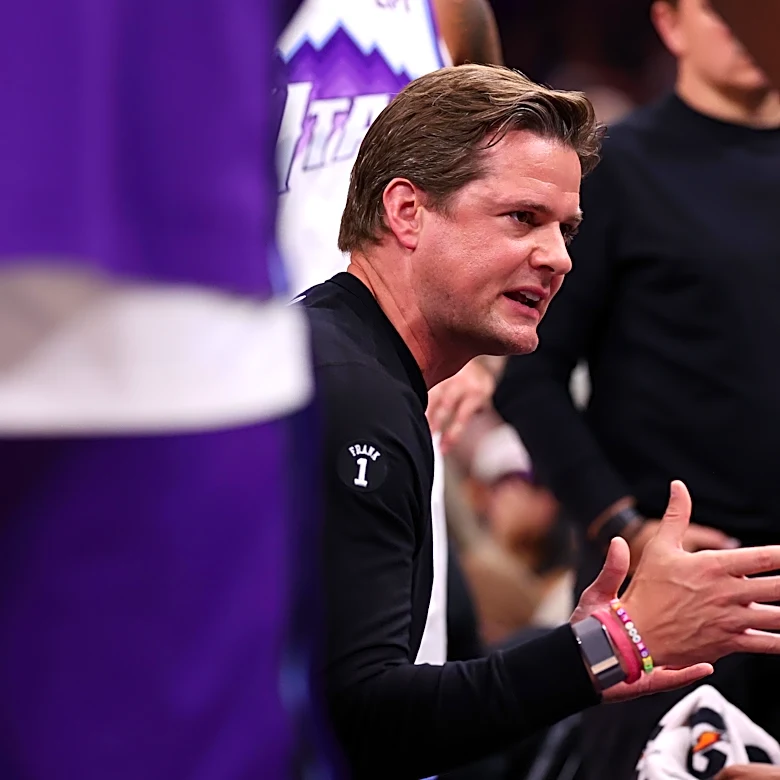

Jason Stein can still see the players vividly if he closes his eyes.
They’re boyhood memories of Tim Thomas, Lamar Odom, Elton Brand, Stephon Marbury, Omar Cook, Erick Barkley and Shaheen Holloway descending on a small, packed church gym in Port Chester, New York.
They came to play in what was known as the CYP Tournament, which hosted the best high school players on the East Coast. It ran for decades.
“It was like lightning in a bottle,” says Stein, who never really let basketball escape his imagination. “It's always stuck with me how great it is to watch that age and level of talent. And I don't think many people get that chance.”
Stein played Division III basketball at New York University and, after he became an investor and entrepreneur, established
relationships with LeBron James and Kevin Durant and their business partners through his company, SC Holdings. As they talked about the sport, and its fragmented youth spaces, they settled on a way to try and put all the top under-18 players together.
“We thought there was room for improvement, and there was a way to do it better, address a lot of the trendy topics that people talk about, like the fact that there hasn't been an American born NBA MVP since 2018,” Stein tells USA TODAY Sports. “And that's despite the fact that the majority of all the best talent in the world comes from America. It's not debatable that agility, speed, athleticism is peak, peak, peak here.”
The Futures Basketball League (FBL), Stein and his partners announced earlier this week, seeks to bring together the country’s top 120 high school prospects.
They’ll have chances to earn Name, Image and Likeness (NIL) compensation but also focus on the physical and emotional development that will help them play beyond high school in the model of a European Academy.
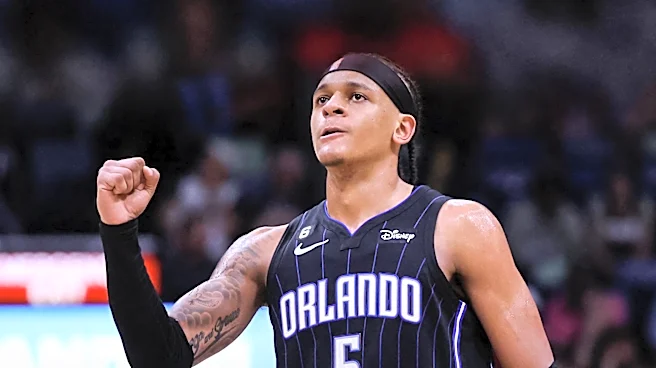
“When you think about what really makes an elite athlete successful, and if you ask Derrick Rose or Paolo (Banchero, two founding team owners of the league) or all these guys who've been through, it's not about the game being played on the court,” Stein says. “It's everything else. It's the strength training, the plyometrics, the mobility and agility to prevent injuries, the recovery, the mental side of everything, on-court as well as off-court and managing your life, and your friends, and your family. And money for the first time for a lot of people, or new money for anyone, no matter where you come from, is always a big deal.”
We spoke with Stein about how the Futures Basketball League will work, and what he hopes to achieve with it.
What is the Futures Basketball League (FBL)?
The FBL will bring together high school classes of 2028 through 2031 to form 12 regional teams to compete against each other from April to August, 2027. According to the release, teams will compete across 10 league weekends of live events in top U.S. markets, ending with a national championship weekend.
The schedule avoids the high school season, NCAA live periods, USA Basketball commitments and the NBPA Top 100 Camp.
“We want kids to have the opportunity to be kids and be with their families, and be with their friends, and have school spirit,” Stein says. “There is a lot already going on in that space.”
The Futures also offers opportunities for NIL compensation and will be geared toward mentorship, life-skills education including money management (“and managing friends and family who pop up, asking for money,” Stein says), national media exposure and training and brand partnerships.
“We are actively speaking to all the sneaker companies about how to work together,” Stein says. “And the conversations have been very positive, both because we are encouraging the players to sign with sneaker brands directly, like they do in the NBA, and separately because we will have an apparel sponsor of the league.”
How many kids will be involved in Futures Basketball and how will they be selected?
Stein says it will start at 120 kids, and they will add teams and players over time, although he doesn’t see the number increasing to more than 250 or 300.
He says operations partner MADE Hoops, a youth basketball events operator, will provide a pipeline. (MADE stands for maximizing athletes’ development & exposure.)
Kids play in MADE Hoops events starting in grade school, and Stein says it has over 100,000 athletes who play in its camps and events per year.
“I would say the majority will be sophomores and juniors in high school,” Stein says of the Futures League. “There'll be a few freshmen and then every once in a while an eighth grader. Some people won't be quite ready to play, but we want to get them into development system and get them started younger and earlier so that they're ready and they may play on another team for their age and practice with these teams and then by the end of the season play.”
He says the league has staff members who have established relationships with families and coaches and will rely on national rankings of top high school players to some extent.
How much will players in the Futures Basketball League be paid?
Players will be able to earn NIL-based compensation. Salary information, and which players have been signed, hasn’t been shared publicly but Stein says that information is coming soon.
Who are the NBA players involved in the Futures Basketball League and why?
Boardroom Sports Holdings, co-founded and owned by Kevin Durant with Rich Kleiman, and LRMR, run by LeBron James and Maverick Carter, are founding FBL partners and team owners, along with Rose and Paolo Banchero. Carter and Kleiman are on FBL's Board of Directors. LRMR Ventures, Boardroom and Banchero are investors in MADE Hoops.
"I came up through the grassroots circuit in Chicago, and I saw how much talent could benefit from real structure and support," Rose said in the release announcing the league. "I was lucky — my brothers built a wall around me and made sure the right people were in my corner. Most young players don't have that. Futures gives them that kind of protection and support, off the court as much as on it."
According to the league, the price to buy into a team has been $6 million.
How does the Futures Basketball League differ from the current elite youth basketball system?
Stein says the top 150 players are on more than 200 different teams in six or seven leagues that don't get to compete with each other. There is minimal practice and skills development, he says, and usually four games per weekend.
The space is also splintered into a number of leagues run by sneaker companies like Adidas and Nike.
The FBL will consolidate top players and play two games per weekend. The first one to two weekends will focus on skills development, team practices, game film and, Stein says, maybe a 3-on-3 tournament.
“It's very important for us that this is a high quality of basketball that's being played and taught to the athletes that looks and resembles the NBA a lot more than the sneaker circuits do today,” Stein says. “They are more one-on-one oriented or playground style of basketball. “We want this to be a modern pace-and-spacing style of play, positionless basketball heavy on ball movement and moving without the ball and passing, which is like a lot of Euro league basketball and it’s beautiful to watch.”
HMBL Development will handle FBL's player development.
Who will coach the Futures Basketball League teams?
Stein says the league is talking to former NBA and Division 1 players, former college coaches and high school and prep school head coaches.
Will the Futures Basketball League games be televised?
The plan is for games to be streamed or distributed on national television on a network to be determined. Connor Schell, a former global head of content at ESPN, will advise the league on live production.
“You're talking about 16-year-old Cooper Flagg playing 15-year-old AJ Dybantsa,” Stein says. “It's super high quality sports.”
How will the Futures Basketball League fit into the youth sports ecosystem?
Stein, the league’s CEO, helped build professional pickleball into Pickleball, Inc., which is valued at $750 million after a recent transaction with Apollo Sports Capital. He is on the board of Pickleball Inc.
“The fun part is that I've done this before,” Stein says. “We built the professional pickleball league from zero. So I'm clearly a glutton for punishment because I do emerging sports leagues.
“We trying to do it the right way,” he says. “We think it's a commercial property, but everything we're doing is like, how is this going to be better for the athlete first? And I think when you approach it that way, then that's the best business too.”
He’s a father of two sons (12 and 6) and a daughter (9). His older son plays basketball.
“I build my entire life around being able to be a dad,” says Stein, who grew up playing the AAU circuits of New York City’s Tri-State Area. “I go to every game and most practices. (From) 5 to 8 during the week, my office knows like I'm usually not going to be available and I'll make it up between 8 and 12 because I'm with my kids. It's my favorite thing to do.”
“I'm in it deep, and I just see all the pros and cons of all of it, and it's what's informing how we're trying to do things.”
Steve Borelli, aka Coach Steve, has been an editor and writer with USA TODAY since 1999. He played baseball in high school, rowed in college and spent 10 years coaching his two sons’ baseball and basketball teams. He and his wife, Colleen, are now sports parents to a college and high school baseball player. For his past columns, click here.
Order his "Youth Sports Survival Guide" for athletes and parents here.
Got a question for Coach Steve you want answered in a column? Email him at sborelli@usatoday.com.
This article originally appeared on USA TODAY: What Futures League backed by NBA stars means for top basketball prospects
Our editors independently choose our recommendations. Some content is produced with paid support from a third party, however our editorial decisions remain independent. If you buy through our links, the USA TODAY Network may earn a commission. Prices and availability may change.