
The 2026 NFL season isn't even through the first quarter of regular-season games yet, but the end of September still marks a prime opportunity to hand out preliminary marks.
Sure, little can be said with
much certainty about any team's trajectory with this small a sample size. There's still time for teams to address issues or squander any advantages that may have surfaced in the first month. Yet for all of the room for change that remains, each team has had to face some early realities that have emerged through the first three weeks.
While taking into account preseason expectations and the factors both within and outside of a team's control in the early going, here are our grades for all 32 NFL teams in September.
A
San Francisco 49ers
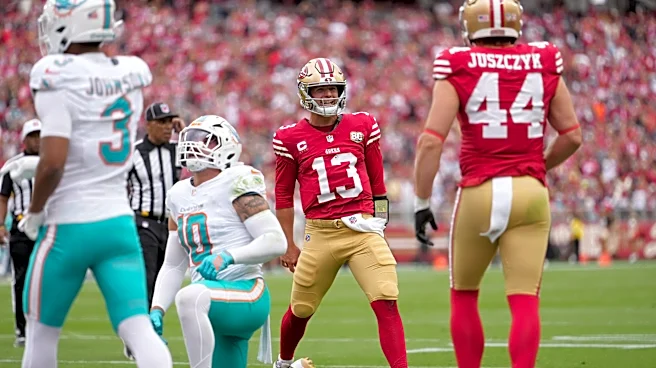
Since making quick work of the rival Rams in Australia, San Francisco hasn't had to break much of a sweat against a pair of overmatched opponents. Still, Kyle Shanahan piling up points at a rate even greater than his team accrues injuries is something to behold. The 49ers' league-leading EPA per play (+0.33) is nearly twice that of the next closest team in the Bills, while their 7.3 yards per play are more than a half-yard better than the second-place Ravens. Despite being saddled with a receiving corps that seemingly dwindles with each passing day, Brock Purdy is on a plane of efficiency all his own with a 133.1 passer rating and +0.63 EPA per dropback. Perhaps even more encouraging is the trajectory of the once wobbly defense, which has allowed just four total plays of 20-plus yards despite its own mounting personnel losses. Staying power will always be a concern for a franchise that has come to expect having to navigate what other teams would see as a calamitous run of injuries. For now, at least, San Francisco has once again set itself apart with a singular capacity to endure.
A-
Buffalo Bills
The firing of Sean McDermott underscored that the status quo wouldn't stand for an organization desperate for its postseason breakthrough. Through the first three weeks of the Joe Brady era, it's hardly been business as usual for Buffalo. Astounding aggressiveness helped the offense chart a new course through three weeks, though the unit crash-landed with a five-turnover outing against the Chargers. And though defensive coordinator Jim Leonhard called out his unit's "boom-or-bust" style as "unsustainable," a group that was gashed on the ground last year is showing marked improvement at stopping ball carriers before they can get runs going. An equilibrium needs to be reached, but Brady's knack for winning with different approaches serves this roster extremely well.
Kansas City Chiefs
So … are the Chiefs fully back? Even as the team has tried desperately for years to recreate its imposing form of yesteryear, that might be the wrong question to ask. Still, there’s no question that the addition of NFL leading rusher Kenneth Walker III has transformed this attack. Now able to threaten teams from under center and with play-action looks thanks to its restored balance, the Chiefs are keeping opponents off base – and Patrick Mahomes is reaping the benefits. With the aerial attack opening up, Mahomes has thus far posted his highest EPA per dropback (+0.21) since his second MVP season, all while recording the lowest mark for air yards per attempt (5.8, according to Next Gen Stats). A pass rush that has been held without a sack for two games is worrisome, as are the protection lapses that have popped up for a front that is still without left tackle Josh Simmons. But Kansas City's edge – particularly in the close contests it once prevailed in but last year repeatedly dropped – appears to have been restored.
Las Vegas Raiders
Even amid a 3-0 start in a season that figured to present plenty of growing pains, the Raiders still haven't quite earned their contender credentials. No matter. Las Vegas always seemed more concerned with the bigger picture of Klint Kubiak's first season rather than the raw results. Viewed through either lens, the early returns have to be considered sterling for the Silver and Black. Kirk Cousins has exceeded all reasonable expectations as the steady hand called on to lead the offense through an acclimation period. With tight end Brock Bowers back in the fold as the focal point of the passing attack, things could really take off from here. A rushing attack that ranks last in success rate at 30.1% might require some time to catch up to the rest of the outfit, and it's fair to question whether the defense is being propped up by its league-high nine takeaways. Despite that, it's clear that Kubiak has pointed this formerly aimless franchise in the right direction.
B+
Chicago Bears
Let's table the talk of Chicago becoming the NFL's highest-scoring offense in history. What's clear for the time being is that even with Caleb Williams out, Ben Johnson's precision and abundant creativity give the Bears a chance to compete with the NFC's best, no matter how daunting the circumstances. Fueling a defense with takeaways is always a risky proposition, but this group's big-play flair might not be an aberration. For a franchise that seemingly faced calamity when Williams first went down with a hamstring injury, Chicago sure looks capable of staying afloat until it can fully harness its high-flying ways once its star signal-caller returns.
Jacksonville Jaguars
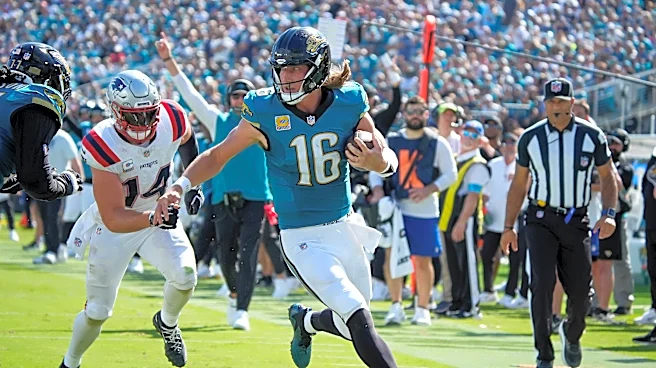
After picking apart the Browns and Patriots, the Jaguars stand as the only team to rank in the top five for EPA/play on both offense and defense, according to Next Gen Stats. Still, the Week 2 misstep against the Broncos served as a reminder that this team might still be defined by the limitations of its fronts. For now, however, Jacksonville is admirably finding alternative routes to consistently come out ahead, thanks in large part to the defense's opportunistic streak and Trevor Lawrence's efficiency in the short-to-intermediate game.
Seattle Seahawks
Even the defending champs sometimes produce a dud. The Seahawks have been so adept at baiting other teams into missteps that it was alarming to see Mike Macdonald's team unravel with three turnovers to the Marcus Mariota-led Commanders. Though that setback might have stung a group, it's not the kind of performance that should hang over the organization for long. Between its ball carriers being stuffed at or behind the line at the second-highest rate in the NFL (21.3%, according to Next Gen Stats) and Jadarian Price's ball security issues flaring, Seattle's ground game leaves plenty to be desired. That dynamic heightens the importance of Zach Charbonnet's return, as he could significantly expand the offense's comfort zone if he fortifies the short-yardage and goal-line operations. But so long as the Seahawks' starting safeties get healthy once again, the defense should be able to return to shutting down all downfield shots while continuing to set the bar in stopping the run.
B
Baltimore Ravens
Turns out the post-Week 1 coronation of first-year head coach Jesse Minter and offensive coordinator Declan Doyle was entirely premature. But while Baltimore might not be the immediately dominant outfit it first appeared to be in its opening statement against the Colts, there’s still plenty to like about the direction the new coaching staff is pushing this group. Lamar Jackson looks fully revitalized by a scheme that’s leveraging his ability to generate explosive plays as a dropback passer, particularly when attacking over the middle. The defense hasn’t coalesced as quickly as many expected it would under Minter, but cutting down on missed tackles might repair a good portion of what’s ailing the unit. Losing their top two options at center, however, puts the Ravens in a bind that could severely constrict the offense, particularly in AFC North matchups.
Cincinnati Bengals
The feel-good vibes surrounding Cincinnati's reloaded defense dissipated after the unit reverted to some of its previous lethal habits in a loss to the Steelers. Dexter Lawrence's dominant play up front and the ramped-up pass rush give the unit the chance to create substantial disruption week in and week out, which could cover for some shortcomings. But the coverage busts that crippled the group early last year resurfaced and could significantly impede this year's progress. The offense is yet to fully find its footing, too, but it could be headed for takeoff once it disposes of the penalties and self-inflicted mistakes that have been holding it back.
Denver Broncos
It should come as no surprise that the organization counting on continuity would carry over much of the same strengths and maladies that characterized last season. Sean Payton still can’t shake the slow starts that have been precipitated by an ineffectual ground game, but the Broncos still have a masterful finish touch. This surely isn’t the formula Payton wants to rely on, though. Perhaps there’s a path for more consistency with the rushing attack, with rookie Jonah Coleman potentially presenting a steadying presence once he returns from injured reserve. No matter the source of the first-half woes, it’s incumbent on Payton and first-year play-caller Davis Webb to ensure that the offense doesn’t have to live dangerously for another full season the way it did throughout 2025.
Detroit Lions
Close calls against the Saints and Jets reinforced that nothing might come easy to Detroit this season. That much should have been clear, however, when the team entered the season with a secondary that looked liable to subject the Lions to repeated shootouts. Scoring 31 points in each of its contests might be the only form of consistency the offense can count on at this point, as the slow starts by the unit have increased the already disproportionate reliance on chunk gains. For now, though, Dan Campbell is getting enough big plays on both sides of the ball to finish off some uncomfortable contests.
Minnesota Vikings
Is this a harsh grade for an undefeated team pacing the cutthroat NFC North? Perhaps. But Minnesota has affirmed what was already evident with Brian Flores' stupefying defense while leaving plenty uncertain about the rest of its operation. While it's no one's fault that the quarterback issue continues to linger with Kyler Murray missing almost two full games due to a concussion, the Vikings simply can't expect to scrape by with an offense that ranks last in yards per play at 4.3. Maybe things will truly come together once Murray, wide receiver Justin Jefferson and running back Jordan Mason are all fully healthy and able to work alongside one another, but coach Kevin O'Connell can't take that as a given based off what his team has shown so far.
Pittsburgh Steelers
What version of the Steelers should we expect to see for the rest of the season? The offense's Week 3 eruption against the Bengals might seem like an outlier result, especially given how boxed in the attack had been with Aaron Rodgers at the helm since the beginning of last season. But from the changes along the formerly shaky offensive front to the newfound creativity coursing through Mike McCarthy's play-calling, Pittsburgh showed a willingness to adjust on the fly that should serve it well down the stretch. While the results might not be fully sustainable over the course of an entire season, enhanced control at the line of scrimmage and a featured role for Jaylen Warren could provide the steadying presence required to keep the Steelers competitive in the AFC North.
B-
Cleveland Browns
Credit Todd Monken and Cleveland with one of the more impressive early-season course corrections in recent history. The Week 1 implosion against the Jaguars clearly set off some alarms, but the Browns regrouped in impressive fashion against the Buccaneers and Panthers. If a resurgent defense powered by a still-disruptive front can clamp down on opponents, Deshaun Watson won't have to be a world-beater to keep the team competitive. It's too early to say a new day is afoot for the franchise, but this is a far more auspicious start than anyone could have foreseen after the summer and season opener suggested that the fall could entail a good deal of pain.
Los Angeles Rams
Things aren't as dire for Sean McVay's crew as the 1-2 mark suggests, with Los Angeles having fallen to Denver on a controversial pass interference penalty despite outgaining the Broncos by 225 yards. With Myles Garrett and Puka Nacua sidelined, this is hardly a team at peak form. Still, there's no question that the opening month was a substantial letdown for the overwhelming preseason Super Bowl favorites. Opponents have taken advantage of longstanding issues for the Rams: rampant special teams miscues, a lack of depth at receiver and holes popping up in coverage. Shaking off slow starts hasn't been a problem for McVay before, but this is still an unenviable spot to be in given the competitive landscape of the NFC West.
New York Giants
Big Blue bordered on getting an incomplete here, as it's exceedingly difficult to judge a season that has seemingly fallen by the wayside in the wake of quarterback Jaxson Dart being lost for the year. But while the outlook for how this campaign will conclude looks murky at best, John Harbaugh deserves some credit for instituting the competitive guardrails this organization so sorely needed. Short of Jameis Winston somehow shaking the ball placement problems that have plagued him as of late – or J.J. McCarthy somehow flourishing in a new setting – it seems as though the rousing season-opener win will be remembered as a tease of what might have been for New York.
New York Jets
It'd be a stretch to call Gang Green a well-coached team, with various late blunders looming large over two losses that amounted to missed opportunities. But there's still an unmistakable sense of progress in play for the Jets, even if that's cold comfort to a fan base desperate for a true breakthrough. Frank Reich and the offensive support system should be lauded for helping put Geno Smith at ease, as the veteran quarterback has exhibited a clear sense of command and comfort while committing just one turnover. It's fair to wonder whether Aaron Glenn can lead this group back to true competitive relevance within the AFC, but there's no question that he and general manager Darren Mougey are laying a much-needed foundation of core competence for the organization.
C+
Atlanta Falcons
Having to endure Cooper Rush for two weeks nearly put the Falcons at a breaking point. Then, Michael Penix Jr. returned and the offense flourished in prime time. Atlanta seems likely to settle somewhere in between those two extremes of offensive performance, but that still might be sufficient to keep the team relevant down the stretch in the wide-open NFC South. With all the focus going to the offense, however, defensive coordinator Jeff Ulbrich should be lauded for coaxing a 41.6% pressure rate – third in the league, according to Next Gen Stats – out of a group that's missing its two most dynamic pass rushers in James Pearce Jr. and Jalon Walker.
New Orleans Saints
For all of their promise, the Saints can't seem to consistently stay out of their own way. Though Kellen Moore and Co. ended up on the wrong end of a couple of controversial calls that informed each of their losses, New Orleans has yet to string together a complete effort from start to finish. Maybe that's simply what the offense should come to expect as Tyler Shough gets more comfortable in his second season, but a more even-keeled approach and fewer self-inflicted setbacks would go a long way toward fostering the sense of consistency required for the Saints to reach the next level.
Philadelphia Eagles
Through a 2-0 start, warning signs flashed on several fronts for Philadelphia. Perhaps a prime-time stumble against a third-string quarterback will put more eyes on those problems. A bad habit of coming up empty on early downs finally cratered the Eagles, who went 2-for-9 on third down against the Bears. Maybe the effort that Nick Sirianni termed a "true team loss" will properly jolt the two-time defending NFC East champs. But it's worrisome that new coordinator Sean Mannion's offensive scheme isn't coming anywhere close to fulfilling the goal of staying on schedule, and a defense yet to generate a takeaway can only do so much to make up for the gulf between the aspiration and reality.
C
Arizona Cardinals
The comedown from the Week 1 stunner against the Chargers has been sharper than some might have noticed. While Arizona has found some success stringing together longer drives, it has a league-low two plays of 20-plus yards and ranks 30th with 4.5 yards per play. The defense hasn't fared much better in keeping explosive plays under wraps, either, which has been compounded by a pass rush posting a league-worst pressure rate of 23.6%. Yet there's only so much that can be reasonably expected of first-time head coach Mike LaFleur as he pays the toll for a front office that largely opted to stand pat in a transition year.
Carolina Panthers
Having sandwiched its rout of the Falcons with two worrisome flops against the Bears and Browns, the defending NFC South champs have established themselves as an exceedingly difficult team to pin down. One thing is clear, however: Injuries are taking a severe toll on this team. With Pro Bowl cornerback Jaycee Horn out for a long stretch and the defense conceding a league-worst 193.3 rushing yards per game, there's heightened pressure on an offense that looked to have significantly upped its potency in the first two weeks before stalling out against the Browns. But a thinned-out front could threaten any sense of progress for the unit if it can't safeguard Bryce Young, who has faced the second-highest pressure rate (43.5%) of any passer, according to Next Gen Stats.
Dallas Cowboys
Before the season, new defensive coordinator Christian Parker bristled at the notion that his unit merely reducing meltdowns and ending up somewhere around the league average across the board could propel Dallas a good distance. By now, that standard might seem significantly more appealing. The Cowboys' defense has continued to short-circuit, whether over the course of an entire game, such as in the opener against the Giants, or in crunch time, as was the case against the Ravens. Brian Schottenheimer took responsibility for the latest game-management gaffes, but he and Parker have left plenty to be desired in putting their players in position to succeed in the early going.
Miami Dolphins
Why afford some level of grace to the organization responsible for the league's worst point differential (-50)? Simple: Jeff Hafley was on point when he said before the season that Miami's season would be defined not by the outcome of games but by the sense of progress fostered throughout the roster. It took a couple weeks for that to coalesce, but the Dolphins exhibited some impressive competitive spirit in trying to stick with the Chiefs. A pass defense that has yet to generate a sack and struggles to stick with receivers leaves the team vulnerable to more multi-score losses, but the unit finally discovered the sense of resiliency that was expected under Hafley. And despite the shortage of personnel support for Malik Willis – a problem exacerbated by running back De'Von Achane suffering a torn ACL – the offense appears to have a more tenable plan for the quarterback after he was consistently under siege through the first two weeks.
Washington Commanders
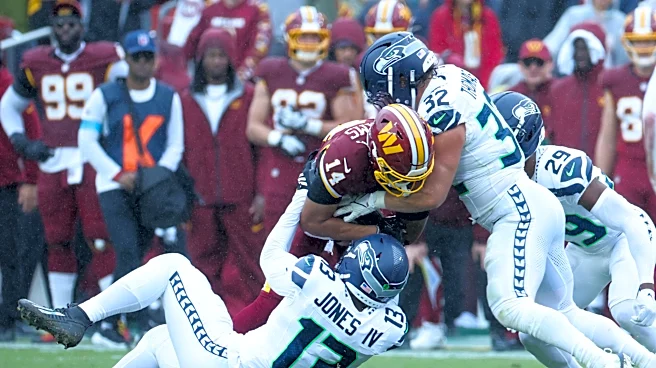
Upon falling to 0-2 and seeing Jayden Daniels dislocate his left elbow yet again, the Commanders appeared to be on the verge of seeing their season spiral out of control. Then, Washington delivered one of the more surprising results of the September slate, ending the Seahawks' 12-game win streak that dated back to last season. A defense that has long struggled to generate takeaways probably can't expect to translate three turnovers into 20 points as it did against Seattle, but first-time coordinators David Blough and Daronte Jones deserve praise for being adaptable and innovative in response to the first wave of issues. If that creativity carries over, the Commanders might really be able to weather Daniels' absence.
C-
Indianapolis Colts
After deciding to run things back for another year with Shane Steichen, Chris Ballard and Daniel Jones, Indianapolis promptly face-planted in the opener. A narrow win over the Texans saved the Colts from full-on desperation mode, but that outcome might have been more telling for Houston than Indianapolis. Though a defense giving up a league-high 417.3 yards per game probably isn't as hopeless as it appeared to be through the first two weeks, Lou Anarumo's group is hardly out of the woods, especially with the scant options for jump-starting the inert pass rush.
D
Houston Texans
General manager Nick Caserio threw plenty of resources at his team's most pressing problems, bringing aboard running back David Montgomery, right tackle Braden Smith and first-round interior lineman Keylan Rutledge to enact a better support system for C.J. Stroud. But what exactly did those moves achieve? The rushing attack has been stopped at or behind the line of scrimmage on more than a quarter of its carries, which easily represents a league-worst rate, according to Next Gen Stats. And with Nico Collins sidelined, entirely too much has been placed on Stroud's shoulders to carry a vanilla attack. Last year's climb from a 0-3 hole might have given DeMeco Ryans confidence that this group can also turn things around, but the formerly dominant defense's middling performances thus far make that a far more daunting task.
New England Patriots
The reigning AFC champs seemed as though they might be due for a bit of a reprieve from judgment when A.J. Brown was lost for several weeks to a sprained ankle. Yet given how pervasive NFL MVP runner-up Drake Maye's struggles have been, it's impossible to fully give New England a pass. Perhaps most discouraging has been the lack of adaptability that Maye and offensive coordinator Josh McDaniels have exhibited in confronting their new reality as well as the problem areas that surfaced in last year's postseason run. The judgment lapses and self-inflicted errors – Maye's seven turnovers lead the league and stand just four fewer than his total for all of 2025 – should be correctable, but they show no sign of abating for the time being.
D-
Green Bay Packers
How bad have the Packers' protection problems been? Not only is the offensive line responsible for arguably two of the ugliest performances by any position group so far this year with its turnstile tendencies in Weeks 1 and 3, but the group has posted a rock-bottom 16% pass block win rate, according to ESPN. The 31st-ranked team, the Cardinals, comes in at 32%. Unless Josh Jacobs comes off the commissioner's exempt list soon – which is hardly a certain outcome – and somehow revitalizes the run game, there's no reasonable way for Matt LaFleur or Jordan Love to overcome that level of ineptitude up front. Maybe a reshuffling borne out of desperation buys the offense a bit more breathing room, but it seems as though general manager Brian Gutekunst made a critical miscalculation in proceeding with this group as constructed.
Tampa Bay Buccaneers
Once the model for getting off to a solid start, the Buccaneers are winless through three weeks for the first time since 2014. While other teams' failures might have earned a more intense spotlight, Tampa Bay might measure up to anyone when it comes to pure disappointment. Coordinator Zac Robinson's scheme seems to be fundamentally misaligned with the players tasked with bringing it to life, as no attack has posted a worse EPA/play (-0.24), according to Next Gen Stats. Quarterback Baker Mayfield and his reckless, erratic play has been at the center of the problems. How can an operation that's come up short across the board now prop undrafted rookie Jalon Daniels while Mayfield is sidelined by a thumb injury? The defense, meanwhile, remains unable to generate a consistent pass rush and is somehow even worse at finishing plays in the backfield or at the line of scrimmage.
Tennessee Titans
At a time when several of the most moribund franchises are rebooting in impressive fashion, the Titans don't look any closer to elevating themselves from the league's bottom rung. A new coaching regime has done little to afford Cam Ward any sense of comfort, with the second-year quarterback ranking 28th in EPA per dropback while piloting an attack that has posted the second-fewest yards of any team. Unless the second-year signal-caller can settle into the offense, a franchise that's been beset by a cascading series of resets might be due for another one – or possibly more – in short order.
F
Los Angeles Chargers
Since arriving late to the Los Angeles party nearly a decade ago, the Chargers have had trouble carving out a distinct space for themselves next to the more successful and visible Rams. Now, however, the Bolts are in a category all their own as the league's greatest disappointment thus far in 2026. It's not merely the 0-3 mark itself that has been so deflating for an organization that seemed to demand more than the wild-card exits of the past two years. Instead, the chasm between what seemed possible under new offensive coordinator Mike McDaniel and what his out-of-sync outfit has put forth looks to be on the precipice of swallowing this season whole. The sloppiness starts up front with an offensive line that ranks 27th in pass-block win rate and has been prone to repeated penalties, but every branch of the attack has been impeded by the ongoing disconnect. Squandering the four-turnover advantage that Buffalo served up showed just how adept this group is at keeping itself down.
This article originally appeared on USA TODAY: NFL team grades for September includes only one 'A' – and a lone 'F'