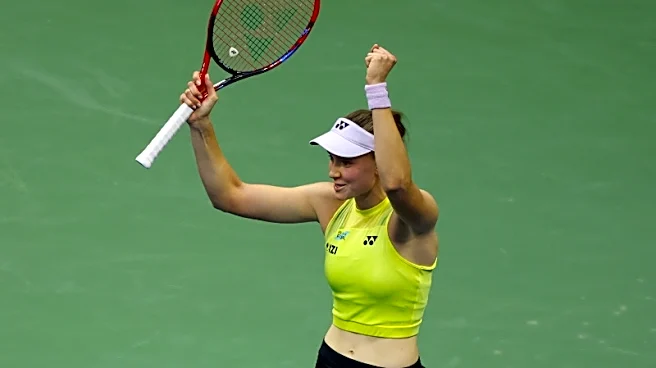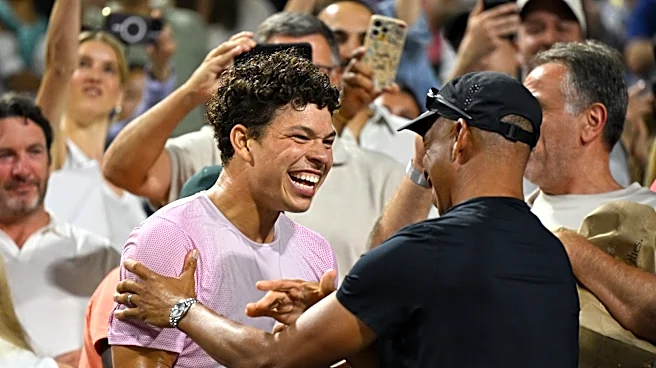



When Ben Shelton and Frances Tiafoe met in the US Open men’s semifinals, it was a triumph for American tennis, but also one for American coaching.
Shelton, who prevailed in four sets Friday, Sept. 11, to set up Sunday’s final with top-seeded Alexander Zverev, works with his father. Bryan Shelton won a national title as a college coach, but left his role to be with his son on the professional tour.
Tiafoe is coached by Mark Kovacs, who has gotten heavily involved with a program launched by the United States Tennis Association to give parents and coaches (who are often both) a direct line to delivering their sport.
Both coaches embody what USTA Coaching is trying to accomplish: the idea that a mom, dad, or someone else can begin instructing a kid
at an early age and continue with him or her as long as the adult and child desire (and dream).
“Tennis has always been a sport where parents have been made to feel like they have to go find a full-time teaching professional to introduce tennis to their kid,” says Megan Rose, USTA Coaching’s managing director and head of business development and operations.
She is a former professional player but also a sports mom.
“There's a lot of parents out there who are tennis lovers,” Rose says. “They watch tennis, maybe they play tennis themselves, and know that tennis is a great sport to get their kid in. But maybe there's financial barriers, or maybe they don't have a local club, or they're not sure where to get started. And so a lot of the pathway for parents for us is giving them resources and tools that they can get their kid out in the driveway, get their kid in the living room with a foam ball or a cush ball, or get them on court, not to maybe make sure that parents all feel like they can become Richard Williams and get their kid to the US Open, but more so just to introduce the love of the game and something for parents and kids to do together."

Rose caught the tennis bug around age 6. Ben Shelton found it around 11, when he saw his father working with his sister on court and wanted to be part of the experience. USTA Coaching’s vision is that his sport, which captures America’s attention for a fortnight in August and September in New York, can last so much longer for you.
We spoke with Rose and Craig Morris, USTA Coaching’s chief executive officer, about how they are continuing to grow their one-year-old program and their advice to parents and young athletes who might want to get involved in their sport, or continue to climb into and discover it.
USTA Coaching: Bringing tennis and an American model of instruction to other sports
Morris says before COVID-19, the USTA, tennis’ national governing body, measured an acquisition-to-churn rate of about one to one. But the pandemic accelerated the sport from around 18 to 28 million tennis players in the United States.
USTA Coaching is a national community of 17,000-plus coaches, parents and industry professionals. The method behind it is that, whether you’re a young child picking up a racket for the first time or a high-performance coach, the participants should share a similar experience of support.
“I think coaching, teaching, leadership is just creating environments where people can be the best they can be,” says Morris, who has overseen community tennis and once coached Samantha Stosur, who would go on to win the 2011 US Open. “And that's a really important skill and it's an art more and more people need to have regardless of their field. And then whether you become Ben Shelton or Coco Gauff, or whether you just want to hack around at the park and be able to rally and hit five balls over in a row, that's beside the point. It's just they feel great about themselves as they get into it.”
USTA Coaching follows the American Development Model (ADM), which has become a cornerstone of USA Hockey’s message to help keep kids, parents and coaches engaged. According to the ADM, the athlete and coach are both on a development journey, and activities need to be developmentally appropriate given their stages.
The ADM is play-based and designed to keep athletes engaged and moving, not standing in line and focusing on rote instruction about grips and swings.
To apply the concept to Bryan Shelton, who is not formally endorsed by USTA coaching, young athletes learn to be inquisitive about what they’re learning. You engage someone in a sport, and you see how they respond to it, then guide them through it.
“I always try to ask the questions,” Bryan Shelton, a former professional tennis player, told the Tennis Insider Club podcast for a July episode. “And it's a different way of approaching and teaching your kids: how to think, how to solve problems, how to get to solutions and resolutions, how to grow and develop. Because if we're constantly telling our kids what to do, how to do it, how to do it better, it becomes our thing, not their thing. And for your kid, one thing that I really want, and my wife really wants for our children, is that they feel strong within themselves. Internally, they understand who they are, and why they do the things that they do, and what their goals are, and the things that they want to accomplish for themselves.
“And so by asking the questions, it allows them to start to think for themselves and start to become confident in who they are as people. And then, obviously, as tennis players as well. What could you have done better? What is something you want to accomplish? How did you feel out there on the court? What could change and get you to a better place? What are some of the things you felt like you were missing? Where do you gain your confidence when you're out on the court? When you played your best in those matches, what were you doing beforehand?
“I want them starting to put an association with certain behaviors that lead to certain performances, and just a way of feeling good about yourself. (It’s) less talking down to your kids, more trying to get them to engage and to take responsibility.”
At a more grassroots level, Rose says, strong coaching and leadership is understanding an individual’s desires and how you can help make sure that they have an enjoyable experience, whatever that looks like.
“There are people out there and they don't want to maybe get better. They just want to keep having fun,” says Rose, a former women’s head tennis coach at Princeton. “They want to play with their friends once a week and our coach's job in that perspective should just be to make sure that you're setting up an environment that allows them to be successful.
“I think that's the same for when I coached at college. There were women who wanted to maybe go on and try to play pro and then there were women who wanted just to play through college and how could I help maximize that potential for each of them? We've heard stories of people who drop out of sport because they had a bad experience with a coach. We want to make sure that never happens. A person should never stop doing something because of the impact another person has negatively made on their life.”
Who does USTA Coaching support?
Morris and Rose want you to know that it supports you. The demographics of who's coming into the sport are changing, so the USTA wants to match those players with more coaches who are women, who are people of color, and who are under 30.
But it also wants to make the sport more accessible to coaches, parents and players with no experience. Rose says that while the majority of USTA Coaching’s members have 10-plus years of coaching, the rest are skewed equally between one to nine years of it. There are, she says, around 1,000 coaches that are under 17 and another 4,000 that are between 18 and 30.
Morris, the CEO, says a high percentage of members have played high school or college tennis and may be looking for a front door to get into coaching, perhaps even as a full-time profession.
“Our research is showing that young people, it's not a lack of desire to coach, it's just not a clear understanding of how to get started,” Rose says. “If you want to become a lawyer, people know you got to go to undergrad, you got to go to law school, you got to pass the bar. We want to make sure that tennis coaching becomes as clear of a pathway as some of these other careers that people know what the pathway is, that they can make an informed decision if it's right for them. …
“We built this organization with the input of coaches. This is not just Craig and myself sitting in an office. Even though we are both coaches, or have been coaches, we had a lot of time spent with coaches in the industry to make sure that this was being built for them.”
The programming is adaptable to all skill levels. There is professional certification where an advanced coach can come in and do this right away and there is a development badge for parents and P.E. teachers or others who are just getting into coaching and want to do it part-time. Think of it, Morris says, like working toward a university degree, from undergrad, to postgrad to master's and a Ph. D.
“Trying to coach somebody to be a grand slam champion and trying to get a young child to choose tennis and then to have a great experience, they're as competitive as one another, and that’s the role of the coach,” says Morris, originally from Australia. “For us to wake up and get a family to say, I think I want my kid to play sports, I think I want my kid to play tennis. Now you’ve got to try and find a program, then you got to hope the coach is good. … We want to make sure coaching is open to everyone.
“I've been in the States for 10 years. The people who deliver the game are our greatest asset. They are dependent on parent volunteers and coaches and people that give up their time. I was surprised at the lack of resources, support, recognition. And I think the US is starting to wake up to that we’re as good as our coaches.”
How can you get involved with USTA Coaching?
There are four tiers of membership. The first one (known as “Baseline” and recommended for parents, guardians and school coaches) is free. The highest (Pro Plus, $249 per year) provides liability insurance and telehealth.
There is a find-a-coach directory, and no coaches are promoted on it who aren’t Safe Play compliant, meaning the coaches are educated and screened.
There are equipment discounts and in-person training at coaching education centers across the country that help with managing groups of people and making practice more exciting. There are online modules from introducing your kid to tennis to coaching high school tennis to female menstrual health awareness.
The online learning hub includes 31 badges, 83 modules and more than 250 on-demand videos.
Kovacs, Tiafoe’s coach, is part of the high-performance offering. But the overarching theme is the same for everyone who is involved.
"Coaches are absolutely critical to the growth of our sport,” Kovacs said in a quote for USA TODAY Sports via USTA Coaching. “They impact players at every level, from introducing someone to the game to helping an elite player reach their potential. I'm thrilled to see the USTA make a meaningful, long-term commitment to coaches in the United States. Investing in coaches is an investment in the future of tennis."
Steve Borelli, aka Coach Steve, has been an editor and writer with USA TODAY since 1999. He played baseball in high school, rowed in college and spent 10 years coaching his two sons’ baseball and basketball teams. He and his wife, Colleen, are now sports parents to a college and high school baseball player. For his past columns, click here.
This article originally appeared on USA TODAY: 'We’re as good as our coaches': How USTA equips parents to coach kids