






With car shoppers seeking fuel-efficient models amid high gas prices, we questioned whether plug-in hybrids are worth the extra cost for people who aren't ready to go fully electric.
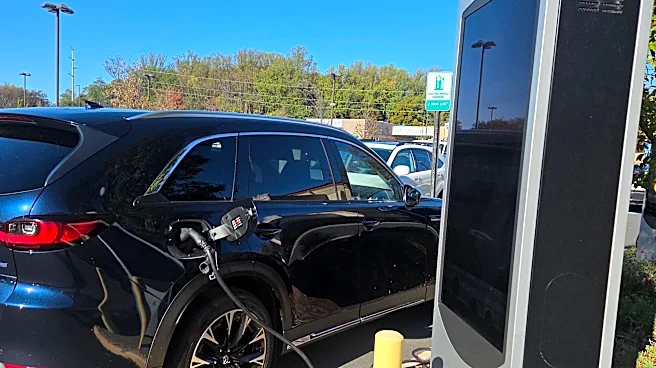
We leaned "no," citing the fact that it took two hours to fully charge the battery of a Mazda CX-90 plug-in hybrid I recently tested in one session, and that only got me 27 miles of electric driving range. Another recent study we wrote about showed that hybrid buyers might not end up saving as much money as they think because of increased upfront purchase costs that take them longer to offset with future gas savings.
But many of our readers disagreed with our findings. One reader, Kirk Morganson, wrote us to offer this assessment: "Hybrids offer two main benefits
which could be considered more important than gas savings. On a local level, they reduce air pollution (particulates, hydrocarbons, NOx…). On a financial/environmental level, they save fuel.
"So, if your point is to encourage people to be self-centered, focused on the short-term money, and not consider the impacts of their decisions on others, then mission accomplished," Morganson wrote.
'It didn't matter to us because it charged overnight'
Another reader, Michael Alexin of California, said it is important to distinguish between regular hybrid cars, which don't need to be charged at all, and plug-in hybrids like the Mazda CX-90 model I tested
"Non-plug-in, mild hybrids are vastly different than plug-ins that have decent all-electric ranges," Alexin wrote. "I own a 2025 BMW X5 50e, and after 2.5 years of driving (26,000 miles), I have averaged around 134 miles per gallon!"
Alexin added: "The reason is that I plug in each night, which gives me 45 miles of pure electric range each day. Rarely in my regular daily driving do I exceed 45 miles, so that I’m driving over 90% on electric."
"Here in California, the cost to charge my car per month is minimal compared to the cost of premium gasoline," Alexin wrote. "So I have been saving a TON of money since I traded my all-gasoline 2020 BMW X5 40i for the X5 50e. It’s rocket-fast, smooth, and efficient as well!"
Another reader, Robin Antonick of Portland, Oregon, said he brought a Toyota Prius prime plug-in in 2021 and he finds it very practical.
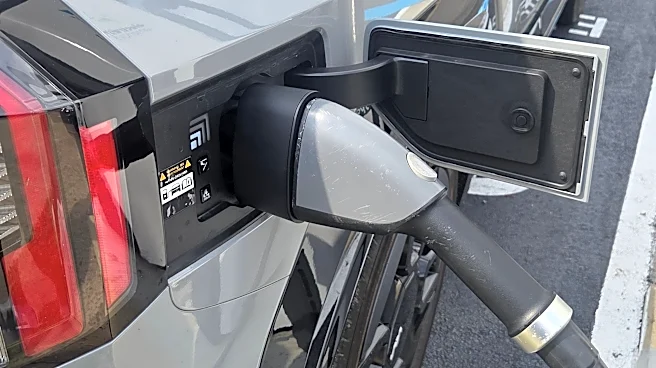
"We used it (primarily) for daily local driving, but enjoyed the flexibility of nearly 500 miles of range," Antonick wrote. "We (charged) it at night using the 12 (volt) Toyota charger that came with the vehicle."
"While it took 4 to 5 hours to recharge, it didn't matter to us because it charged overnight," Antonick wrote. "The majority of our daily usage was provided by the 24 miles of electric fuel. The cost of each charge was appoximately <$0.38 as we are on a time of day. At an average of 20 miles per gallon for an average vehicle, we paid $.38 for what would cost today all over $5."
Why are shoppers gravitating to hybrid cars?
Surging gas prices have driven shoppers to consider hybrids.
The average price of gas in the United States on Nov. 10 was $3.97, according to AAA. That's lower than it has been for months, but it's also up from $3.07 a gallon on Nov. 10, 2025.
Cars.com said hybrids now make up 12.2% of new vehicles for sale, up from 11.4% a year ago and 8% two years ago.
Car buyers have told pollsters for years that they have major concerns about electric cars' battery range. The concern has bubbled up so often that it has been dubbed "range anxiety."
According to a poll released in January 2026 by the EVs for All America group, an advocacy group that works with car manufacturers to push U.S. and state lawmakers to adopt EV-friendly policies, 20% of 600 potential EV buyers surveyed in 2025 said their top concern about plug-in models is unreliable charger networks.
Most regular hybrids get power from regenerative braking, according to Edmunds, so drivers don't have to worry about hooking up to a charger. Hybrid cars usually run on battery for shorter, low-speed portions of the trip and switch to gas when needed for longer, higher-speed trips. Some hybrid cars can get over 500 miles on a single tank.
What happens if you don't charge your plug-in hybrid car? And do most drivers regularly do it?
A plug-in hybrid driver could choose to run their car entirely on gas, and they probably wouldn't notice much difference in mileage. But plug-in hybrids are usually more expensive than gas cars, so that driver would be forgoing the added electric mileage they paid extra for.
There's been a long debate about whether most plug-in hybrid owners even bother charging their cars since most of their mileage comes from gas. The question has grown with recent spikes in fuel and energy prices.
Toyota sought to prove that at least some plug-in hybrid drivers do charge regularly with a study that found drivers of its RAV4 connect to chargers on seven out of every 10 days of driving, and Lexus NX 450h hybrid drivers charge eight to nine times in a 10-day period.
The study found that only 9% of Toyota drivers and 4% of Lexus drivers said they rarely plug in.
"The ability for drivers to choose what can power their car makes a whole lot of sense these days," Toyota said. "The average cost per kilowatt-hour of electricity at home is 18 cents nationally, making it cheaper to go 40 miles on plug power than the gas pump."
Experts say charging daily is the ideal and most efficient way to use a plug-in hybrid.
"If your PHEV is charged daily and driven within the electric range limit, trips to the gas station can be rare," Edmunds said in a website post.
Keith Laing is an automotive reporter on the National Trending Desk at USA TODAY. Contact Keith at klaing@usatodayco.com.
This article originally appeared on USA TODAY: This plug-in hybrid owner says he's averaging 134 mpg. Here's how.