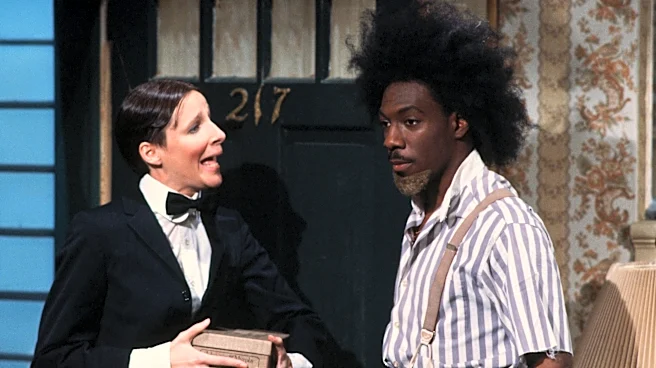









The most popular caregiving service in America has no website, no waitlist and no price tag. "Saturday Night Live" finally gave it a name: Sister.
In the parody commercial, comedian John Mulaney plays a man who is desperate to find care for his aging dad but can’t afford a private aide. Then he discovers Sister. She offers around-the-clock care, manages medications, handles doctor's appointments and best of all, costs nothing. Signing up takes a two-word text: "Dad fell."
With "Sister," "Saturday Night Live" did what it does best: It made us laugh by taking something we’ve come to accept and showing us how absurd it is. Here, it’s a care system built on the assumption that Sister will "quit her job, break her lease and move halfway across the country"
to take care of Dad.
Satire usually exaggerates the truth. For millions of women, "Sister" hit home because it barely had to.
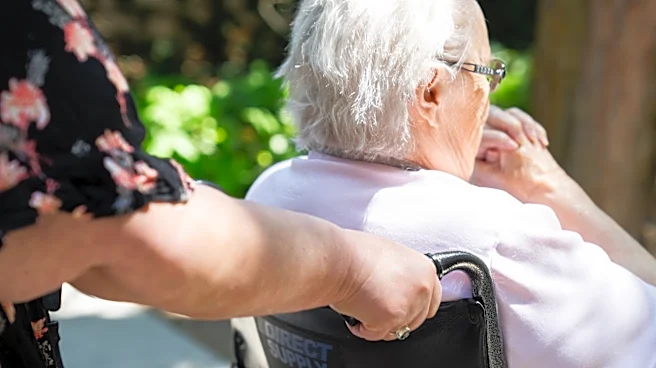
What played out as a three-minute comedy sketch reflects unequal expectations that shape years of women's lives, with sacrifices they’re expected to make without question. More than half of family caregivers − 56% − felt they had no choice but to take on the responsibility, according to the Caregiving in the US 2025 report from AARP and the National Alliance for Caregiving.
Women make up 61% of the country’s 63 million family caregivers, and nearly 1 in 4 provides around-the-clock care. But just because there isn’t an invoice doesn’t mean Sister’s care is free.
Their unpaid care is worth more than $643 billion annually, according to an analysis from The National Partnership for Women & Families, including more than $268 billion contributed by Black women, Latinas and Asian women. And that doesn’t begin to capture what they give up along the way: wages, promotions, savings and retirement security. Women caregivers lose an average of $9,400 in lifetime Social Security income, AARP found, compared with $6,800 for men.
And across all family caregivers, out-of-pocket spending now averages more than $11,500 a year, up nearly 60% since 2021.
That is the care system we call free.
And the price isn't measured in dollars alone. So many caregivers delay their own doctor's appointments because there simply aren't enough hours in the day. They’re physically and mentally exhausted − coordinating care, navigating insurance, managing emergencies, preparing meals − while neglecting their own needs. In fact, more than one in four women caregivers struggle to take care of their own health.
The sketch makes it easy to criticize brothers who rely on their sisters. But the real joke is bigger than any one family. America has built a care system that depends on someone, usually a woman, stepping in to do whatever it takes, regardless of what it costs, without offering any support.
For too many families, the care plan is not really a plan at all. It’s whoever can rearrange their life first. No one should have to sacrifice their livelihood, health or future because a loved one needs care. The solution isn’t simply dividing responsibilities more fairly within our families − it’s passing policies that ease the burden and make support more readily available to everyone who needs it.
The problem is structural, not individual − and it’s only getting worse. More Americans are living longer, and millions more will need care in the years ahead. But our care system is struggling to keep up. Worker shortages and long wait lists already make help difficult to find. Meanwhile, recent cuts to Medicaid, the largest payer for home care, threaten to further limit those services and leave families responsible for shouldering even more care.
There are ways to change this. Congress can save caregivers money and time, and provide more support through common-sense policy. Tax credits like those in Oklahoma, Connecticut and Nebraska could offset the thousands of dollars families spend out of pocket. Paid family and medical leave would give someone time to tend to a loved one without losing a paycheck. And stronger home care services would give families more reliable options when they need help.
We need a system that recognizes how essential care is to our lives and gives families the support they deserve. When we invest in caregivers, we invest in our economic strength as a country.
We laughed at "Saturday Night Live" because we recognized Sister. She’s our mother, our daughter, our neighbor, our co-worker. Maybe she’s us. But behind the laughter is something we can no longer afford to ignore. What happens when Sister needs care?
Who takes her to appointments? Who manages her medications? The wages and savings she sacrifices today may be what she needs to afford her own care tomorrow. Meanwhile, paying for a parent’s care can drain the savings and inheritance that might have helped protect her future. And the cost of doing nothing gets passed from one generation to the next.
At a time when affordability is the buzz word looming over every national debate, strengthening support for caregivers ought to be top of mind.
The people who care for everyone else deserve a future where they’re cared for, too. We cannot simply hope there’s another Sister waiting to answer the text.
Dr. Myechia Minter-Jordan is CEO of AARP. Ai-jen Poo is co-founder and executive director of Caring Across Generations.
This article originally appeared on USA TODAY: 'Saturday Night Live' 'Sister' sketch shows the real cost of 'free' caregiving