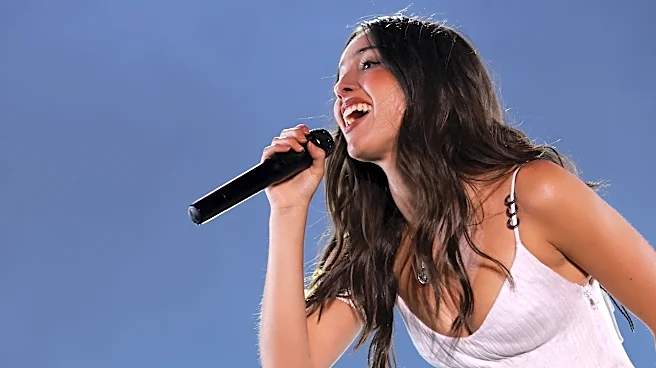


Olivia Rodrigo’s new Christmas single, "Take Me Home (4 Christmas)," reignited the decades-long debate regarding plagiarism and music copyright law. While tedious and dumb, the discourse that ensued missed music's most existential threat.
Upon release, the song drew comparisons to The Waitresses' 1981 classic, "Christmas Wrapping
," due to their similar new-wave sounds and tongue-in-cheek, talk-singy storytelling.These similarities prompted pretty baseless plagiarism allegations since, before the song was released, Waitresses songwriter and guitarist Christopher Butler made a Facebook post stating that Rodrigo contacted him to gush over the band and invited them to hear the song at the Columbus stop on her Unraveled Tour.
Rodrigo was also accused
of plagiarizing “Candy” by Robbie Williams, an accusation he "couldn't care less" about.
"There are only so many notes. Only so many chords. Only so many ways of putting them together before you inevitably find yourself somewhere somebody else has been," Williams wrote in a Nov. 9 Instagram post. “There's a difference between protecting your work and treating every vaguely familiar sequence of notes as a winning lottery ticket.”
How Robin Thicke's 'Blurred Lines' ... blurred lines

Williams highlights a real issue that’s plagued the music industry since the infamous “Blurred Lines” lawsuit, wherein Marvin Gaye’s estate successfully argued that Robin Thicke and Pharrell Williams’ song “Blurred Lines” had infringed the copyright of Gaye’s “Got to Give It Up.”
Musicians and the music community have long criticized copyright law, but the verdict in favor of the Gaye estate – despite the lack of stolen melodies, lyrics or significant instrumental melodies – set a precedent that copyright claims can be leveraged over something as ambiguous as a shared “vibe.”
The case sent shock waves through the industry that have been quelled thanks to more sensible copyright case decisions in the early 2020s. Still, the cultural impact remains. Rodrigo didn’t directly lift any vocal or instrumental melodies from the songs she’s accused of copying. Her song’s similarities to “Christmas Wrapping” are purely homage. Is mere inspiration enough to take someone to court? If so, every working artist should lawyer up.
Those critical of Rodrigo are mostly well-intentioned in their urge for artists to be properly credited when their art is borrowed, but veer into anti-art territory when arguing for an even more litigious music industry where the line between inspiration and unabashed thievery is obfuscated and both are punished equally.
The real enemy to original music is bad AI
Additionally, there’s more music being released today while the number of notes on a scale and musical chord progressions remain the same. Songs are bound to sound similar. Humans are creatures of habit.
Art exists in perpetuity, constantly inspiring the next thing and the next. There’s nothing new under the sun.
But as technology advances and humanity becomes secondary to machine, issues of musical theft and copyright law are about to get even more complicated. We have artificial intelligence to thank.
As if it wasn’t already littered with AI “music,” Spotify is introducing a service that allows listeners to create their own AI remixes and covers of songs. Set to release in early 2027, the company is still negotiating licensing deals and trying to persuade artists to embrace the technology, according to the Financial Times.
AI-generated music is all over TikTok. Users’ habit of completely decontextualizing songs into viral sound bites creates the perfect playground for AI slop to thrive.
Could AI end music?

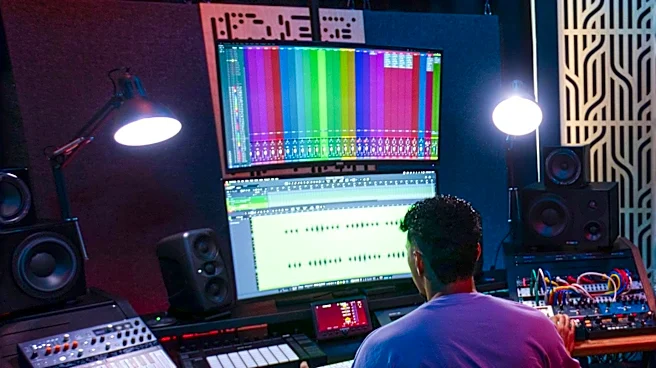
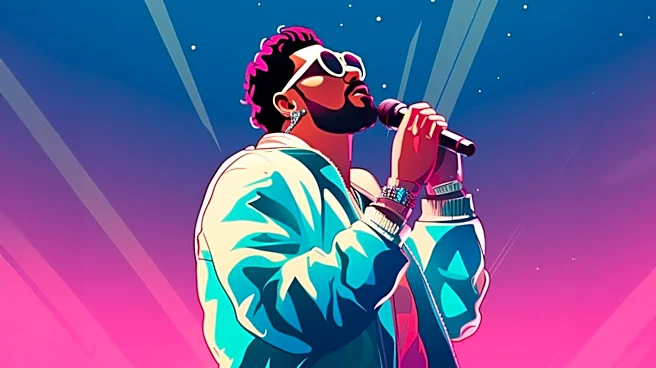
The problem with AI music in regard to copyright law stems from the technology’s inability to create on its own. AI “creates” music by analyzing vast databases of existing songs, audio files, sheet music and MIDI data, learning statistical and structural patterns and predicting a sequence of musical notes or sounds based on that information. AI vocal programs have already been used to replicate artists like Drake, Beyoncé and Taylor Swift.
The legality of AI music is currently being disputed in several lawsuits. One case was brought by four musicians, including the acclaimed country singer-songwriter Jason Isbell, who sued the music AI company Suno in September for allegedly imitating their voices and distinctive styles without permission. Suno has faced a series of lawsuits for massive copyright violations by allegedly using millions of songs to train its model without the permission of record companies and music publishers.
The outcome of these lawsuits will determine the future of AI’s place in the music industry. Questions still remain. Can AI copyright its own music despite its unoriginality? Are artists at the whims of record companies when it comes to AI using their voice and likeness? Will artists be forced to capitulate to AI in the future?
Whatever that sloppy future brings, the music industry and its consumers would be better off focusing their sights on the real enemy and leaving the antiquated plagiarism debates behind.
Kofi Mframa is an entertainment and culture columnist at USA TODAY.
This article originally appeared on USA TODAY: Olivia Rodrigo isn't a plagiarism threat. AI 'music' is | Opinion