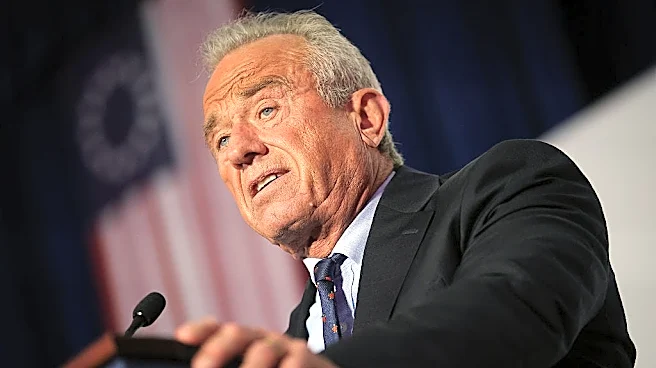






On the heels of an announcement of two measles-associated deaths in Pennsylvania, United States Secretary of Health and Human Services Robert F. Kennedy Jr. and Pennsylvania Governor Josh Shapiro clashed online, with Kennedy claiming the deaths may have been "fabricated."
Kennedy criticized Shapiro for his handling of the situation, questioning the language that was used surrounding the two deaths and repeating inaccurate information about the measles, mumps and rubella vaccine. Shapiro disputed his claims, lambasting the secretary for not encouraging people to get vaccinated and for previously "downplaying the severity of measles" during a visit to Pennsylvania.
Here's what to know about the situation.
RFK Jr. claims PA measles deaths may have been 'fabricated'
In posts from both his personal and U.S.
secretary of health accounts, Kennedy lambasted Shapiro's handling of the two deaths and questioned whether the deaths were "altogether fabricated."
"Governor Shapiro's unseemly rush to Lancaster County to convene a national press conference and his giddy delight in announcing two measles deaths was a morose commentary on the contemporary political dialogue," Kennedy said in an Aug. 26 X post. "The performance was a replay of the Democrats' COVID playbook: Fearmongering, misinformation, finger-pointing, and the weaponization of infectious disease fears for political gain."
He added that he believed the announcement of the deaths was "premature," adding "the deaths may even have been altogether fabricated by one of the Governor's hopeful staffers," as the Lancaster County coroner did not have a record of "any measles deaths."
The Pennsylvania Department of Health disputed this in an Aug. 26 post to X, saying that while not all deaths are referred to a coroner under Pennsylvania law, one of the deaths was under investigation by the Lancaster County coroner. The coroner, Dr. Stephen Diamantoni, has confirmed to multiple media outlets that his office is investigating the death.
Kennedy also accused Shapiro of "refusing to share information" with the county health department and the CDC. In another post, he slammed Shapiro for a phone call the two shared following the deaths, claiming that the MMR vaccine contains "human cellular debris" from aborted fetal cells.
Shapiro decries Kennedy for 'downplaying' measles severity during Pennsylvania visit
The same day, Shapiro fired back on X, posting a lengthy statement in which he called Kennedy's post "inaccurate and misleading," adding that the secretary was "making claims that have been debunked repeatedly by actual scientists and doctors."
Shapiro confirmed that he spoke to Kennedy on the phone and declined additional support in handling the measles outbreak, saying that the Pennsylvania Department of Health was already receiving support from staff at the CDC and HHS.
During the conversation, Shapiro said he encouraged Kennedy to promote vaccination and avoid misinformation, but Kennedy "launched into a tirade — talking about fetal tissue and blaming the previous Administration for this problem."
"He even told me it would be better if we went back to 'natural measles,'" Shapiro said.
He also referenced a previous visit by Kennedy to Lancaster County, where the secretary suggested that measles could be cured by chicken soup and vitamin A.
"As a dad, all I want is to protect our four kids," Shapiro said. "I know that’s how every parent feels. ... So what I’d ask of every parent in Pennsylvania: take any information you get about vaccines and talk to a trusted health care provider about it before you make your decision."
Did measles cause two deaths in Pennsylvania?
The two deaths in Pennsylvania were "measles-associated" deaths, a term the state uses when laboratory or epidemiological evidence of the disease is present, even if a medical certifier or coroner does not say that the disease was the immediate cause of death.
The Lancaster County coroner told reporters that his office was investigating the death of an infant who tested positive for measles and died from a ruptured spleen, the Philadelphia Inquirer reported. The infant died soon after birth. The primary cause of death was a laceration of the spleen, though measles antibodies were found in postmortem testing.
Measles infections acquired during pregnancy can cause complications to both the pregnant person and the fetus, according to the Mayo Clinic, including pregnancy loss, fetal death or complications with fetal development.
Paul Offit, director of the Vaccine Education Center at Children's Hospital of Philadelphia, told the Inquirer that infants can catch measles after birth or be born with it if their mother is sick and develops a rash within 10 days of giving birth. He also said measles can cause an enlarged spleen and that birth can cause it to rupture.
Debra Bogen, Pennsylvania's secretary of health, said in a statement published to X that she had reviewed both deaths and confirmed that both were associated with measles.
"DOH’s Epidemiology team thoroughly investigated and verified both individuals tested positive for measles," Bogen said. "The information was not reported to the public until the results of the epidemiological investigations were confirmed."
No information has been released about the second death.
Does the measles vaccine contain aborted fetal tissue?
No.
The production of some vaccines involves growing viruses in human cell cultures from two fetuses aborted in the 1960s, according to the American Academy of Pediatrics. But vaccines are filtered through a purification process during production, meaning no fetal tissue ends up in the final product.
The cell lines from the cultures developed in the 1960s are still growing, which means new tissue won't need to be collected, according the AAP.
Does the MMR vaccine prevent measles?
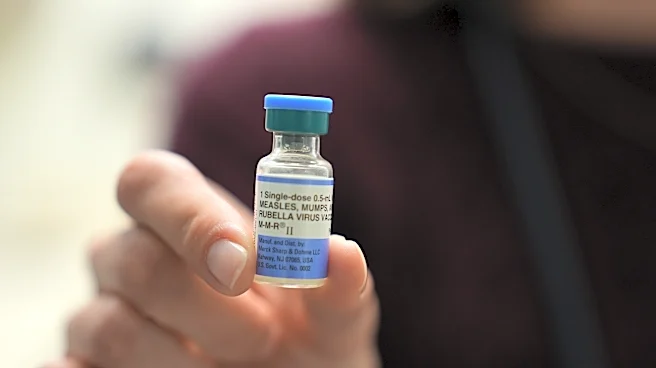
The MMR vaccine is about 97% effective at preventing measles in people who are fully vaccinated, meaning they have received two doses of the vaccine, according to the CDC. A single dose is 93% effective at preventing the disease.
If a measles infection does occur, it's likely that symptoms will be milder and that the disease won't be spread to other people as easily.
Are there measles cases in Pittsburgh?
As of Aug. 27, there were no measles cases among Allegheny County residents. But county officials warned that residents may have been exposed on Aug. 12 and Aug. 18 when an individual from another county who was diagnosed with the disease visited UPMC Children's Hospital Emergency Department.
They added that the individual was isolating and that they were reaching out to anyone who had been exposed.
There was one confirmed case in Butler County, and one confirmed case in Westmoreland County.
What are the symptoms of measles? What complications can measles cause?
Measles is particularly dangerous for babies and young children, though anyone can experience complications from the disease, according to the CDC. Symptoms typically start between seven to 14 days after coming into contact with the virus and may present similarly to the flu, with signs like a cough, runny nose, red/watery eyes and a high fever that may spike to more than 104 degrees. Koplik spots, or small white spots, may show up inside the mouth two to three days after symptoms start, and a measles rash generally appears three to five days after initial symptoms, beginning as flat red spots near the hairline before spreading down the body.
Common complications include ear infections, which occur in about one of every 10 children with measles, and diarrhea, which is reported in less than one of every 10 people with measles.
Measles can cause severe complications. These include:
- Hospitalization (occurs in approximately one in five unvaccinated people in the U.S. who get measles)
- Pneumonia (occurs in approximately one of every 20 children with measles and is the most common cause of death from measles in young children)
- Encephalitis (occurs in approximately one in every 1,000 children with measles and can lead to convulsions, deafness or intellectual disability)
- Death (occurs in approximately one to three in every 1,000 children with measles, generally from respiratory and neurological complications)
- Pregnancy complications
The disease can also cause immune amnesia, meaning they have a high risk of getting sick with other illnesses after catching measles. That's because the measles virus can damage immune cells that help fight off other infections, making the immune system temporarily "forget" how to respond to germs. This can last for months or years, according to the CDC.
Long term, measles rarely causes subacute sclerosing panencephalitis, which is a fatal disease of the nervous system. It typically develops seven to 10 years after a person has had measles. It's estimated that between seven to 11 out of every 100,000 people who contracted measles between 1989 to 1991 were at risk for developing the disease, though it's rarely reported in the United States because of widespread vaccination.
Finch Walker is the Pittsburgh Connect Reporter for the USA TODAY Network. Contact Walker at FWalker@usatodayco.com. Instagram: @finchwalker_. X: @_finchwalker.
This article originally appeared on USA TODAY: RFK Jr., Gov. Josh Shapiro clash over PA measles-related deaths