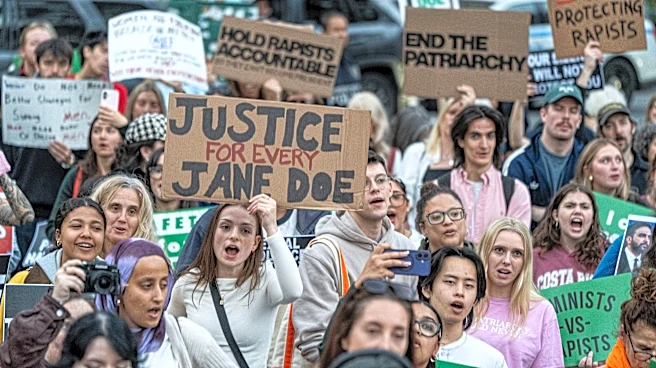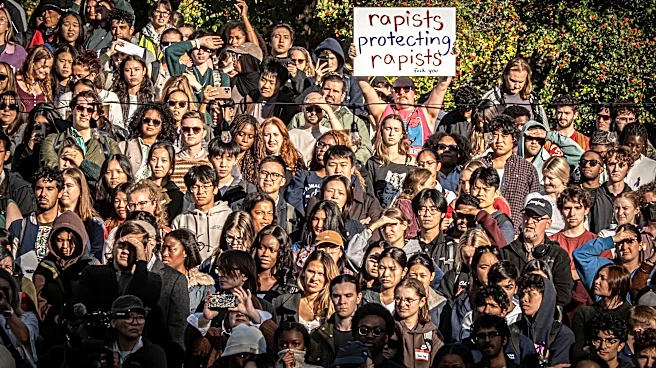







Since news broke of gang rape allegations against a Cornell University fraternity and a lawsuit filed by a former student, my phone has been abuzz with messages from fellow Cornell alumnae – many of them, like me, former sorority members.
We are furious at the callous way Chi Phi fraternity members appear to have regarded "Jane Doe" in their group Snapchat communications – as subhuman, a mere vehicle for their sexual gratification. But none of us are much surprised. The fraternity culture that enabled this remains vivid in our memories, even 15 years removed.
While at Cornell, we received an elite education from world-class professors. Simultaneously, through our participation in Greek life, we received an education in misogyny. At the time, what
we experienced created a nebulous sense of unease. In retrospect, we walked a gauntlet.
Many Cornell alumni I know have a story of suspected drugging at a fraternity party. Either they became inexplicably incapacitated, or they watched it happen to a friend.
Looking back, it is staggering how widespread this was; never since have I navigated a social space where being involuntarily drugged was considered a routine risk. But as teenagers venturing into nightlife for the first time, we accepted that it was part of the experience.

For college women, noxious party culture is normalized
Women who interacted with fraternity men quickly learned our core function in their eyes: sex objects. In sororities, this dynamic was explicitly structured into our social calendar. We were invited to fraternity mixers with themes like “CEOs and Secretary Hoes,” or “Golf Bros and Tennis Hoes.”
Women were not only objectified in the abstract; we were used as sexual currency for men to build status with one another. At one fraternity, a brother there told me, members recounted their sexual exploits at their weekly fraternity meeting, awarding a trophy jersey to the member with the most lauded encounter. The ritual explicitly incentivized the sexual conquest of women.
This culture spilled into our private encounters. A hookup behind closed doors might be interrupted by fellow fraternity brothers “accidentally” walking in. A consensual sexual encounter might morph into a fraternity man’s pressure to participate in increasingly extreme sex acts – with the goal, one suspected, of recounting them to other brothers later. Women became interchangeable; the primary aim was extracting sex to impress other men.
Looking back, choosing to spend time in such spaces feels ludicrous. Outside of a college setting, if a bar were notorious for being filled with men intent on drugging and exploiting women in order to impress other men, women would simply go elsewhere.
Indeed, that is what happened once my peers and I turned 21. By our senior year, we could drink at local bars or in off-campus apartments. Once we had viable alternatives to fraternity parties, we overwhelmingly avoided them, having learned they were noxious, degrading and unsafe.
Break up the monopoly fraternities have on nightlife
The core issue – as scholars of campus sexual assault have long documented – is that fraternities hold a functional monopoly on nightlife for students under 21 at universities located in small college towns.
Yes, underage drinking is illegal; in theory, students should simply wait until they are of age to drink. But college parties are widely seen as a quintessential part of undergraduate life, and many fear becoming socially isolated if they opt out. Controlling access to that social world grants fraternity men immense power.
Consider another recent example of monopoly power over a coveted social experience: live concerts. As Ticketmaster came to dominate concert ticketing, fans who wanted to see their favorite artists had little choice but to accept the extortionate prices it imposed.
Some Ticketmaster employees seemed to revel in that power, mocking the customers who had little choice but to accept their terms. In private internal communications, they reportedly boasted: “These people are so stupid”; “I almost feel bad taking advantage of them”; “Robbing them blind baby. That’s how we do.”
At many universities, fraternities exercise that same monopoly power over underage college social life. They also evince callous indifference toward those who participate in their spaces. If underage students at institutions like Cornell had a greater variety of nightlife options, fraternities would lose their present monopoly position that fuels such callousness. By occupying a niche rather than a monopoly, fraternities would find themselves competing with other safer, more respectful environments. Perhaps this would inspire them to treat women with basic human dignity.
Breaking this monopoly requires structural intervention. If sororities take seriously the safety and autonomy of their members, they should overturn their ban on alcohol and hosting their own college parties, investing in spaces where women control the culture. Universities should actively cultivate alternative social spaces, expanding the footprint of co-ops, language houses and identity-based living communities capable of hosting student-led nightlife.
Legal frameworks should adapt to facilitate a diversity of nightlife options on college campuses. Some advocate lowering the drinking age to 18 – as is true in parts of Canada – so commercial bars compete with fraternities from day one. Alternatively, lawmakers could consider creating legal safe harbors allowing universities to host regulated, safe social events with alcohol even for students under 21.
As long as young women have to enter male-controlled spaces to fully participate in campus life, fraternities will have a form of power that no student organization should have.
Universities, break this fraternity monopoly.

Chloe Grace Hart is an assistant professor of sociology at the University of Wisconsin-Madison.
This article originally appeared on USA TODAY: It’s time to end the fraternity monopoly on campus nightlife | Opinion