








It is legal for students to bring medication — but not every type of medicine, and not without approval.
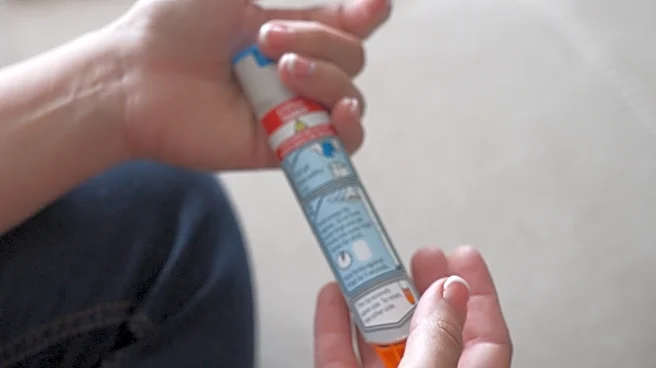
Under Pennsylvania law, students may be allowed to carry and self-administer prescribed asthma inhalers and epinephrine auto-injectors, such as EpiPens, at school. Other medications including daily prescriptions, allergy tablets, pain relievers and over-the-counter medicines — generally need to be handled through the school health office.
The distinction matters as families prepare for the school year: A parent should not simply place medication in a child’s backpack and assume it is permitted.
What students can self-carry
Pittsburgh Public School Code has policies allowing students to carry and use prescribed asthma inhalers and epinephrine auto-injectors under specified
conditions. The law was written to ensure a child can quickly access lifesaving medicine during an asthma attack or severe allergic reaction.
Before a student self-carries an inhaler or EpiPen, parents should expect to provide:
- Written permission from a parent or guardian.
- A written order and approval from the student’s licensed health-care provider.
- Documentation that the student is capable of using the medication safely and responsibly.
- A school nurse’s acknowledgment of the student’s ability to self-administer the medication.
The school may restrict or revoke the privilege if the student does not comply with the applicable school policy.
What should go to the nurse
For medications that are not approved for self-carry, families should contact the nurse at their child’s Pittsburgh Public School before the medication is sent in. This can include prescription medicine taken during the school day, nonprescription allergy medicine, pain relievers, vitamins or other treatments.
Pennsylvania school-health guidance generally requires a licensed provider’s specific medication order and written parent or guardian permission. The order should state the dosage, route, timing and reason the medication is needed.
Parents should also ask the school nurse how medication must be delivered and labeled. Schools commonly require medicine to be in its original pharmacy or manufacturer container, and a district may have its own form or procedure for the current school year.
Diabetes medication differs
State law separately allows eligible students with diabetes to possess and use their own medication and monitoring equipment. That also requires written approval from the student’s health-care provider and parent or guardian, along with written acknowledgment from the school nurse that the child can self-administer safely.
What PPS families should do
Before the first day — or before medicine needs to be given during the day — contact your child’s school nurse. Ask for the school’s current medication-administration form and whether the student may self-carry an emergency medication.
The practical takeaway is simple: Approved emergency medication can travel with a student; other medicine should be cleared with the school health office first.
This article by Gabby Sartori was created with the assistance of Artificial Intelligence (AI). Journalists were involved in every step of the information gathering, review, editing and publishing process. Learn more.
This article originally appeared on USA TODAY: Is it legal for student-carry medication? What Pennsylvania law allows