




It opens with a blast of electronica – keyboards frantically swerving and blipping until they crash into slices of electric guitar.
Eleven songs later, it ends softly, with the distinctive, slightly warbly voice of the late Dolly Parton trading feelings with Bono, himself no stranger to the power of a prayerful lyric.
The contrast between the album's beginning and ending would be puzzling with most bands.
But U2 has never been most bands. Predictability isn’t in their vocabulary.
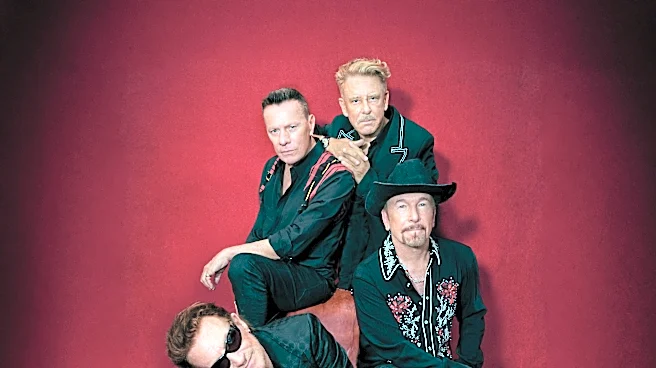
On “Carnaval de Luz,” their 16th studio album and first full album of new material in nine years, the everlasting quartet of Bono, The Edge, Larry Mullen Jr. and Adam Clayton dispense celebration and sorrow, pensiveness and silliness. They are the ringleaders of a circus
built on 50 years of brotherhood that has remained steadfast even during times of possible derailment.
Bono, still the undiminished architect of U2, has penned an arsenal of lyrics that sometimes teeter between poetry and gobbledygook (“Be ye kings or queens or emperors of despair/We’re not arguing the toss/We got some words for your boss,” he sings on “If the World is At War We’d Better Not Be”).
But no one lands artful delivery like the swaggering Irishman.

U2 honors its history while still moving forward on first new album in almost a decade
In the slashing “Silencio,” the punky refrain “it’s when I’m with you, I miss you the most” is joined by a mic drop to whisper “Campo de Cristo de silencio,” which sounds perfectly natural – expectant, even – from Bono.
Likewise the inherent melancholy produced by “The Greatest Show on Earth,” a quintessential U2 track that builds on The Edge’s melodic riffing but is anchored by Bono’s opaque conveyance.
Is the line “we were once the greatest show on Earth” an acquiescence to the inevitability of time? Or is it a story of love amid the wreckage (“Made a profession out of breaking your heart/You call it lies, I call it art”)? The beauty is in Bono letting the song breathe, leaving a blank canvas for listeners to project their own interpretation on the track most worthy of inclusion in the band’s sprawling oeuvre.
Subtle tributes to U2’s legendary career are sprinkled throughout. A razor-sharp riff and bright soul-inspired chorus color the nod to friendship in “Midnight Sunshine,” while the band conjures the imagery of their schoolyard origin in “If The World is At War We Better Not Be.”

Dolly Parton sings with Bono on new U2 album
Elsewhere on “Carnaval de Luz” (which translates to “carnival of light”), the quartet provides several moments of musical nostalgia. The rat-a-tat snare from Mullen Jr. and booming chorus about freedom in “Superficiality” is vintage U2. Likewise the intro to “Can’t Stop Us Now,” with The Edge’s guitar scratches and Clayton’s bass merging into an evocative swirl so synonymous with their sound.
Two songs – both spotlighting female singers in some form – mark artistic detours into Latin and country music and are definitive highlights.
“The Mirror Maker (Rosalía)” is inspired by Catalan superstar Rosalía, who weaves flamenco, R&B and pop into her own music. But amid the throbbing bass and prominent higher-range vocals from The Edge are lyrical references to St. Cecilia, the patron saint of musicians. How very Bono to merge pop art with Catholicism.
But it’s the album closer, “Torn,” that is seizing headlines due to Parton’s appearance, her last recording before her death in August.
In liner notes for the album, Bono writes that Parton had been working on the song and when U2 called told them, "You can take it anywhere you like and I might like it there, too." Bono continues, “Somehow this country song became a song about a country … tearing itself apart … an uncivil war fought at the kitchen table." It is not, he points out, exclusively an American tale, but a family one.
The pair trades verses over a gentle heartbeat and sparse guitar, with Parton's voice audibly shaking with emotion as she sings, "Hands that used to hold you clenched in fists/Words that used to soothe you cut you into bits/Are you your brother's keeper now, or know what you're fighting for?/Nothing hurts a mother more than a family at war."
It’s a contemplative closer to an album from a veteran band that has said so much through the years, yet still isn’t done shouting.
This article originally appeared on USA TODAY: With an assist from Dolly Parton, U2 defies expectations again | Review