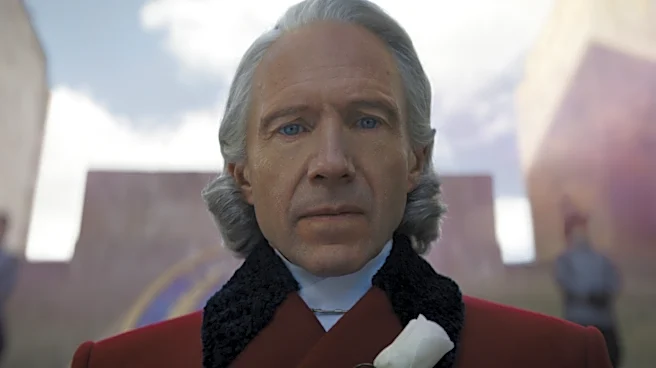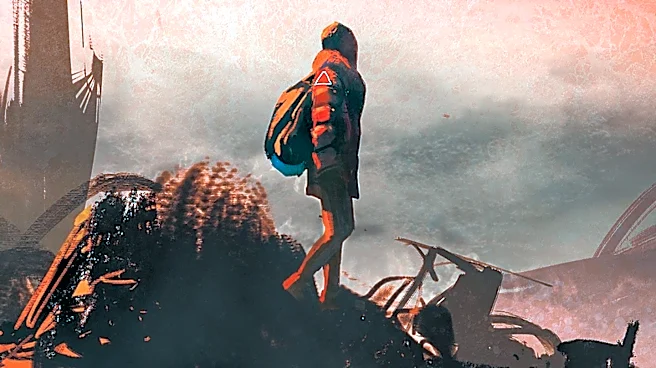







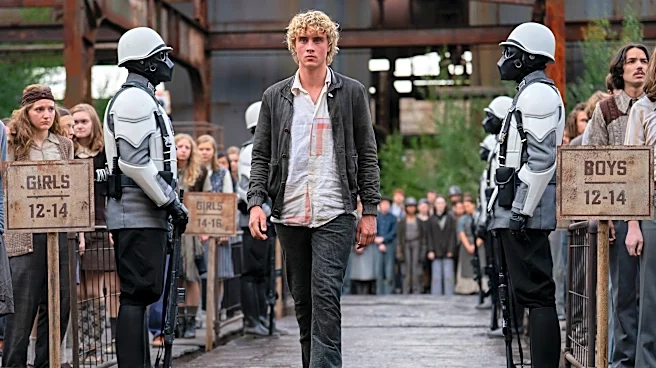

I approach book adaptations with trepidation.
It’s all too common to feel utter disappointment when our favorite books hit the screens, especially when they’re unable to translate what it felt like to live in that beloved fictional world. This year has seen much of that, in this reader’s humble opinion. (Cough cough, “Wuthering Heights.”)
But I’m here to say “Sunrise on the Reaping” (in theaters now) is not one of those disappointments.
The Hunger Games franchise is revered in the book world for faithful adaptations, with a crew of writers, directors and producers who worked closely with author Suzanne Collins for the series’ first five installments. “Sunrise on the Reaping,” the new prequel, was no different. When I left the theater, I was reminded
of exactly what makes these adaptations so enduring – Collins’ source material, written so tightly that reading it is a cinematic experience in and of itself.

‘Sunrise on the Reaping’ movie is a testament to Suzanne Collins’ genius
From the start, “Sunrise on the Reaping” was a close collaboration between Collins and the film team, which includes director Francis Lawrence, producer Nina Jacobson and writers Billy Ray and Michael Lesslie, all of whom have worked on other movies in the franchise. The book and the movie were announced simultaneously and developed in tandem, a “very different” process on the film side, Jacobson told Variety in 2025.
Films and books are fundamentally different mediums. It’s necessary to slim down tomes for a palatable runtime, and I appreciate a movie that doesn’t hold me hostage for three and a half hours. So I understand there must be cuts.
And there are a few changes in "Sunrise on the Reaping," notably the chariot parade and Wellie’s demise. The other movies do this, too.
But small changes feel forgivable when you walk out of the theater with the same gut-wrenching feeling as when you read the book.
And what a book it is. “Sunrise on the Reaping” occurs 24 years before the events of “The Hunger Games.” It’s the 50th Hunger Games and the second Quarter Quell, and this year’s twist is a game with double the tributes. Haymitch Abernathy is one of four from District 12.
The movie simply adds to the already full-bodied world Collins created. The book is told in first person, so we’re inside Haymitch’s head from its ambivalent start to pessimistic end. But the film broadens this to darken the tone from the jump. Haymitch running around the back corners of District 12 and hanging with his girlfriend, Lenore Dove, is how the book opens, but the movie intersperses clips of the Peacekeepers setting up the Reaping. This is not a love story, the film seems to warn us, despite Haymitch’s initial naivety. You already know how this ends.
Joseph Zada, for his part, does an excellent job with Haymitch’s excruciating slide from careless, love-struck teen to jaded alcoholic. His anxiety and panic are felt through visceral close-ups. Fighting for his life in the arena, I felt like I was a teen again reading “The Hunger Games” and wincing at Katniss’ injuries like they were my own.

Why the Hunger Games franchise continues to please fans
The early screening I attended was full of fans in Capitol drag and cosplaying Woody Harrelson’s pajama look from a “Mockingjay − Part 2” photo call. These are the fans that grew up on the Hunger Games series, learning critical thinking skills, a healthy dose of distrust in authority and a love of dystopian literature. Now adults in the social media and misinformation age, Collins re-emerged to write about propaganda and the digital construction of “reality.”
Sure, there are plenty of Easter eggs for longtime fans, like Jennifer Lawrence and Josh Hutcherson’s (too short) cameo, a haunting violin soundtrack for Beetee like in “Catching Fire” and a young Effie Trinket (Elle Fanning) yearning for a touch of mahogany. But what makes “Sunrise on the Reaping” a win for readers is the respect that the filmmakers take in translating Collins’ world.
I love to ask the authors I’m interviewing how they feel about the adaptation process. I never get the same answer twice. Some want to write and consult closely; others don't want to be involved.
But it would suit Hollywood to take a page from the Collins-Lionsgate collaboration – books are not just IP to buy or rough ideas to chop up.
Though "Project Hail Mary" was an early standout, this year has made me largely cynical about book-to-screen adaptations. Can we just stop turning everything into a movie or show? I thought, half a dozen times this year.
“Sunrise on the Reaping” left me more optimistic. The movie has hardcore fans rereading the series to prepare. Others will use it as an excuse to read them for the first time. And, like me, I know they won’t be disappointed in either medium.
Clare Mulroy is USA TODAY’s Books Reporter, covering buzzy releases, chatting with authors and diving into the culture of reading. Find her on Instagram, subscribe to our weekly Books newsletter or tell her what you’re reading at cmulroy@usatoday.com.
This article originally appeared on USA TODAY: 'Sunrise on the Reaping' restores my faith in book adaptations