






Alabama has executed a death row inmate for the murder of an Elvis impersonator and his ex-wife nearly 30 years ago.
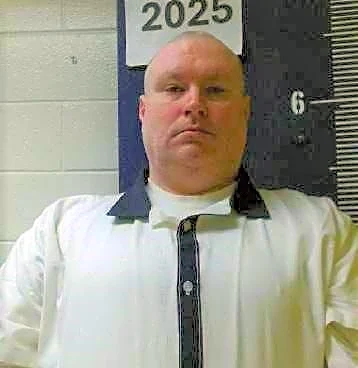
The state executed Jeffery Lee, 49, by lethal injection on Thursday, Sept. 17, just three months after he won a last-minute stay of execution over the controversial execution method of nitrogen gas. The state pronounced Lee dead at 6:22 p.m. CT.
Lee was convicted of fatally shooting Jimmy Ellis, 53, and Elaine Thompson, 44, during a pawn shop holdup in 1998 in Orrville, about 60 miles west of Montgomery. Ellis was the owner of the shop and a noted Elvis impersonator with an international following, while Thompson was his ex-wife who also worked at the pawn shop. Another employee survived her wounds by playing dead.
The judge presiding
over Lee's trial sentenced him to death even though a jury voted 7-5 to give him life in prison. The practice − called judicial override − was abolished in Alabama in 2017 but the move did not apply to old cases.
Lee's attorneys have been arguing that the jury's verdict should have been honored and that Alabama shouldn't be able to change execution methods the way it did. The U.S. Supreme Court declined to intervene on Thursday.
Lee is the second inmate to be executed in Alabama this year and the 27th in the nation.
Here's what you need to know about Lee's execution and more about who Ellis and Thompson were.
Jeffery Lee's crime and controversial sentencing
On Dec. 12, 1998, Jeffery Lee walked into a pawn shop and shouted "Give me your money" as two accomplices waited in a car, court records say. Within six seconds, Lee used a sawed-off shotgun to shoot Ellis, Thompson and an employee named Helen King, court records and archived news reports show.
A jury found Lee guilty of first-degree murder and voted 7-5 to sentence him to life in prison. But in a move that shocked the courtroom six months later, Dallas County Circuit Judge Jack Meigs overrode the majority-black jury's decision and sentenced Lee to death.
"With cold precision and premeditation," Lee gunned down three people "who were doing nothing more than trying to earn a living," Meigs wrote in his ruling in 2000, according to an archived story in the Montgomery Advertiser, part of the USA TODAY Network.
Meigs handed down the death penalty even after the prosecutor in the case said he was pleased with the jury's recommendation. "This will take him out of society the rest of his life," then-District Attorney Ed Greene told the Selma-Times Journal, referring to a sentence of life in prison.

Two of the jurors in Lee's case recently spoke out about his death sentence.
"It shook me when I heard it," one of the unnamed jurors says in a statement told the Life for Jeffery Lee Campaign. "If he's gonna make the last decision, what'd you need us there for?"
The other juror said that Lee needs to be punished for his crime but that: "I don't want him put to death."
As deputies led Lee out of the courthouse after he was sentenced to death, he said: "It's in the hands of the Lord now," the Advertiser reported.
The Life for Jeffery Lee campaign planned to demonstrate outside of Alabama Gov. Kay Ivey's mansion on Thursday in part "to honor the jury that voted for his life."
In a statement after the execution, Ivey said Lee's death sentence was deserved and that she was committed to justice being served in the case.
“Tonight, that promise was fulfilled for his victims, Jimmy Ellis and Elaine Thompson, as well as for their loved ones who have long-awaited his sentence to be carried out," she said. "This case underscores exactly why the law passed in 2017 ending so-called ‘judicial override’ did not apply to existing death sentences like Mr. Lee’s. These victims have waited long enough, and I pray they can feel peace and have closure.”
Lee is one of more than two dozen inmates still sentenced to death in Alabama as a result of judicial override, according to the nonprofit Death Penalty Information Center.
Jefferey Lee's life was spared in June
Lee had been set to be executed by the controversial method of nitrogen gas on June 11. But two days beforehand, a federal Alabama judge stopped the state from carrying it out, ruling that the method amounts to cruel and unusual punishment in violation of the U.S. Constitution.
The ruling came after U.S. District Judge Emily Marks presided over a hearing about how much pain inmates feel during a nitrogen gas execution. She concluded that they experience up to three minutes of "severe air hunger" resulting in emotional distress, anxiety, physiological stress, and physical discomfort. Marks' ruling blocks the state from using the method.
Alabama was the first state in the nation to carry out a nitrogen gas execution, that of Kenneth Eugene Smith in 2024. The state executed six other inmates using the method, and Louisiana has used it once.
Alabama rescheduled Lee's execution, only this time using the more common lethal injection method. Marks recently declined a request from Lee's attorneys to again stop the execution.
"Court after court, appeal after appeal, the record spoke with one voice and the verdict held strong," Alabama Attorney General Steve Marshall said in a statement after the execution. "Nothing can give back what was taken from Jimmy and Elaine and their families, but today we proved that every innocent life is worth fighting for, no matter how long it takes.”

Who were Jimmy Ellis and Elaine Thompson?
Jimmy Ellis and Elaine Thompson, who had previously been husband and wife, were beloved community members and parents who were killed just about two weeks before Christmas, which made the holidays particularly tough on their loved ones.
"It's been hard for everybody," Jimmy Ellis Jr. told the Selma-Times Journal in 2000. "The kids took it hard."
Craig Crenshaw, who befriended the elder Ellis after seeing him perform, described his slain friend as a generous man and said that if Lee needed money, all he had to do was ask Ellis.
Ellis performed under the stage name Orion, and a 2015 documentary tells his life story. ("Orion: The Man Who Would Be King")
Ellis began his recording career in 1964, and his first two singles were covers of two Elvis hits, “That’s All Right” and “Blue Moon of Kentucky,” according to Sun Records. In all, he recorded 11 albums with Sun and toured with the likes of Dionne Warwick, the Oak Ridge Boys and Jerry Lee Lewis, Sun Records says.
The label described Ellis as being unable to escape the uncanny resemblance his voice had to Elvis's, and that at one point, he even released a single called, “I’m Trying Not to Sound Like Elvis.”
Thompson's sister, Holly Ammons, told the newspaper that she last saw Thompson when they went out shopping the weekend after Thanksgiving. She described Thompson as an active woman who loved life and was the backbone of her close-knit family.
Handful of states keep up execution pace
So far this year, 38 executions have either been carried out or are scheduled in seven states, with more expected to be added to the calendar.
Last year, 11 states carried out 47 executions, with most being carried out in Florida, Alabama, South Carolina and Texas. It was the most executions carried out in a single year in the U.S. since 2009.
Florida has been executing a state record number of inmates. Of the 74 executions carried out in the U.S. since 2025, Florida accounts for 34 of them. That's 46%, and that figure is increasing. Of this year's 27 executions, Florida has carried out 15. That's 56%.
Contributing: Sarah Clifton, the Montgomery Advertiser
Amanda Lee Myers is a senior crime reporter who covers the death penalty, cold cases and breaking news for USA TODAY. Follow her on X at @amandaleeusat.
This article originally appeared on USA TODAY: Famed Elvis impersonator was murdered with ex-wife. Their killer was just executed.