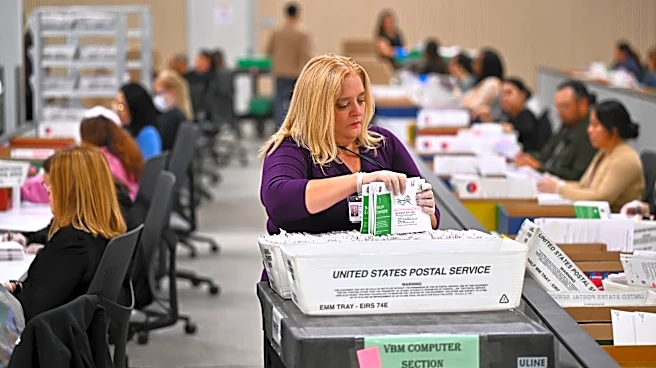






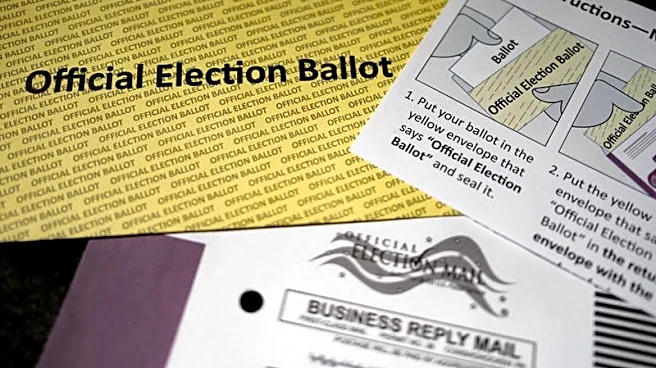
Current and former election officials said it would take something short of "an act of God" for their states and localities to comply with a new U.S. Postal Service mail-in ballot rule just weeks before the midterm elections.
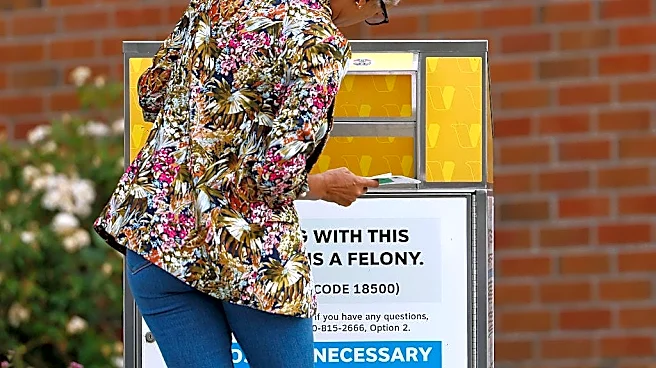
The rule, which the Postal Service finalized Aug. 26 in response to an executive order President Donald Trump issued in March, requires state and local election officials to submit voters’ names and addresses to USPS through a new portal.
Only voters whose information is submitted by states would be allowed to receive and return mail-in ballots. The rule also establishes new design requirements, including a tracking barcode for mail-in ballot envelopes that states must create and submit to the USPS for approval.
But time has
already essentially run out, Arizona Secretary of State Adrian Fontes told USA TODAY.
"This is a logistical nightmare," said Fontes, a Democrat. "It's just too late from a pragmatic, practical application perspective."
On Aug. 24, the Supreme Court cleared the way for the Postal Service to issue the rule. It will remain in effect for the midterms unless it is blocked by the courts. Multiple lawsuits over its constitutionality have already been filed, including one by 24 states and another by voting rights groups. In both lawsuits, a judge has granted a temporary restraining order blocking part of the rule from taking effect. A joint hearing on a long-term block to keep it from being used in the 2026 midterms is scheduled for Sept. 3.
The Postal Service did not respond to emailed questions about the rule, including when states can start submitting voter names to the portal, what standards they will be expected to meet to have envelopes approved and how training for USPS employees will be carried out to ensure ballots are properly handled. USPS has previously said it cannot comment on topics subject to pending litigation.
White House spokeswoman Lauren Bis said the USPS rule "was proposed months ago giving election officials ample time to prepare for the 2026 election."
"Any confusion was caused by radical Democrats’ litigation to stop these commonsense measures that protect the security of mail-in ballots and ensure only Americans are electing American leaders. The Trump Administration will continue to lawfully enact the agenda President Trump was elected on – which includes the safety and security of our elections," Bis said.
Meanwhile, Fontes and other state and local election officials are grappling with the logistics of what it would take to comply.
Election planning starts months, or even years, before early voting begins, they said, and ballot language must be cleared with state officials. Envelopes were purchased months ago, they added, and some of them already have stamps affixed. All of this was done on a tight budget, said Carolina Lopez, a former Miami-Dade County, Florida, election administrator.
"If there was a change today or any time between these federal – or even state – deadlines, it would take short of an act of God" to pull off the elections, Lopez said. "It does require time and money."
Because the Constitution gives states authority over election administration, every state has different laws, rules and standards for what ballots and envelopes look like, when they must be mailed to voters and how and when mailed ballots can be returned.
Little time
Local officials must comply with federal deadlines to send ballots to military and overseas voters at least 45 days before the election – that's in mid-September. States also have laws determining when ballots must be mailed to voters.
Twenty states send mail-in ballots to voters 45 days or more before an election, according to the National Conference of State Legislatures. For example, North Carolina and Delaware begin sending ballots out the first week of September.
Fontes said he's operating on faith that courts will halt the Postal Service rule from taking effect in the 2026 midterms.
"Otherwise, what am I supposed to do? Go into a full-fledged panic and send everybody into emergency mode down a path that they very likely won't have to finish and upset the already busy, underfunded, understaffed apple cart that we're already running down the trail?" he said. "We just can't do this. We don't live in a world where miracles happen."
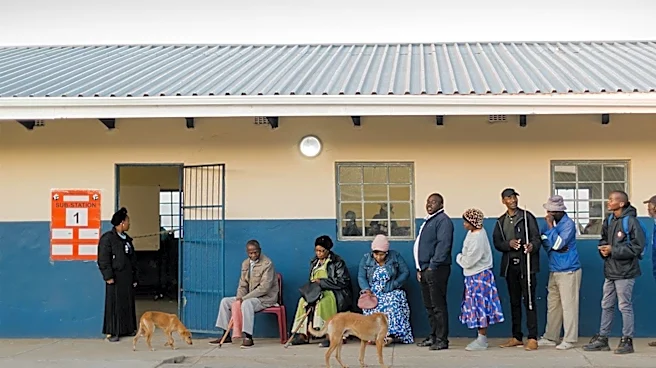
States that can't or won't comply with the new rule won't be allowed to send ballots in the mail. That would be a particular problem for the eight states and Washington, D.C., which allow all elections to be conducted entirely by mail.
Voting by mail has become so popular – nearly 30% of voters cast an absentee ballot in the 2024 election – that many states don't have enough equipment to conduct all in-person elections if they are not allowed to mail ballots, state election officials said. In some cases, not enough of equipment, such as private booths to mark ballots, is available today for states to purchase on short notice.
"It's not like they're not in the supply chain, or you can't get a bunch of them on eBay or something. They just don't exist," Fontes said.
For example, Maricopa County, Arizona, serves so many voters that it purchases special ballot paper over a year in advance of an election, he said. Obtaining enough such paper, he added, for reprinting ballots to meet the new USPS specifications, or to have sufficient pre-printed ballots for dramatically increased in-person polling locations, might not be possible.
In Orange County, California, military and overseas ballots will be printed before the end of next week, said Bob Page, the county's registrar of voters.
"For our 1.9 million voters locally, we will start printing those ballots the week of Labor Day," Page said.
California, which has more than 23 million registered voters, is among the states that send ballots by mail to every voter.

Many states and counties use the same handful of printers around the country because of their expertise, so they cannot wait until the Postal Service approves envelope design or approves voter lists, said Amanda Gonzalez, the Jefferson County, Colorado, clerk and recorder. Many printers have contracts to produce ballots and addressed envelopes.
"They have top security and they make sure that our processes are well done," Gonzalez said. "There just isn't a lot of wiggle room."
The ballot certification deadline in Colorado is Sept. 2, she said. That gives Gonzalez at most six days to get ballot proofs to her printer, once she has final confirmation of what the ballot and envelope must look like.
Ricky Keech, deputy elections director for Loudoun County, Virginia, said the final proofs of the mail-in ballots will go to their mailing vendor by the end of this week and be sent out to voters the week of Sept. 18.
"The deadlines are pretty much passed at this point and our envelopes for this election were printed a month ago," Keech said.
Is USPS prepared?
Several election officials and government advocates have questioned how quickly the Postal Service can stand up the systems necessary to ensure the rule can be followed for this election. Sometimes, it can take up to a year for federal agency to implement a new rule it has approved.
"If the Postal Service is trying to put in place a new portal for who gets a ballot, that timing will come to a head very soon," Aaron Blacksberg, federal policy counsel at the Institute for Responsive Government, said.
Nevada Secretary of State Cisco Aguilar said he doesn't believe the Postal Service will be ready to enforce the rule in the midterm elections.
"I don't think there is one ounce of opportunity that the post office can put this database together in less than 70 days," said Aguilar, a Democrat.
William Hensley, a former USPS election mail specialist, said the Postal Service has multiple responsibilities to quickly accomplish in order to make the rule work for 2026. The agency's cyber and technology team, he added, is "totally capable" of standing up the infrastructure needed for a portal states will use to submit voters names.
He said he is more concerned about the parts of the rule that require people to assess whether the mailed ballots meet all of the requirements and can be sent to voters or returned to local election officials.
Those employees "will need to undertake a lot of training to make sure that they're getting this right and that they're not inadvertently rejecting compliant mail pieces that could delay delivery of those ballots," he said. "That training doesn't happen overnight."
(This story was updated to add new information.)
This article originally appeared on USA TODAY: Election officials say mail-in ballot rules could compromise midterms