




On the Wednesday, September 23, 2026, episode of The Excerpt podcast:
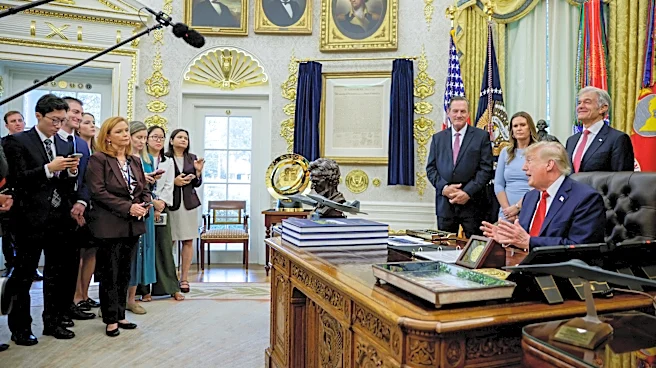
This fight is bigger than which reporters enter the White House. BrieAnna Frank, USA TODAY First Amendment reporting fellow, explains why fewer journalists with firsthand access could narrow what the public can independently learn and verify, and how a loss in court could give future administrations more room to restrict the press.Hit play on the player below to hear the podcast and follow along with the transcript beneath it. This transcript was automatically generated, and then edited for clarity in its current form. There may be some differences between the audio and the text.
Podcasts: True crime, in-depth interviews and more USA TODAY podcasts right here
Dana Taylor:
Who
gets to decide which journalists can question the president and report from the White House? And what happens if that access can be taken away? That fight has now become a major legal battle with implications that could extend well beyond the White House. This is USA TODAY'S The Excerpt. I'm Dana Taylor. Joining me to share her insights is USA TODAY First Amendment Reporting Fellow BrieAnna Frank. So good to speak with you again, BrieAnna.
BrieAnna Frank:
Thanks for having me, Dana.
Dana Taylor:
If someone doesn't watch CNN or trusts the national media, why should they care about these reporters being banned from the White House?
BrieAnna Frank:
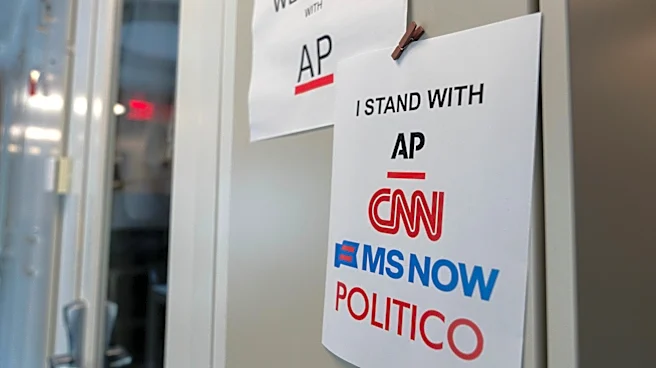
According to the news outlets at the center of this ban, as well as advocacy groups, including the National Press Club, the Freedom of the Press Foundation, they've said that this is about much more than the reporters who have now been banned from the White House. This is a broader First Amendment issue that follows countless other conflicts the Trump administration has had with the news media over the years. And they've also said this has broader implications for the American public. If at the end of the day, these news outlets are granted access to these spaces to gather information and report it to the public, having a smaller number of outlets who are given that access thus has an impact on what information ends up going out to the public. So they have certainly referred to this as an alarming escalation of President Trump's conflict with the news media that they say at the end of the day has negative implications for the public at large.
Dana Taylor:
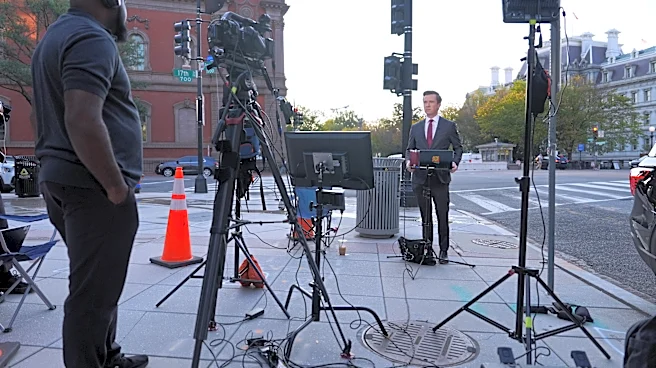
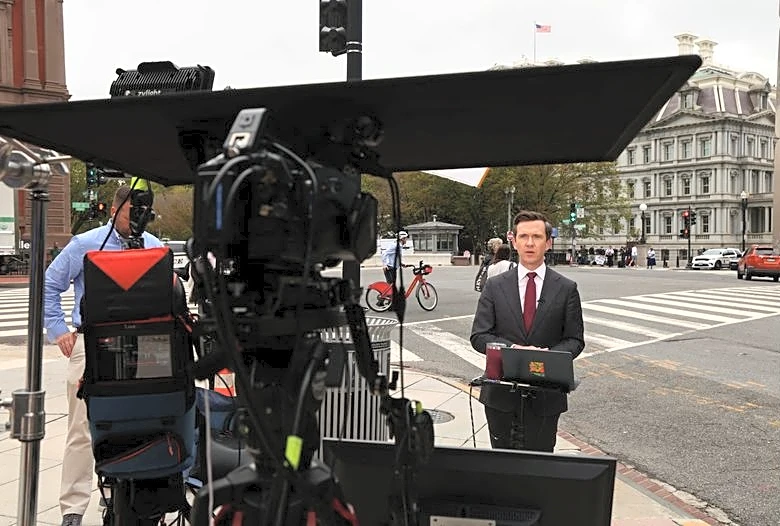
Then for people who think they can still report from across the street, what's the practical difference? What access was lost and what can reporters no longer see or verify independently?
BrieAnna Frank:
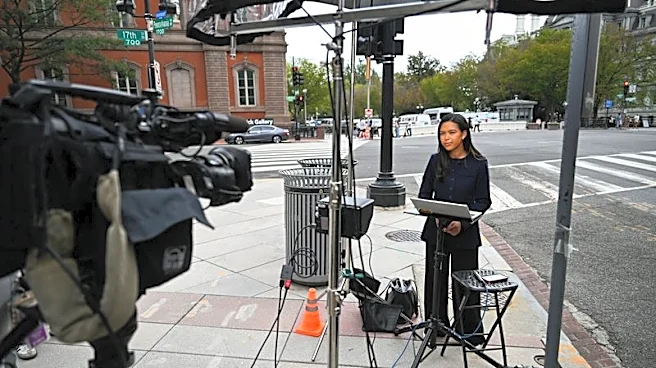
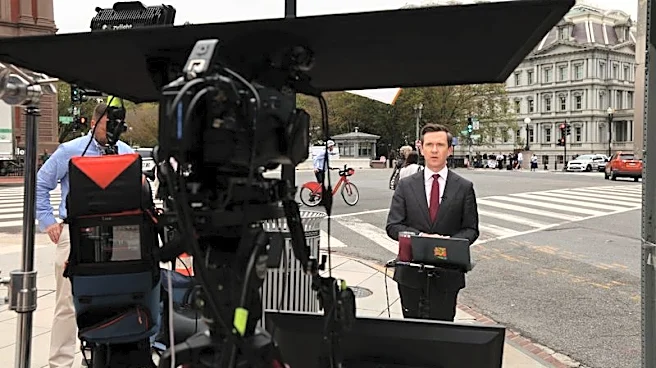
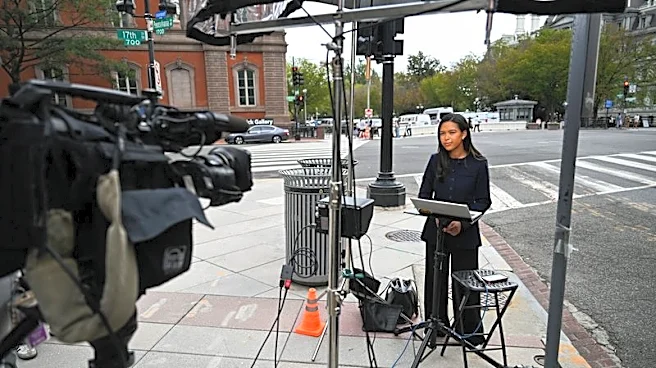
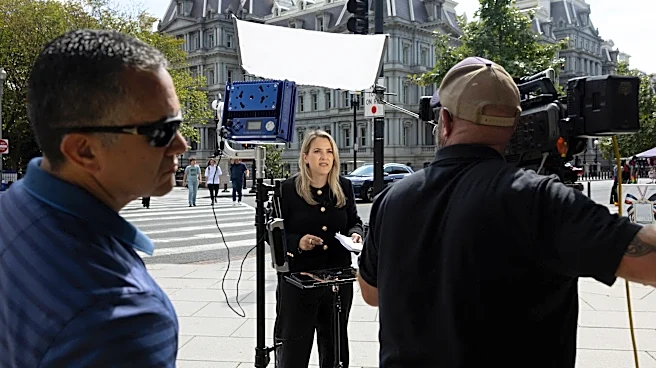
Each of these outlets has pledged to continue reporting on the White House despite this ban. Reporters from each of these outlets were denied entry to the complex. But in speaking with experts about this, they said there is no getting around the fact that not having access to a certain space makes it harder to report on what's going on inside. So while these outlets may have sourcing that will help them get that information, there is still a difference in what they would be able to report on if they were inside the doors seeing these things happen as they unfold.
Dana Taylor:
At the heart of this is the claim that the government is punishing outlets for their coverage. What would these outlets have to prove in court and how important could Trump's own public statements be to that argument?
BrieAnna Frank:
What these news outlets are arguing is that the forums that they have been kicked out of are non-public forums. And in those types of forums, the government can impose restrictions on speech, but they have to be viewpoint neutral, and they also have to be reasonable in light of the larger concern that the administration is targeting. So in their complaints, they acknowledge that the president referred to them as, quote, "fake news" and explicitly said that he was displeased with their coverage. So they are pointing to that as proof of what they say indicates that this is not a viewpoint neutral decision and would therefore be unconstitutional. Though again, a court would have to agree with them in their arguments that these forums that they've been banned from have those requirements.
Dana Taylor:
And beyond the First Amendment issues, these media outlets argue they were stripped of access without notice or process. Why does that matter legally?
BrieAnna Frank:
One of the legal cases that their complaint is pointing to is from the 1970s, in which a reporter's White House press pass was similarly revoked. And in that case, a court said that the White House can't arbitrarily deny these press passes. And the court said that under the Fifth Amendment, there is a due process that would have to happen for a press pass to be revoked like this. These news outlets are arguing that there was no due process, there was no suggestion beforehand or any type of written instruction that this would be the case. They are arguing that this was an arbitrary decision that violates their First Amendment rights.
Dana Taylor:
If the news outlets do win, what would a meaningful victory look like? Could the administration still limit access through different rules or procedures?
BrieAnna Frank:
Well, courts have acknowledged that presidential administrations do have some discretion as it relates to access for news media. In that 1970s case that I mentioned earlier, the court said that the president can choose based on viewpoint which news outlets he wants to grant interviews to. And as far as a victory, these outlets again are asking for this specific restriction to be lifted, but news outlets and other advocacy groups have asked for a broader shift in how the Trump administration responds to news media. So there is a broader legal fight happening between the Trump administration and the news media with the Pentagon, for example.
The Pentagon imposed a series of restrictions on the news media that led to a number, in fact, most mainstream news outlets losing access to the building last year. That's an ongoing legal fight with The New York Times across the board. Though, we would have to see if a judge rules in favor of the news outlets in this issue, whether more would come for other outlets or in other facets of the administration.
Dana Taylor:
And then if they lose, what could that mean for press access, and government transparency really, going forward?
BrieAnna Frank:
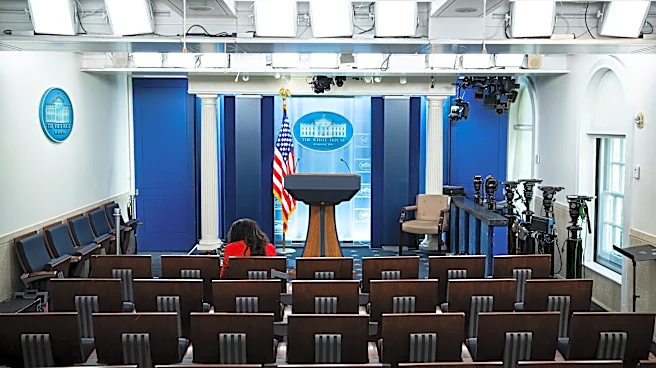
Well, if they lose, it certainly grants President Trump the ability to curate even further which news outlets have access to him. There was a case involving the Associated Press last year when the Associated Press was similarly kicked out of the White House over the news outlet's refusal to adopt the term Gulf of America after President Trump renamed it from the widely known Gulf of Mexico. And a district court initially sided with the Associated Press, but an appeals court later said that at least with certain spaces like Air Force One and the Oval Office, those are personal workspaces for the president and he has a greater ability without violating the First Amendment to decide who gets access to those spaces. Though, the appeals court did say that the Associated Press should be granted to larger spaces like the Press Briefing Room.
But in that decision and if this court in this case were to rule in President Trump's favor, it certainly gives him more reason to potentially try to impose similar restrictions in the future. Last week when he made this announcement, he did suggest that more restrictions could follow. So we would have to see whether a ruling one way or the other in this case would actually affect his willingness to try to do this with other news outlets.
Dana Taylor:
Have previous administrations, Republican or Democrat, tried to limit access in similar ways?
BrieAnna Frank:
There have been previous incidents involving presidential administrations having these conflicts with news outlets over access. During President Barack Obama's administration, for example, there was an incident in which Fox News was denied access to an interview, but other networks refused to participate in that if Fox News was not included and that restriction ended up being lifted. There are a number of other conflicts, like under the Nixon administration between the administration and news outlets. But experts I've talked to said that even though there is a naturally combative relationship between the president and the news media, what's happening under President Trump's administration is, in their view, unprecedented as far as the number of news outlets that have gotten wrapped up in these legal fights and the extent to which these restrictions are being imposed.
For example, I was talking to somebody who said, "Even though in some ways this echoes the Associated Press ban, that was against one outlet from certain spaces over a singular decision. With this, we're talking about three news outlets being affected at once over a general sense or perception of their coverage being unfair. And it appears at least, based off of the reporters who were denied access on Saturday to be, again, a restriction on the White House complex entirely." So this incident does echo similar conflicts in the past, but in many other ways it is unique.
Dana Taylor:
BrieAnna Frank is a First Amendment reporting fellow for USA Today. Thank you so much, BrieAnna.
BrieAnna Frank:
Thanks for having me.
Dana Taylor:
Share your thoughts in the comments or drop us a line at podcasts@usatoday.com. I'm your host, Dana Taylor, and that's today's The Excerpt.
This article originally appeared on USA TODAY: What happens when the White House bans reporters? | The Excerpt