





Lubbock, TX − Before last week, Tristan Wright considered himself a pretty ordinary 22-year-old. He was, by his own description, something of a nerd.
He loved music, competing nationally as a saxophonist. He spent his free time playing “Dungeons & Dragons” with friends, had recently taken up martial arts and worked in food service, sometimes pulling 12-hour shifts.
Growing up in Lubbock, Texas — about 300 miles northwest of Fort Worth near the state panhandle — he was the quiet kid who mostly kept to himself. He wasn't an activist or someone who went out of his way to make his opinions heard.
But when he learned President Donald Trump was coming to town, Wright saw an opportunity he wasn't sure he'd get again.
On Oct. 27, thousands of people descended
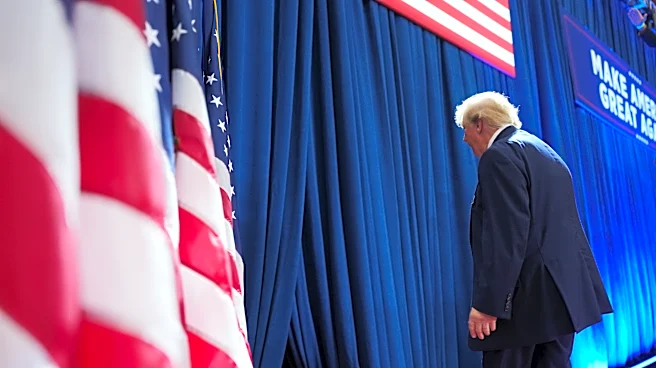
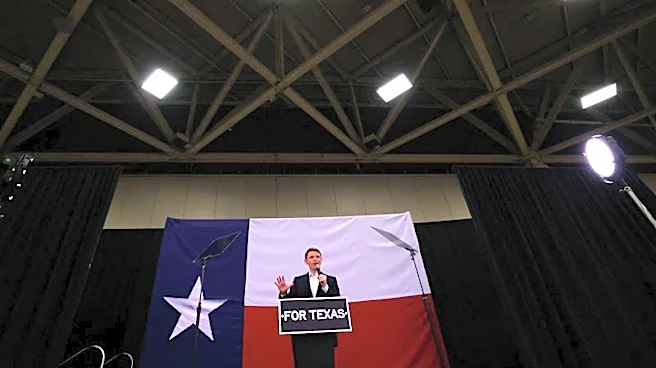
on the Lubbock Memorial Civic Center for Trump's rally appearance in support of Republican U.S. Senate candidate Ken Paxton. Supporters lined downtown streets, many wearing MAGA hats and waving American flags. Food trucks and campaign merchandise vendors filled the area, while some supporters pitched tents and spent the night to secure their place in line.
Wright arrived with a different purpose, and within a span of a few hours, the self-described introvert had become one of the most recognizable faces of Trump's Lubbock rally.
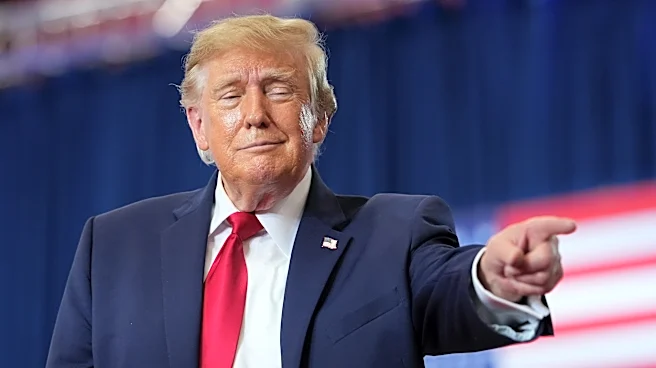
As Trump addressed the crowd, Wright did something that likely would have surprised the people who knew him best. When the president paused while criticizing Democratic Senate candidate James Talarico for being vegan — a label that the candidate says is not true — Wright seized the opening and shouted:
"You're a pedophile. You're a rapist. You're a pedophile. You're in the Epstein files!"
Trump has denied allegations of sexual assault and rape, including claims involving underage girls. He has also denied wrongdoing in connection with Jeffrey Epstein, the convicted sex offender who was accused of sexually abusing and trafficking underage girls. White House spokesperson Lauren Bis also denied the allegations, telling USA TODAY the president has been "totally exonerated on anything related to Epstein."
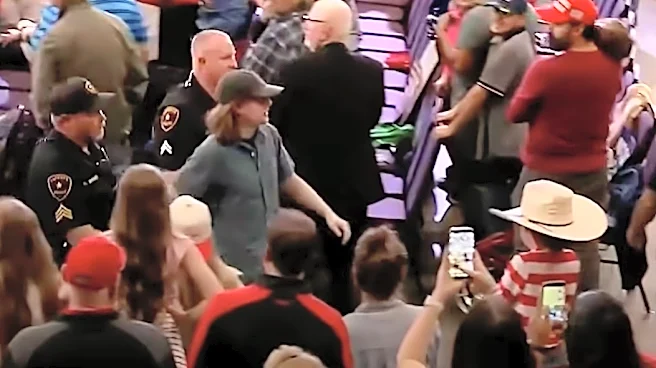
Secret Service agents quickly escorted him from the venue, and Wright recorded the confrontation on his phone, capturing the interruption and the intense moments that followed. In the moment, Trump suggested he was a "paid protester" and praised local law enforcement for how quickly they responded.
Wright said he hadn't been paid, though he had a tongue-in-cheek response to the accusation.
"You know, I'm actually so glad you brought this up because I do have a confession to make," he told USA TODAY. "I haven't been completely honest. I was in fact paid when I got home after the event. My dad handed me a beer."
For Wright, the decision to confront the president wasn't an impulsive departure from his beliefs. Those had been taking shape for years, beginning in a household where questioning authority and thinking independently were encouraged.
An open-minded upbringing in West Texas
Wright was born and raised in Lubbock, where he grew up in a family that didn't necessarily share the political and religious outlooks traditionally associated with the region.
Both of his parents were raised in conservative Christian households, he said. But by the time they were raising children of their own, they wanted something different.
"They didn't want that from me or my brother," Wright said. "So we were raised in a very open-minded household."
The family occasionally attended a Unitarian Universalist church, but Wright said his parents gave him room to develop his own beliefs.
His mother was particularly vocal about her liberal and feminist views.
His father, who had been a Republican when he was younger, also moved left politically with an unconventional day-to-day routine: working in medical billing during the day and playing in metal bands at night.
Wright said both parents encouraged him to question what he was taught rather than simply accept it. And some of his earliest ideas about politics and power also came from an unlikely source: “Star Wars.”
His father introduced him to the films when he was young. Their stories of empires, authoritarian rulers and resistance movements — which creator George Lucas said was designed to mirror the United States during the Vietnam War — gave Wright an early framework for understanding government and political power.
"I was able to kind of put two and two together and realize that imperialism is generally not a good thing, and that authoritarianism is generally not very productive," he said.
That independent streak followed him through Roscoe Wilson Elementary, Hutchinson Middle School and Lubbock High School. Wright later briefly attended Texas Tech University, officially studying psychology but finding himself more drawn to music courses.
He eventually left the university, in part because of his objections to Brandon Creighton, who became chancellor of the Texas Tech University System in November 2025. Creighton, a former Republican state senator, also spoke at Trump's rally in Lubbock.
Since taking the role, Creighton has issued directives restricting how faculty teach about race, sex, gender identity and sexual orientation, including requiring additional review and approval of some course materials, the Lubbock Avalanche-Journal reported. In April 2026, he and the Board of Regents went further, directing the system's universities to phase out academic programs centered on sexual orientation and gender identity and restricting how those subjects can be taught in core and lower-level undergraduate courses.
For Wright, the university's direction became a reason to leave.
Wright said he had never considered himself an activist. He had attended one or two Black Lives Matter protests during the COVID-19 pandemic and a couple of No Kings demonstrations, but political demonstrations were not a regular part of his life.
"Opportunities like that only come once in a lifetime," he said.
How he got inside Trump's rally
Wright initially planned to attend the rally with a friend and a co-worker. Both eventually had circumstances that prevented them from going, leaving him to make the trip alone.
He had spent time thinking about what he would say if he got the chance to confront Trump. But as the rally approached, he realized how little he had prepared for everything else.
His shift at a local food-service job ended around 2:30 p.m., and arrived at the rally about 4 p.m., later than he had intended. Realizing he might not get inside if he waited, he worked his way into a line of people who had been waiting for hours. Soon, he found himself cutting ahead of thousands of supporters of a president he had come to confront.
He also hadn't given much thought to the logistics of getting inside, navigating security or interacting with law enforcement. Much of what he knew about handling an encounter with police and Secret Service agents came from secondhand accounts and videos he had seen on social media, he said.
Meanwhile, his phone was already running low on battery, so he tried to conserve what remained. For the next couple of hours, he stood quietly, watching the crowd and waiting for an opportunity.
One thing he did know for certain was what he planned to say.
“I knew I wanted to call him a pedophile, and I knew I would not have many other words after that because I'd be dragged out after that,” Wright said.
The biggest challenge, he said, was finding a pause. Trump rarely left much silence between remarks, Wright said.
“The only thing I was looking for was a pause, and I learned how rare those actually are. That guy does not shut up,” Wright said. “But, you know, about five or so minutes in, after he called James Talarico a vegan, there was a brief pause in his speech. So I thought that was my golden opportunity. I had been mustering the courage the whole time, and I finally decided, 'You know what? I have to let it rip. If I don't do it now, I'm not going to do it.'”
Wright shouted his accusations as he recorded the moment. The crowd reacted, and security moved in. As the officers escorted him out, Wright told one of them, “This is my First Amendment right, sir.”
The agent told Wright the rally was a private event, but Wright countered that he had registered and was authorized to attend.
The agent then told him he could not "insult the president," and Wright pushed back, saying he had not insulted Trump but had called him a "pedophile." The agent questioned why Wright would say that before asking whether he would agree to a voluntary interview. Wright declined.
And within minutes, the interruption was over; Trump returned to his remarks, and Wright was out of the building.
The accusations behind the interruption
Wright's interruption was brief, but the accusation he chose was deliberate.
He said his decision to call Trump a pedophile was rooted in the president's past association with Epstein.
Trump and Epstein socialized for years, appearing together at events and traveling on Epstein's private plane. Trump has acknowledged knowing Epstein, though he has denied wrongdoing and knowledge of Epstein's criminal activity.
The relationship has drawn renewed scrutiny with the release of millions of pages of Epstein-related records. A review of the documents found more than 38,000 references to Trump, his wife, Mar-a-Lago and related terms across more than 5,300 files, according to The New York Times. The references varied in context, and being named in the records does not establish criminal wrongdoing.
Trump has also faced allegations of sexual abuse involving minors. In 2016, a woman using the pseudonym Jane Doe accused Trump and Epstein of sexually assaulting her when she was 13, according to PBS News. She later withdrew the lawsuit, and the allegations were never tested in court. In March, the Justice Department released FBI interview records documenting a separate woman's uncorroborated allegations that Trump sexually assaulted her when she was a minor.
The day before Trump's rally in Lubbock, Democrats on the House Judiciary Committee released a 53-page staff report calling for an independent special counsel to investigate the president's ties to Epstein. Titled "We Have Things in Common, Jeffrey," the report detailed accounts involving 11 women, including five who directly accused Trump of rape or sexual assault in Epstein's company or presence. Among the allegations was a former Miss Switzerland contestant's account that Trump raped her at a New York hotel in 1993, when she was 24.
The president and the White House have both denied allegation and wrongdoing associated with Epstein.
"By releasing thousands of pages of documents, cooperating with the House Oversight Committee’s subpoena request, signing the Epstein Files Transparency Act, and calling for more investigations into Epstein’s Democrat friends, President Trump has done more for Epstein’s victims than anyone before him," spokesperson Bis told USA TODAY. "Meanwhile, Democrats like Hakeem Jeffries and Stacey Plaskett have yet to explain why they were soliciting money and meetings from Epstein after he was a convicted sex offender."
Wright said he was particularly struck by what he viewed as a contradiction between the religious identity of some Trump supporters and their continued support for the president despite the allegations and his association with Epstein. He recalled seeing teachers, grandmothers and families with children at the rally, including people he understood to be Christians.
"I'm baffled by the irony in bringing children to an event led by a pedophile," Wright said.
He said the word was among the strongest accusations he could make in the brief window he expected to have the president's attention.
"He's a million things. You can call him anything in the dictionary, but I think it's hard to find something worse to label somebody than a pedophile," Wright said.
But Wright's political concerns extend beyond Trump and the Epstein files.
He added that campaign finance and the influence of money in politics are among his biggest priorities. He criticized the role of wealthy donors and corporate interests in shaping government decisions, arguing that elected officials should be more accountable to the people they represent.
"My biggest things right now when it comes to politics are keeping money out of it completely," he said.
He argued that elected officials should not financially benefit from representing their constituents and suggested they should be paid a minimum wage comparable to the people they serve. Foreign policy is another concern of his, and Wright said he would rather see the government devote resources to helping people in the United States than funding military action abroad.
"I'd rather help sick children in my country than kill innocent children in other countries," he said.
Wright voted on the first day of early voting in Texas, casting what he described as a "blue across the board" ballot. But he doesn't see voting as the only way to participate in politics.
For him, the rally presented an opportunity to make his views heard in a way he believed would be difficult to ignore.
Returning to an ordinary life
The attention that followed the confrontation was unlike anything Wright had experienced.
He described going from being surrounded by people who were overwhelmingly hostile toward him at the rally to receiving an outpouring of support from people who had watched the video.
"It's been the most hatred I've ever experienced in one concentrated area, and then to go from that to incredible support, not only online but in person," he said.
The response followed him back into his everyday life, too.
By the following morning, Wright was back at work in food service, alongside colleagues who had seen the footage circulating online. Some brought up the confrontation, while others didn't. He said the reaction among his co-workers was largely supportive and that he faced no repercussions at his job.
While training a new colleague, Wright said, he learned that people at the co-worker's apartment complex had been talking about him. The colleague eventually asked to take a picture with him.
For someone who had spent much of his life keeping to himself, being recognized by strangers was a strange new experience.
Still, the viral moment hadn't fundamentally changed his routine. He was back to working long shifts, spending time with friends and pursuing the interests that had occupied his time before the rally. The difference was that a video of him confronting the president had now reached an audience far beyond the people inside the Civic Center.
Wright understands that people will have different opinions about what he did. But he has no interest in distancing himself from the moment or apologizing for it.
"I don't want people to get the idea that I'm ashamed of this in any way. In fact, I take pride in it," he said, adding, "you should take pride in getting in trouble with fascists. You should take pride in getting in trouble with pedophiles. It means you're doing something correct."
Brandi D. Addison covers weather nationwide as the Weather Connect reporter for the USA TODAY Network and contributes to Texas Connect coverage statewide. She can be reached at baddison@usatodayco.com. Follow her on Facebook here.
This article originally appeared on USA TODAY: He never saw himself as an activist. Then he called Trump a 'pedophile'