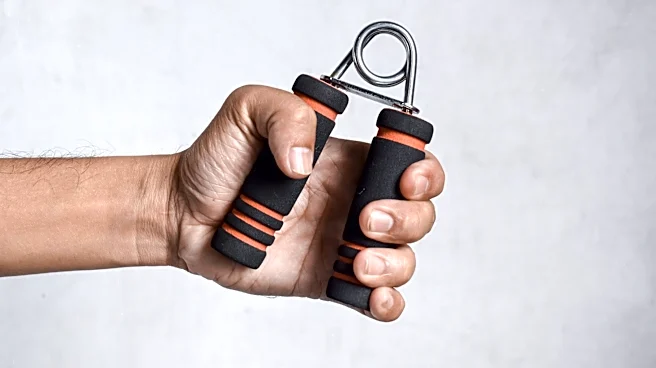







While opening a stubborn jar, carrying every grocery bag into the house in one trip or holding onto a rail in a moving subway may not feel like much of a workout, each task depends on something quietly shaping your independence: your grip strength.
Your grip helps you cook, work, drive, exercise and catch yourself during a stumble. But it can also offer doctors a surprisingly insightful glimpse into your overall health, how well your body is aging and even how long you may live.
That doesn't mean being able to crush an apple with your bare hands will add years to your life, though. "Many people believe that strengthening their grip will make them live longer, but that is simply not true," says Nick Maroldi, a doctor of physical therapy at the Hospital
for Special Surgery in New York.
Instead, grip strength is a window into your existing health and strength. Here’s what to know.
What is grip strength? How is grip strength measured?
Grip strength is the amount of force your hand can produce when your fingers and thumb close around an object. While most of that force comes from muscles in the hand and forearm, a strong grip also depends on support from your wrist, elbow and shoulders. "And if the extensors of your wrist are not strong enough to keep the wrist stable, the flexors of your fingers will pull your wrist forward," Maroldi explains.
Your grip can also reveal something about muscles in other parts of your body. Because it depends partly on overall muscle strength and nervous system function, "grip strength correlates with the strength of your leg and many upper-body muscles as well," says Keith Baar, a professor of molecular exercise physiology at the University of California, Davis. That is one reason researchers often use it as a convenient stand-in for overall muscular strength.
He explains that clinicians measure grip strength using a handheld device called a dynamometer, which records force in pounds or kilograms. To use it, you simply squeeze as hard as possible, usually several times with each hand. But because arm position, handle size, posture and even the instructions given during the test can affect the score, standardized testing is important when comparing results.
Because scores also differ by age, sex, body size and dominant hand, Maroldi says clinicians are also taught to interpret them in the proper context rather than apply a single standard to everyone.
How does grip strength relate to overall health?
While grip strength itself does not extend life, it does reflect many of the things that influence health, including physical activity, muscle quality, nutrition, illness, coordination and how well the nervous system is functioning, Baar explains.
The association between grip strength and overall health is striking. For example, a 2024 study that followed more than 9,300 adults ages 45 and older for an average of about three years found that every 5-kilogram, or 11-pound, increase in grip strength was associated with a nearly 8% lower risk of developing heart disease.
Another study involving nearly 140,000 adults across 17 countries found that every 5-kilogram decrease in grip strength was also associated with a 16% higher risk of death from any cause. In that study, grip strength was an even stronger predictor of all-cause and cardiovascular mortality than blood pressure. In short, grip strength is "a biomarker for overall musculoskeletal and systemic health," Maroldi says.
But this is also where Baar says grip strength is often misunderstood. While improving your whole-body health and strength can improve your grip, strengthening your hands alone will not necessarily change the underlying health conditions your grip may be revealing.
Why does grip strength decrease as we age?
Grip strength generally begins declining around the same time overall strength starts to diminish, at about age 35, Baar says. This loss is known as dynapenia, and it can even happen without a significant reduction in muscle mass. The body becomes less efficient at activating muscle fibers as it ages. At the same time, many people simply become less active and give their bodies fewer reasons to maintain strength when they get older.
Arthritis, nerve problems, injuries and other age-related conditions can also make movement more difficult and further discourage activity.
And "there are lots of other reasons strength goes down" beyond age, Baar says, including chronic illness, inadequate nutrition, long periods of inactivity "or that we simply stop lifting or carrying heavy things as frequently."
How to increase grip strength
The best approach to improving grip strength is not endless squeezing, Maroldi explains, but to instead choose exercises that strengthen your whole body that also require your hands to hold, pull or carry something.
Think deadlifts, rows, pull-ups, dead hangs and farmer’s carries – walking while holding weights at your sides. Baar also recommends combining heavier holds for shorter periods with lighter holds that last longer. "Holding a reasonable amount of weight for 30 to 60 seconds is just as good as continuous lifting," he says.
Everyday activities such as gardening, carrying groceries and lifting laundry baskets can also strengthen your grip. "And if you combine simple exercises like squeezing a ball, hanging from the casing over your bedroom door or holding bags with cans in them, you will quickly see improvements in your grip strength," Baar says. Maroldi agrees, echoing that "any exercises involving pulling, hanging or carrying are all excellent for your grip strength."
When doing so, though, he stresses to be sure that anything you hang from is secure and designed to support your weight. People with hand numbness, a recent injury, an arthritis flare or persistent pain in the wrist, elbow or shoulder should also consult a clinician or hand therapist before progressing.
The goal in strengthening grip strength should not be to win a handshake. "Since grip strength is such a good biomarker for overall health, the best things to do are keep your body healthy through good diet and exercise, including both cardiovascular and strengthening exercise," Maroldi says. In other words, "focus more on your full body and functional strengthening rather than grip-specific exercise."
This article originally appeared on USA TODAY: Your grip strength says more about your health than you might think