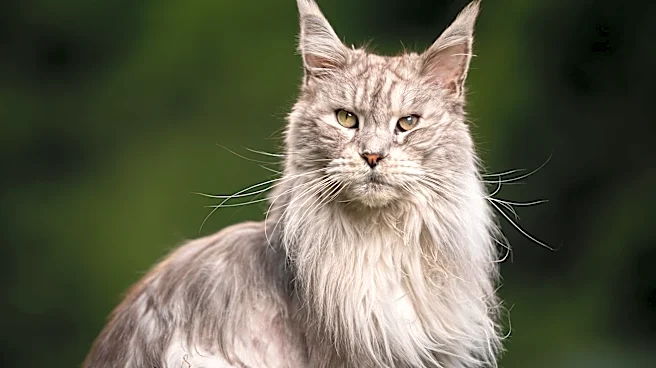








Cats may not actually have nine lives, but some are very good at stretching one out.Most pet cats live about 12 to 18 years, though veterinarians often care for cats in their late teens and early 20s, said Dr. Jo Myers, a veterinarian with more than 30 years of experience and a consultant at Vetster.Then there are the feline overachievers like Creme Puff, a domestic cat from Texas, who holds the Guinness World Record after living 38 years and three days.
Which cat breeds live the longest?
A 2024 Royal Veterinary College study of nearly 8,000 cat deaths in the United Kingdom found:
- Burmese and Birman cats had the highest life expectancy, at about 14.4 years.
- Crossbred cats averaged about 11.9 years.
- Siamese cats averaged about 11.7 years.
"The strongest published evidence suggests Burmese cats are among the longest-lived pedigree breeds,” Myers said. Maine coons, ragdolls, Abyssinians, bengals, Balinese cats and American shorthairs often
appear on lists of long-living breeds. But Myers and Dr. Amanda Steffen, a veterinarian who focuses on senior pets, said individual care matters more than pedigree. "For at least a couple of them, the ‘ages gracefully’ reputation is more about individual cats and good care than the breed average itself,” Steffen said.
It is also easy to confuse an American shorthair, a recognized breed, with a domestic shorthair, which simply describes a short-haired cat with mixed or unknown ancestry. "Most pet cats don’t actually belong to any recognized breed,” Myers said.
Long-living breeds can still face health risks
A reputation for longevity does not mean a breed is free from inherited health conditions. Maine coons and ragdolls have an increased risk of hypertrophic cardiomyopathy, a disease that causes the heart muscle to thicken. Bengals may be affected by heart disease, progressive retinal atrophy and pyruvate kinase deficiency.
Abyssinians can be predisposed to progressive retinal atrophy and renal amyloidosis, while Burmese cats may have an increased risk of diabetes. Prospective owners should ask breeders which genetic and health screenings they perform. Current owners can ask their veterinarian whether their cat’s breed warrants additional heart, kidney, eye or blood sugar testing.
"Understanding the health conditions they’re most likely to face is far more valuable than focusing on life expectancy alone,” Myers said.
How can you help your cat live longer?
Veterinarians recommend:
- Keeping cats indoors or providing a secure catio.
- Maintaining a healthy weight.
- Feeding a complete and balanced diet.
- Scheduling regular veterinary exams.
- Prioritizing dental care.
- Providing daily play and enrichment.
Owners should also watch for weight loss, increased thirst, litter box changes, difficulty jumping, reduced grooming and nighttime vocalization. "One of the biggest misconceptions is that slowing down is simply ‘old age,'" Myers said. Steffen recommends weighing cats at home every few months because even a 1-pound loss can be significant.
In the end, both veterinarians said quality matters more than simply adding more candles to the birthday tuna. "The more important goal is helping every cat enjoy as many healthy, comfortable years as possible,” Myers said.
And if your cat makes it into its 30s? "They’ve probably earned the right to ignore you even more than they already do,” she said.
This article originally appeared on USA TODAY: Can cats live to 30? The longest-living breeds explained