


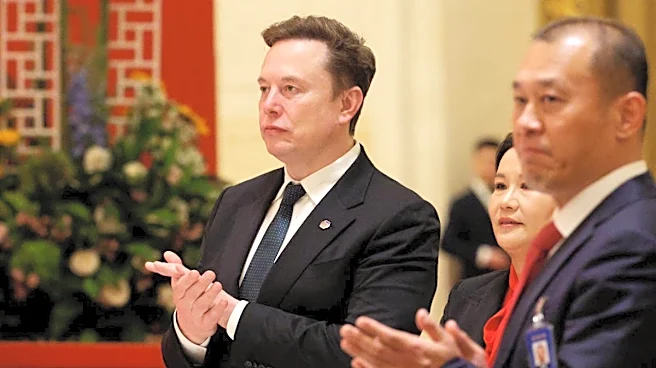
Tesla CEO Elon Musk sought to reassure his company's investors that he is committed to safety after it reported a record number of crashes involving its automated driver assistance systems like Autopilot and Full-Self Drive amid a big push for more autonomy in the near future.
Musk has touted the fact that Tesla is planning to expand its Robotaxi service to a "dozen or so states"
by the end of the year in a move he said would be part of the company's "overall shift to an autonomous future."On a July 22 call with investors, Musk stressed the importance of Tesla proceeding with caution as it moves toward more autonomous driving.
"So, with robotaxi, our goals are very ambitious for robotaxi, but we do need to be cautious about causing any accidents
or causing any harm to anyone," he said. "Although there are, I think, 30,000 to 40,000 automotive deaths per year in the United States alone, most of those do not generate any press or -- you never really read about almost any of those."
Musk continued: "But if we injure even one person, it will be worldwide headline news. And regulators will immediately clamp down on our activities. So -- and we don't want to injure anyone. So we're going as fast as humanly possible in scaling robotaxi with while trying to ensure that we do not harm anyone at all and ideally do not even run over a pet. So that's really the constraint is we want to grow as fast as possible with robotaxi without harm to anyone."
The comments come as Tesla has reported over 200 crashes involving its automated driver assistance systems in recent months, according to data compiled by the U.S. National Highway Traffic Safety Administration.
With that in mind, the USA TODAY Cars team took at look at how Tesla's "Robotaxi" fared in cities where it already operating and what company officials are saying about the planned expansion.
How does Tesla's Robotaxi work?
Tesla said rides in its Robotaxis can be ordered using a cell phone app similar to the ones riders use now to search for Uber and Lyft rides.
"We’re bringing autonomous rides to you today—starting with Model Y," Tesla said in a post on its website. "To get started, download the Robotaxi app."
Riders must create an account and the Robotaxi app is currently only available on Apple iOS devices, the company said.
Vaibhav Taneja, Tesla's Chief Financial Officer, told investors on the July 22 that Tesla is pushing ahead with its plans to expand Robotaxi, despite the concerns that have been raised about its other automated driver assistance technologies.
"We continue to grow the Tesla Robotaxi fleet and have expanded to a total of seven markets in the U.S," he said. "We expect the ramp of the fleet to accelerate throughout the year, along with the expansion into new U.S. markets."
Where do Tesla's Robotaxis operate?
Tesla says it currently operates its Robotaxis using Model Ys in limited areas of:
- Austin
- Dallas
- Houston
- California
The company has previously told investors that it plans to expand the service to cities including:
- Phoenix
- Miami
- Orlando
- Tampa
- Las Vegas
Tesla also operates a ride-share service in Las Vegas that is operated by human drivers and uses tunnels, constructed through Musk's Boring Company, with plans announced to expand service in other markets.
Musk told investors on the July earnings call that his company plans to continue rapidly expanding its Robotaxi service to other cities.
"We're providing live updates for robotaxi launch as we open up in a city," he said. "We immediately post that on X. So if you just follow the Tesla account on X, but we'll keep you informed as we scale to new cities. We've opened up a number of cities in Florida and in Texas and obviously in the Bay Area. So we'll continue to scale, I think, very, very rapidly on -- with it looks like more than 10% a week in terms of miles driven. So it's a very high compound growth rate."
This article originally appeared on USA TODAY: Musk worries about 'Robotaxi'-crash headlines as Tesla expands service