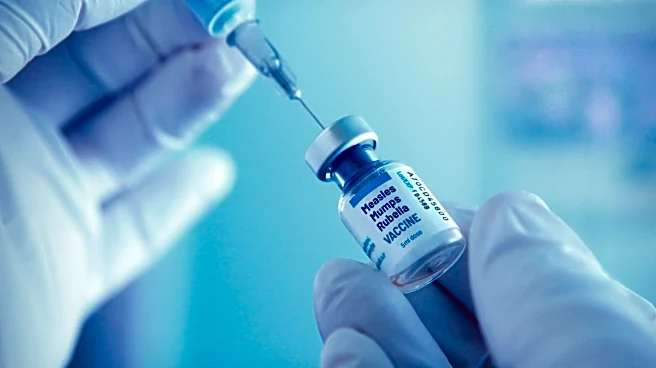

Pittsburgh has reported its first case of measles as the school year kicks off.
On Aug. 20, Allegheny Health officials said an out-of-county individual who was diagnosed with measles visited UPMC Children's
Hospital Emergency Department on Aug. 12 and Aug. 18. Those who had been exposed were being contacted by the health department.
Even before the exposure, the health department was urging families to protect themselves against the disease. Prompted by an Aug. 10 executive order, in which President Donald Trump called for the measles, mumps and rubella vaccine to be split into individual shots to be delivered at separate medical visits, county health officials urged parents not to delay vaccinating their children ahead of the school year.
Here's what to know as the number of measles cases in Pennsylvania continues to grow.
Pittsburgh area school measles vaccination rates
Last school year, 93.8% of all students in Allegheny County attended school with all required vaccines, according to a report from the county's health department. In kindergarten, 91.8% of students in class had all required vaccines. That population did not exceed 95% for any required vaccine except hepatitis B.
Across all grades, 96.3% of students had received two doses of the MMR vaccine, according to county data. But not everyone entered kindergarten fully vaccinated against measles, with just 93.8% of students beginning the school year having received both doses of the vaccine.
To achieve herd immunity against measles, more than 95% of people must be vaccinated against measles, according to the CDC.
What schools have the lowest vaccination rates in Pittsburgh?
Private/independent and public schools had the highest rates of vaccinations among kindergarteners (above 93% for all vaccines), while religious schools saw the lowest rates of vaccinations, with no rates above 90% for any vaccine.
Across the board, 60.5% of schools had a student population that was at least 95% fully vaccinated, with public schools reporting the highest percentage of these schools at 69.6%, followed by private/independent schools, then charter schools. Religious schools saw the lowest percentage at only 31.4%.
Have student vaccination rates declined in Pittsburgh?
Kindergarteners in Allegheny County have been below the threshold for herd immunity for measles for several years, according to state records.
Here's how overall vaccination rates have dropped among kindergarteners in Allegheny County:
- 2025-2026: 93.8%
- 2024-2025: 94.1%
- 2023-2024: 94.4%
- 2022-2023: 94.8%
- 2021-2022: 95.7%
- 2020-2021: 96.7%
Should Pittsburgh parents change children's vaccine schedule? What Trump executive order means
Allegheny County Health Department urged parents not to delay recommended childhood vaccinations because of an Aug. 10 executive order from Trump, particularly the MMR vaccine.
"While the recent federal announcement calls for exploring separate measles, mumps and rubella vaccines, single-antigen measles, mumps and rubella vaccines are not available in the United States," Jillian Irwin, medical director and deputy director for clinical services at Allegheny County Health Department, said. "Families should not wait for a hypothetical future vaccine option when the MMR vaccine is available and has a long history of protecting children."
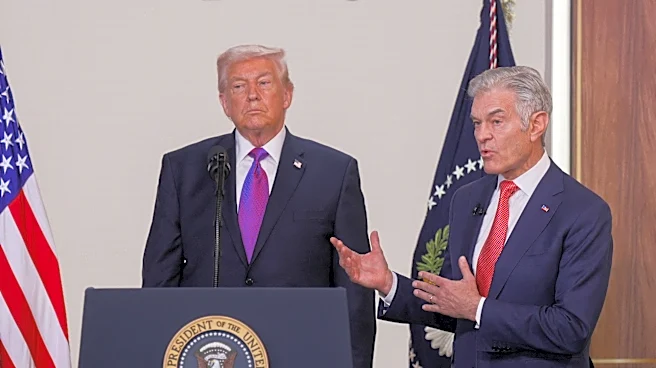
Trump's executive order cuts the number of childhood vaccines to 11, calls for further vaccine safety research and asks that the MMR vaccine be split into individual shots.
"You have the MMR, we want it in three separate vaccinations, given at separate times. Together there could be a possibility they're quite lethal and separately, it looks like they are not at all lethal, but just very effective," Trump said.
The MMR vaccine is not lethal and is highly effective in preventing measles. One dose of the vaccine is 93% effective against measles, while two doses are 97% effective, according to the Centers for Disease Control. For most people, the vaccine provides lifelong protection.
Currently, standalone measles, mumps and rubella vaccines are not produced for use in the United States. Medical research shows no benefit or reduced risk in separating the shots. Instead, upping the number of shots increases injection pain, leaves children unprotected longer and lowers overall vaccination rates, according to experts.
Finch Walker is the Pittsburgh Connect Reporter for the USA TODAY Network. Contact Walker at FWalker@usatodayco.com. Instagram: @finchwalker_. X: @_finchwalker.
This article originally appeared on USA TODAY: School's starting, and measles have arrived in Pittsburgh area