






Three years ago, Israel suffered the worst terrorist attack in its history. On Oct. 7, 2023, Hamas stormed communities across southern Israel, killing some 1,200 people, most of them civilians, and dragging 251 others into Gaza as hostages.
The assault also exposed the bankruptcy of the assumptions that had guided Israeli policy for years.
What followed was far more than war in Gaza. Over the next three years, Israel found itself fighting on as many as seven fronts and fundamentally rethinking how it confronts the threats arrayed against it. The results have been striking.
A map redrawn from Gaza to the Red Sea

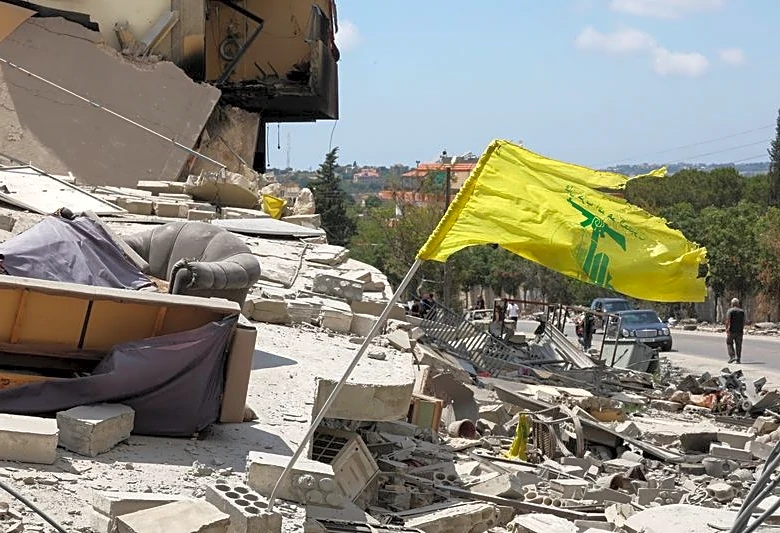
To its north, Israel has severely degraded the capabilities of Lebanon's Hezbollah militia, killing
much of its senior leadership, including longtime chief Hassan Nasrallah, and sharply reducing the threat the group poses.
In the process, it has loosened Hezbollah's longtime stranglehold on Lebanese politics. In March, Beirut took the unprecedented step of banning the group's military activities, a sign that real change there may finally be possible.
Against Iran, Israel has shown an unprecedented ability to penetrate the regime's defenses. During the 12-day war in June 2025, Israel – with U.S. help – inflicted serious damage on Iran's nuclear program and ballistic missile arsenal. And while the ongoing war with Iran has settled into something of a U.S.-Iranian stalemate, Israel has at least helped puncture the aura of Iranian invulnerability that once paralyzed the region.
The ground has shifted elsewhere, too. Hamas hasn't been eliminated, but it is a mere shadow of the organization that carried out its Oct. 7 campaign of terror, with Israel having killed many of its top leaders.
And through the Trump-led Board of Peace, which in July announced Hamas' agreement to disarm and give up any role in governing Gaza, the group's room for political maneuver in the Gaza Strip is narrowing further.
In Syria, meanwhile, the collapse of Bashar al-Assad's regime in December 2024 cut the land corridor Iran had used to resupply its proxies.
Since then, Israel's relationship with Syria's new Sunni-dominated order has proved generally stable, if not friendly. Syrian President Ahmed al-Sharaa says his government is avoiding confrontation with Israel and working toward a security agreement with it.
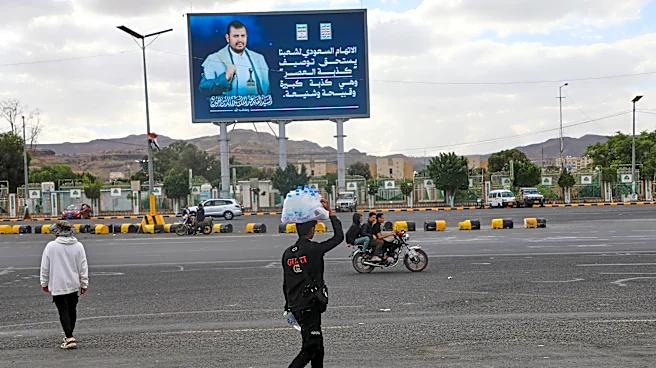
Farther south, Israel's need to neutralize the threat from Yemen's Houthi rebels led it to become the first country to recognize Somaliland, laying the groundwork for a forward-operating presence against one of Iran's most potent proxies. Israel is now trying to negotiate a military base at the port of Berbera – a foothold at the mouth of the Red Sea that could prove decisive as the region emerges as a distinct strategic theater.
These gains have left Israel in a far stronger strategic position than it held on Oct. 6, 2023. But three years of continuous conflict have also exposed how unsustainable the country's "total war" footing has become, on more than one front.
Netanyahu warned that Israel would face isolation
The first is internal. Since its founding, Israel's military has been built to fight short, sharp wars – and to end them quickly and decisively. It was never designed to sustain war as a permanent condition. That's why the extraordinary call-up of some 300,000 reservists for Israel's multifront campaigns has come at such a heavy price.
It has sapped the national economy, which the International Monetary Fund estimates is running about 9% below its pre-Oct. 7 trajectory.
It has also strained the country's social cohesion, deepening resentment of the ultra-Orthodox, who still enjoy broad exemptions from military service despite a 2024 Supreme Court ruling that they be drafted.
The second constraint is international. The Israel-Hamas war has exacted a steep reputational price, compounded by foreign propaganda and influence campaigns – including Iranian bot networks aimed at American audiences – that have helped erode the country's international legitimacy.
Even in the United States, long a bastion of pro-Israel sentiment, attitudes have soured markedly. Six in 10 Americans now view Israel unfavorably, according to Pew, and this year Gallup found that, for the first time in its tracking, more Americans sympathize with Palestinians than with Israelis.
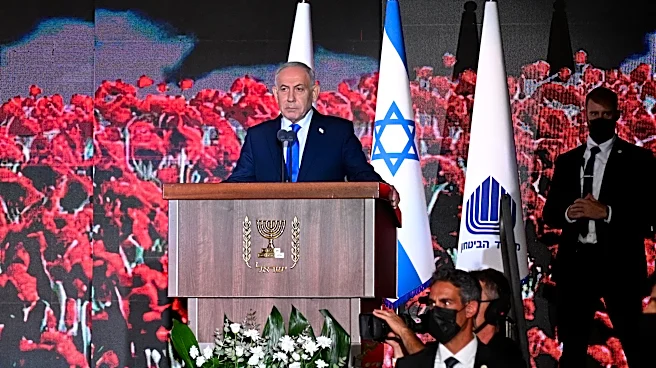
To his credit, Israeli Prime Minister Benjamin Netanyahu saw this ominous trend line more than a year ago. In September 2025, he warned publicly that Israel faced growing diplomatic and economic isolation and needed to become a "super-Sparta" – self-sufficient and technologically advanced. At the time, the idea was widely derided. Today, with Western opinion souring, Israel finds itself under mounting pressure to prove its worth in concrete terms.
Netanyahu's political opponents share that diagnosis but differ sharply on the remedy. Former Prime Minister Naftali Bennett, a longtime fixture of Israel's right, and centrist former Prime Minister Yair Lapid are now running on a joint ticket to unseat him. In August, Lapid laid out a six-point plan to reverse Israel's isolation, including a new security memorandum of understanding with the U.S. and stronger outreach to foreign publics. Bennett, who would lead their government, has vowed to declare a "diplomatic emergency" and argued that the fix lies in a far more capable public diplomacy apparatus and stepped-up regional partnerships.
All this matters now. On Oct. 27, Israelis will vote in their first national elections since Oct. 7. It will be a consequential moment, not just a political reckoning for that terrible day, but a referendum on the most sustainable strategic path for the years ahead.
Ilan Berman is senior vice president of the American Foreign Policy Council in Washington, DC.
This article originally appeared on USA TODAY: Three years after Oct. 7, Israel is stronger and more alone | Opinion