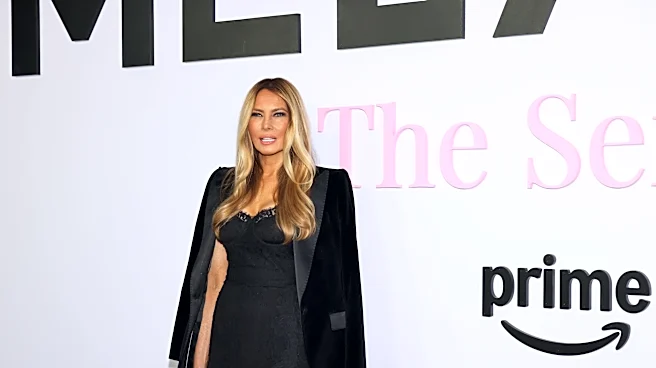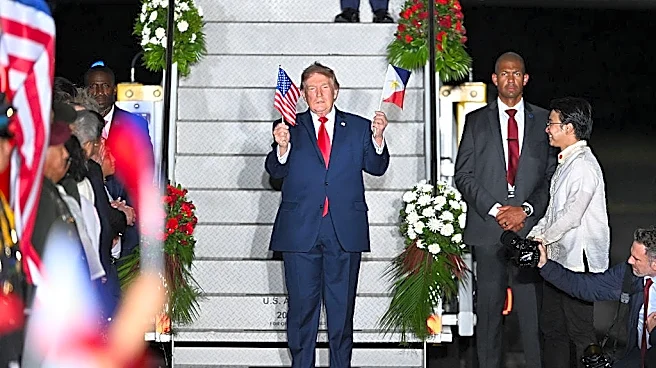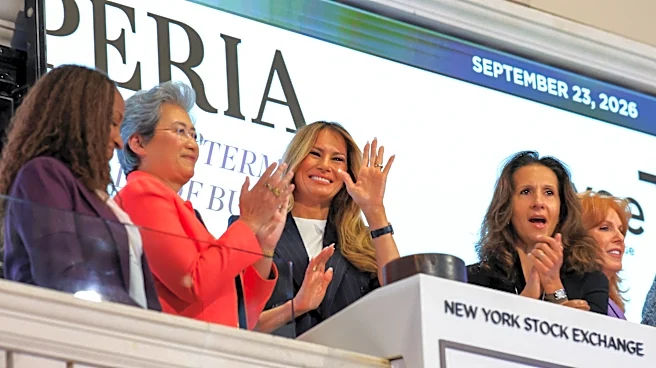




First lady Melania Trump’s Imperia initiative focusing on economic empowerment for women is in the spotlight thanks to revelations that its name and mission closely align with Imperia Global, a company whose founder left the country in response to President Donald Trump's crackdown on diversity, equity and inclusion (DEI) programs.
In the two months since the initiative's launch, Accenture and Lockheed Martin have settled claims brought by the Department of Justice for $25 million and $29.5 million, respectively, over the companies' DEI practices.
One issue raised in the government's claims was that the companies allegedly offered leadership development programs to employees that were restricted according to race and gender. Paradoxically, this
is exactly what Trump's Imperia program – “a female-led platform built to expand economic opportunity and prepare the next generation of women to own, invest, and build” – does.
Apparently, DEI is “illegal,” except for when the first lady does it.
As researchers and organizational advisers with backgrounds in the law and social psychology, we help companies assess the risk of their DEI initiatives against the backdrop of the shifting political and legal landscape. Ironically, implementing a program like Imperia would make lawyers at most companies worry about incurring the government's wrath.
Attacks on DEI affect America's workers

The scapegoating of DEI, a cynical ploy to politicize and demonize civil rights advancement, has destroyed people’s lives and livelihoods.
Hundreds of thousands of Black women have been pushed out of the workforce. There have been significant drops in workforce participation for Black and female workers. DEI watch lists and doxxing are becoming popular. The military ranks have been purged. There are increases in reports of LGBTQ+ harassment and, while the Equal Employment Opportunity Commission (EEOC) no longer tracks this data, there are indications that sexual harassment and age discrimination are on the rise as well.
All this was purportedly done in the name of “restoring merit-based opportunity.” Yet the reality is that the administration’s war on DEI was a thinly veiled attempt to erode social progress since the Civil Rights Movement and put power back in the hands of those – typically, White men – who already wield it.
Just as disruptive has been the impact of this anti-DEI ideology on businesses. In 2020, companies were falling over themselves to highlight their anti-racist stances, yet just a few years later, many rolled back those programs under threat of arbitrary and extortionary punishment by the Justice Department and EEOC.
DEI has helped companies improve their workforces

As experts in this field, we have long been raising alarms about the vague guidelines of the Justice Department, broad executive orders and capriciousness of the current administration.
Some business leaders gleefully celebrated the “end of woke,” but far more found themselves in the impossible position of balancing the threats of this current administration against what they know to be true: Companies are better places when outcomes are equitable, teams inclusive and workforces diverse.
Workplace practices designed to optimize hiring and performance practices, ensure fair outcomes, and hold all employees equally accountable are well-documented best practices. No one wins when companies are afraid to implement them.
Let’s be clear. If Imperia is not DEI, then nothing is. So why does the first lady get to do DEI, while others who do are fired, put on watchlists and forced to pay historically high settlements?
Because the war on DEI was never about returning to merit. It was about winning elections and consolidating power.
Reset Justice Department's Civil Rights Division
But, once again, the balance of power is shifting.
At the federal level, the recent departures of Harmeet Dhillon and Brett Shumate from the Justice Department’s Civil Rights Division, which led the agency's war against “illegal" DEI, offer lawmakers the chance to appoint more moderates to an agency that has gone rogue.
As incoming congressional lawmakers consider possible targets for investigations, issues related to the weaponization of the Justice Department and EEOC against marginalized workers should be high on the list.
This is also the time to prioritize legislation that clarifies and expands anti-discrimination laws, to devote more resources to administrative enforcement, and to reverse statewide bans on equity-focused programming and education.
It can’t be the case that we deny citizens their fundamental rights at work and access to opportunity, unless the first lady decides they are worthy of protection. The access of everyday people to employment opportunities and workplace fairness shouldn’t be meme-ified and tossed around every election as a political football.

Companies shouldn’t have to guess whether they’ll be sued, and for how much, and according to which legal standard.
As the economy continues to falter and workers everywhere struggle, it’s time that this administration stops playing political games with people’s businesses and livelihoods. Whether the work is called “DEI” or something else, it is clear the American people want broad representation and a labor market that plays fair.
Again we ask, if the first lady can do it, why can’t we?
Y-Vonne Hutchinson is the chief executive officer of ReadySet, a former lawyer and the author of "How to Talk to your Boss About Race: Speaking Up Without Getting Shut Down." Evelyn Carter is a social psychologist, organizational adviser and author of "Was that Racist?"
This article originally appeared on USA TODAY: Melania Trump has DEI program – and a husband who fights DEI | Opinion