


Kelvin waves are having a moment, and it could be bad news for the West Coast.
Mostly laboring in obscurity since they were first discovered in 1879, oceanic Kelvin waves appear to be having their moment in the sun in 2026.
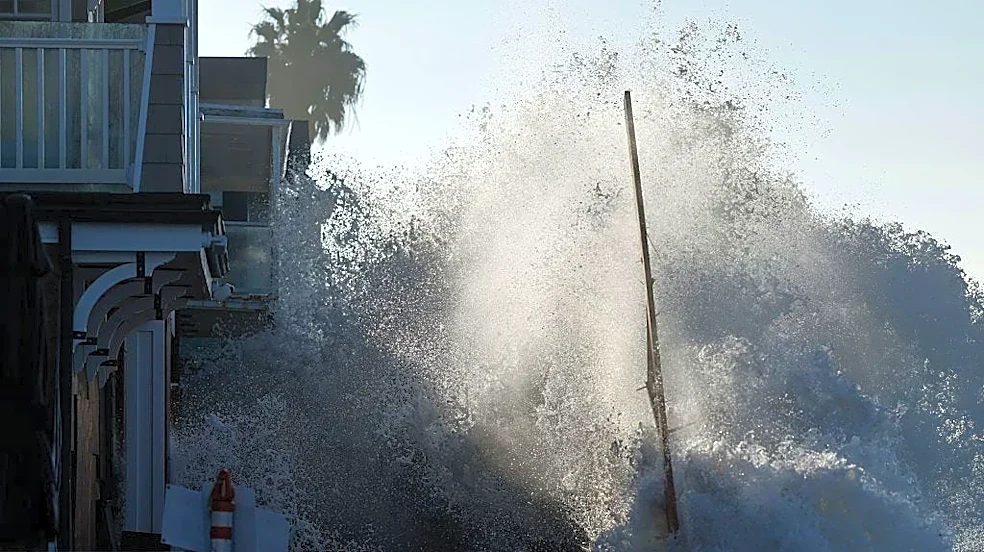
Indeed, these long and subtle undersea waves have been making the news this year, as they're contributing to rising sea levels, coastal flooding and beach erosion along the West Coast of the United States, especially California.
The waves are slow-moving enough to be tracked by forecasters and their impact on sea levels is measurable, if often unspectacular. But as winter approaches, experts say Kelvin waves could compound with other natural phenomena to temporary raise sea levels by up to two feet, causing dramatic problems
with flooding and erosion, threatening beaches and coastal homes.
Across California, "hundreds of thousands of people could potentially be inundated" at some point this winter due to rising sea levels, Daniel Swain, a climate scientist with the University of California Agriculture and Natural Resources, told USA TODAY. There could be as much as two feet of elevated sea level, he said, which he called "pretty significant." This is true for both southern and northern California, including the San Francisco Bay area.
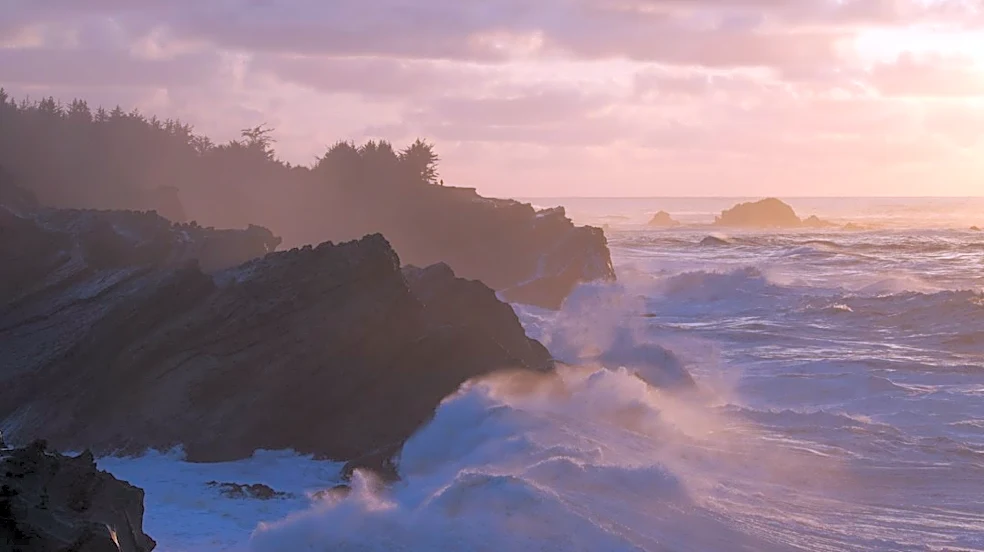
Kelvin waves alone can raise sea levels by up to a foot, supercharging breaking waves and beach erosion. The effects can last for days to weeks.
Right now, one wave's effects are waning, but another one may be heading toward the West Coast in coming weeks. A worry among experts: If the Kelvin waves keep coming every few weeks, one may arrive in the early winter when California will have its highest tides of the year.
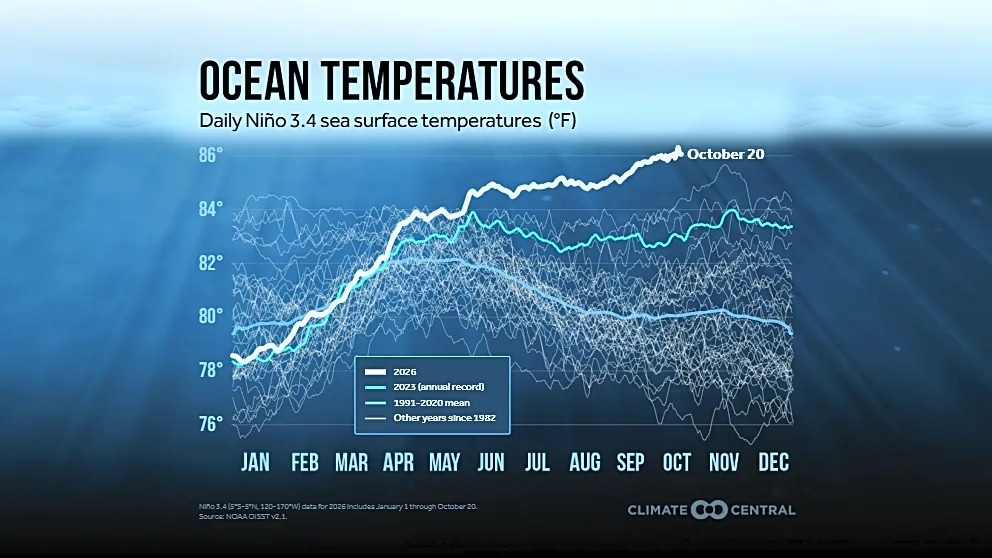
Meanwhile, the Kelvin waves are occurring against the backdrop of a record strong El Niño, which could batter the West Coast with all sorts of stormy weather.
What are Kelvin waves?
Unlike the waves we're used to seeing at the beach, Kelvin waves travel underwater, are very long, and only change sea level slightly, National Oceanic and Atmospheric Administration oceanographer Michael Jacox wrote in a recent NOAA fact sheet. "They often form in the western equatorial Pacific, then travel along the equator from west to east. After reaching South America, they continue as coastal trapped waves away from the equator – both north along the Central and North American coasts and south along the South American coast," Jacox said.
Whenever Kelvin waves arrive and are trapped along the West Coast, the increased water level heights can exacerbate other flooding problems related to high tides, rough surf and storms, increasing risks of potential coastal flooding and erosion on vulnerable beaches and low-lying coastlines.

What's the current Kelvin wave forecast?
While one Kelvin wave has recently passed, a new one is brewing and could arrive in November.
Scientists say the Kelvin wave raised background sea levels, worsening the effects of high tides and hurricane-generated surf rather than causing the damage on its own.
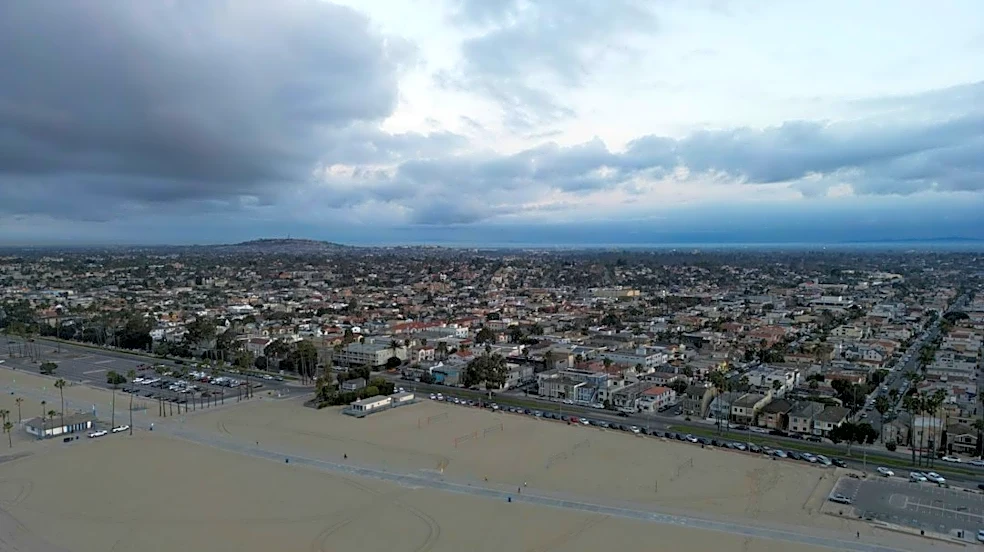
Across the state, coastal damage has been reported from Malibu and Long Beach south through Orange and San Diego counties, with particularly severe destruction in Long Beach, the Los Angeles Times reported. The damage was due to both the Kelvin wave and to waves from a tropical cyclone out in the Pacific.
The wave that arrived earlier in October along the West Coast appears to be diminishing: "The most recent Kelvin wave seems to have largely run its course," said North Carolina State University scientist Dillon Amaya, who said the wave made it as far north as San Francisco, but much of its energy has weakened.
He doubts it will pose a substantial risk to regions further north at this point.
"However, another El Niño-driven Kelvin wave has already made its way up the Mexican coastline and is in the Gulf of California right now," he added. "The new Kelvin wave looks just as large, if not larger than the previous wave."
He said it would be about 2-3 weeks before the most recent Kelvin wave is in U.S. waters, Amaya told USA TODAY in an email.
How are these waves impacting the West Coast?
Amaya said that Kelvin waves raise background sea levels of the nearest 15-20 miles of coastal water by roughly 6-12 inches. "Raising the background sea state like this effectively loads the dice, making coastal flooding and beach erosion that much more likely when compared with other factors like storm surge, high tides, and/or large swells."
Michael Beck of the University of California at Santa Cruz told USA TODAY that "for central and northern California, the big problem is waves. Our normal winter storms can have waves as big as 20 feet and in El Niño years waves are often 20% bigger (and more events).
"So we are very concerned about waves this winter, particularly if storms arrive around Christmas and mid-January when we have our biggest tides of the year."
Beck continued: "The problem is that multiple factors are rapidly raising sea level (past sea-level rise, El Niño water warming, Kelvin wave) and these combined together with the highest tides of the year we could easily be running at 18-24 inches above normal and then putting massive waves on top of water that will already be at or above some of our low-lying coastal infrastructure such as roads, seawalls, and businesses."
How fast does a Kelvin wave typically travel?
They travel about 6 mph, or 150 miles per day, according to Jacox.
Michael McPhaden, former senior scientist at NOAA's Pacific Marine Environmental Lab, told USA TODAY that there have been five or so Kelvin waves within the past six months.
Are king tides making things worse?
"Absolutely! Combining king tides with already high background sea levels can be a recipe for significant flooding events," Amaya said.
King tides are unusually high astronomical tides that occur when the gravitational pull of the moon and sun combine to push ocean levels higher than normal, according to NOAA.
And according to the California king tides project, the upcoming king tides in California are on the following dates:
- Nov. 24-26, 2026
- Dec. 23-25, 2026
- Jan. 21-22, 2027
Is El Niño feeding these Kelvin waves?
Yes, these Kelvin waves are directly related to El Niño, Amaya said. "The Kelvin waves are formed in the far western equatorial Pacific in response to a weakening of the trade winds. When the winds weaken like this, it allows a lot of warm water that is usually piled up in that part of the world to effectively 'slosh' back towards South America."
"That signal, that 'sloshing,' is a Kelvin wave that suppresses upwelling in the Eastern equatorial Pacific, causing the warming that we call El Niño."
Amaya said, "However, once the wave reaches the coastline of South America, the energy associated with the wave continues up the coast, leading to the coastal Kelvin wave phenomenon that we have been tracking the past month. In short, coastal Kelvin waves and elevated coastal sea levels are a symptom of El Niño."
Why are they called Kelvin waves?
Kelvin waves are named after the prominent scientist, Lord Kelvin, who first described these unique wave phenomena in 1879, Jacox said.
Doyle Rice is a national correspondent for USA TODAY, with a focus on weather and climate.
This article originally appeared on USA TODAY: Barrage of Kelvin waves to cause trouble on West Coast