


They rearranged their lives around a fragile chance to begin again in the United States.
A Russian family fled their country and moved again, uprooting two little girls for a home that remains out of reach. An Egyptian family sold their house and much of what they owned, believing they would soon leave. An Iranian couple imagined a life beyond an oppressive government, a hope made more urgent as they lived through war.
The three families have never met. They live across continents and hold onto different versions of the American dream. But each family’s fate became tied to the U.S. Diversity Immigrant Visa Program — the same stroke of extraordinary luck and the same approaching deadline.
The program randomly selects people from countries with relatively
low rates of U.S. immigration for the chance to apply for one of up to 55,000 visas. Applicants whose cases remain unresolved when the fiscal year ends Sept. 30 lose their eligibility.
With about a week remaining, the families are at the center of a fight over whether the Trump administration obeyed court orders to resume diversity visa processing after federal judges found its pauses unlawful. Attorneys for the selectees accuse the administration of slow-walking thousands of cases to run out the clock. A federal judge is now weighing whether the government complied — and whether to hold it in contempt or intervene further.
"We are testing right now the limits of what our judicial system can take and what it can do," said Carolina Solano, an attorney with Red Eagle Law, which represents selectees in two lawsuits.
A State Department spokesperson told USA TODAY "limited information can be shared" given the ongoing litigation and that the department is abiding by court orders.
"The Trump Administration is protecting the American people by upholding the highest standards of screening and vetting of visa applicants," the spokesperson wrote in an email.
While being chosen as a selectee did not guarantee the families a visa, it did set their lives in motion. They spent thousands of dollars on visa fees and medical exams, sometimes crossing borders just to reach embassy interviews. They sold homes, drained savings, left jobs and put careers, education and family plans on hold because, after years of waiting, they believed the United States had finally opened a door.
Now they remain trapped between the lives they gave up and the ones they have not been allowed to begin.
"Why are they putting us through all of this?" said Rabab Sultan, a 49-year-old selectee from Egypt. "We are only asking for our legal rights. We did everything by the book and never tried to migrate illegally. Is this really the justice that we always believed was one of America's greatest values?"

'I feel American'
On the day Roksana Medani, 37, met the man she would marry, she watched yet another chance to move to the United States slip away from him.
They were at a yoga retreat in May 2019 when Artemii Medani checked the results of the diversity visa lottery. He had been entering the lottery since he was 18, returning year after year to the possibility that a government computer in Kentucky might choose his name. This time, like so many times before, it had not.
Now 35, he struggled to explain why he kept trying. The closest explanation he could find came from actor and former California Gov. Arnold Schwarzenegger, who had written about dreaming of the United States since his childhood in Austria.
"I was born in Russia, but I feel American," Artemii Medani said. "When I grew up, when I was a kid, I've always thought it's my place, the place where I should live."
He spoke as though he had been born in Russia by mistake, Roksana Medani joked, as if it had been some sort of cosmic clerical error. She had never felt the same pull toward the United States. But his certainty moved her, and once they were together, she began entering the lottery, too.
Six years after watching him lose, she won. In May 2025, she checked the results online and learned her entry had been selected.
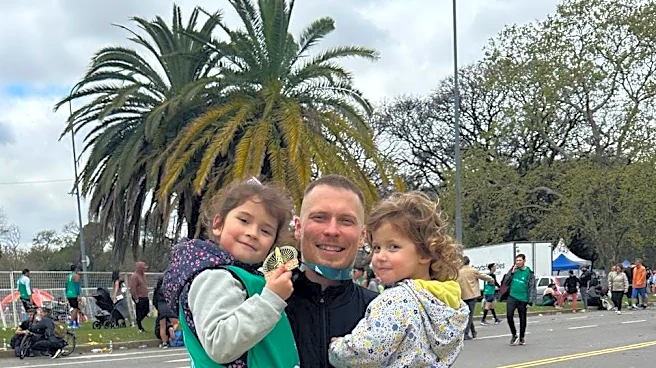
By then, the family had already remade their lives once. In 2023, they left Moscow for Buenos Aires, Argentina, where their daughters learned Spanish. Now they imagined sunny South Florida, where a familiar language might soften another beginning — and where they hoped they could finally stop starting over.

Those hopes rested on one of the narrowest openings in the U.S. immigration system.
Unlike most pathways to lawful permanent residence, the diversity lottery requires neither an American relative nor an employer willing to sponsor them. What it does require is extraordinary luck. With more than 20 million people chasing the roughly 52,000 visas available through the 2026 lottery, the odds of ultimately receiving one were about the same as correctly guessing a stranger’s birthday on the first try.
Being chosen each May wins an applicant only a place in line. The State Department draws far more names than it has visas, knowing some people will not qualify and others will simply run out of time. To turn that stroke of luck into a life in the United States, selectees must gather records, pass background checks and medical examinations, pay hundreds of dollars in fees and make it through an interview before the fiscal year ends. Those approved abroad receive a visa to enter the country as permanent residents. Then a green card is issued.
The program, which was created by Congress in 1990, accounts for only a sliver of new residents. In fiscal 2024, the latest year with available data, diversity immigrants made up 3.7% of the nearly 1.4 million people who became lawful permanent residents.
Critics have long argued that immigration should not begin with chance and that the lottery invites fraud and threatens national security. A 2007 Government Accountability Office review found no documented evidence that diversity immigrants posed a terrorist or other threat, though it warned that the program was vulnerable to fraud.
The Medanis attended their embassy interview in Buenos Aires on Oct. 28, then spent weeks securing one final record from Greece, where Roksana Medani had lived. On Dec. 18, the embassy confirmed it had arrived. The last piece of their application was in.
But within days, the Trump administration halted diversity visa issuances after authorities identified the man responsible for the deadly shootings at Brown University as a Portuguese immigrant who had received permanent residence through the lottery in 2017. The State Department said it would review the program’s screening and vetting procedures.
The decision had nothing to do with the Medanis or any defect in their application. It stopped their case all the same. Each day, Artemii Medani told himself it could not be possible that the United States would do something like this, he said.
"This just cannot be real," he said.
'The United States will grow up with us'
By the time Ramy Eid, 19, walked into the U.S. Embassy in Cairo on Feb. 22, his family had already spent months and much of what it had left preparing to leave Egypt.
They had sold their house and car and moved into a rental. Eid, his parents, and two younger siblings had pooled their savings and spent about $5,000 on documents, medical examinations, and other expenses, including $1,650 in visa fees for that morning’s interviews.
For Eid, the money was almost impossible to separate from the labor it represented. He earned about $3 a day repairing iPhones while studying. His mother, Rabab Sultan, worked 12-hour days as an accountant.
In the United States, he hoped to study computer science, turn his skills into a career, and make a life where Sultan no longer worked so hard for so little.
He did not imagine his family merely taking from a new country, Eid said. They wanted to build something there, too.
"When we grow up in the United States," Eid said, "the United States will grow up with us."
But the pause was already two months old when the family arrived for its interviews. Sultan said the consular officer told them they qualified for visas but could not receive them. Their applications were instead placed in a temporary hold known as "administrative processing," embassy records show.

In March, the family joined 737 other selectee families in Ivanov v. Trump, one of several lawsuits challenging the policies that had stalled their cases. In June, 664 families brought another challenge, Medani v. Trump, in federal court in California.
The plaintiffs argued the government could not impose blanket policies that effectively suspended a program created by Congress.
In August, two federal judges ruled in favor of the selectees. One of them, U.S. District Judge Edward Davila, found the halt "arbitrary and capricious," and ordered the government to resume the program.
Eid and Sultan celebrated the rulings in Cairo, expecting the embassy to resume their case. But even as the courts ordered the program processing to restart, the State Department was cancelingimmigrant visa interviews worldwide for what it called a "global training initiative."
Davila questioned why the State Department had waited so long to resume processing after his ruling and ordered the government to report its progress three times a week. In its Sept. 18 status report, the department said it had scheduled 86 interviews and 1,544 reinterviews, conducted 396 interviews, and adjudicated 765 applications from Aug. 29 to Sept. 18.
But it did not say how many of those adjudications produced visas. Earlier status reports had identified only 28 applications approved for issuance. Some applicants instead emerged from reinterviews in administrative processing again, while others were told their cases had been sent to a "Visa Integrity Unit" in Washington, DC.
And those were the applicants who made it through an embassy’s doors. Many others have still not received appointments.
Stephen Yale-Loehr, an immigration law expert and retired Cornell Law School professor, said the Trump administration’s actions "undermine the rule of law."
"The reason we have courts is that if an agency violates the law, a court is supposed to be able to issue an order and expect that the agency will follow that court order," he said. "Here we see foot-dragging by the State Department to try to indirectly circumvent the court order."
The administration denied it is trying to run out the clock. In court records, the Trump administration said the State Department had "substantially complied" with the orders and was “working diligently” in good faith, pointing to instructions directing consulates to immediately review and prioritize applications previously refused under the pauses.

Life in limbo
In Iran, Setareh and her husband are now living through a war, waiting on visa applications that could expire before they find a way out.
Setareh, a 32-year-old architect, requested partial anonymity because she fears retribution from the Iranian government. When they first applied, the United States represented a place where she and her husband, a civil engineer, could expand their careers. The couple hoped to establish a design and construction firm focused on sustainable, climate-resilient architecture, applying their experience to challenges such as extreme heat, wildfires, energy efficiency, and resilient housing.
But as protests gave way to violence and later war, the opportunity came to represent safety, too.
The couple simplified their wedding so their marriage documents would be ready in time and folded their honeymoon into the trip to their embassy interview in Abu Dhabi. By then, the White House had suspended nearly all entry by Iranian nationals. Setareh and her husband carried professional portfolios to support a request for an exception available to people whose admission would serve U.S. national interest.
The officer told them the review could take two weeks, she said. But a refusal email arrived the next day with another applicant’s name attached to their case number. For several hours, they allowed themselves to believe the decision belonged to someone else.
The embassy, however, corrected the name the following day.
After the court rulings, Setareh emailed the embassy, asking it to reconsider their applications. The online record showed their case had been updated that same day, but the embassy did not explain whether it had reopened it.
Her medical examination has since expired. The embassy that handled her application has closed amid the conflict raging in the Middle East. In the meantime, the couple is avoiding long-term professional commitments, accepting only work they can finish quickly in case they are suddenly allowed to leave.
"We feel like we are carrying two different kinds of emotional weight at the same time," Setareh said.
"At this point," she added, "hope and uncertainty are happening at the same time."
This article originally appeared on USA TODAY: They won the diversity visa lottery. Now their American dream is on hold