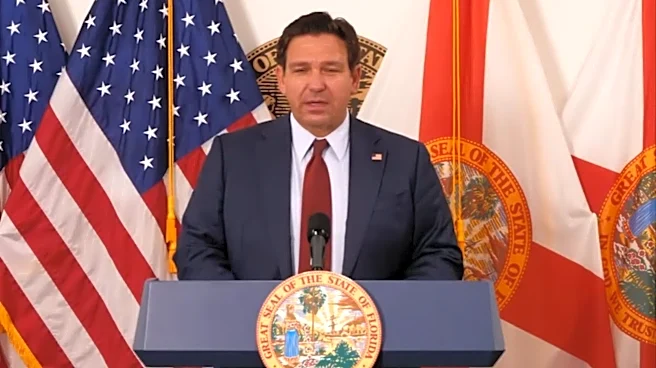





In the immediate aftermath of the midterm elections, Florida Gov. Ron DeSantis had more reason to smile than most Republicans.
While Democrats stacked up historic victories in other parts of the country, Republicans in the Sunshine State maintained control of the governor's office, the legislature (albeit with smaller numbers) and the Cabinet positions elected statewide.
Amendment 3, an anti-tax measure DeSantis championed, has been credited with driving enough conservative voters to the polls to allow Republican office seekers to pull off narrow victories in the statewide races.
With Republican losses elsewhere, DeSantis is one of the party's most prominent leaders outside of President Donald Trump's administration. As such, that might appear
to give him a boost in a possible 2028 presidential run.
Amendment 3, which will sharply limit the amount of property taxes city and county governments in Florida can collect, might seem like the type of tax reform conservatives in other states would want to promote as a way to reverse this year's losses.
In politics, though, appearances can be deceiving.
Property tax limits helped Florida Republicans. Will it help housing?

Amendment 3 might not be the magic bullet for addressing the state's housing affordability issues that some of its supporters have made it out to be. And if the worst predictions about Amendment 3's consequences come true, then the ballot initiative might be more of a liability than an asset for DeSantis two years from now.
Housing affordability was clearly on the minds of many voters in the run-up to the elections. One exit poll, conducted by Voss Research and Strategy, found 56% of voters were concerned they or their family members might not be able to afford rent or mortgage payments.
While a lot can change from one election cycle to the next, anxiety over housing affordability isn't likely to disappear over the next two years, particularly if Trump and the new Democratic-controlled Congress are locked in a stalemate.
Yet there are a lot of reasons to believe property tax reform is neither a political booster shot for conservatives nor an effective solution for higher housing costs.
For starters, other results from the elections raise questions about whether property tax reform ballot initiatives can help Republican candidates elsewhere.
North Carolina voters also approved a ballot measure limiting property tax collections, at the same time they were giving Democratic candidates firm control of the state's congressional delegation. Voters can dislike taxes while rejecting candidates who hold other views with which they disagree.
Going back much further in history, California voters approved Proposition 13, which limited increases in property tax rates and assessments, in 1978. Nearly 50 years later, California isn't known as either a Republican stronghold or a place where housing is particularly affordable.
Tax cuts are often really tax shifts
There's a good reason why even some conservatives are leery of ballot measures like Florida's Amendment 3. Unless other restrictions are put in place after property tax limits are adopted, city and county governments may just make up for the lost money by imposing other taxes and fees.
Many Florida homeowners should be paying less in property taxes because the amendment allows them to claim higher homestead exemptions for their primary residences. However, local governments could respond by charging user fees to visit parks or libraries. Or charging people whenever police officers or firefighters respond to emergency calls at their homes. Or more aggressively levying fines against housing code violators.
There are plenty of other ways besides taxing property values that governments can reach into their constituents' pockets.
Don't count on lower housing costs, either
It's unlikely Amendment 3 is going to have a positive impact on housing affordability in Florida, anyway.
Because a house with lower property taxes is intrinsically more valuable, the price of purchasing a new home could go up. Also, with homestead exemptions that will reach $250,000 of assessed value in 2028, there's less incentive for local governments to approve lower-cost housing that wouldn't generate enough tax revenue to cover the cost of providing services for it.
In time, a smaller supply of new housing will drive up costs of existing housing, if our high school economics teachers were to be believed.
Plus, because rental properties aren't eligible for homestead exemptions, local governments have every incentive to try to collect as much in taxes from them as they can, which means landlords will likely pass those costs along to tenants in the form of higher rents.
DeSantis tried to get ahead of Amendment 3 problems by calling state legislators into a special session before his term ends to discuss ways of limiting local governments from compensating for the property tax losses with other increases. However, the state's legislative leaders decided recently to wait until DeSantis' successor takes office before discussing Amendment 3 again, which will leave DeSantis out of control of that part of his political destiny.
That means DeSantis could be hitting the presidential campaign trail just as cities and counties in his home state are considering draconian service cuts or unpopular new fees to balance their budgets in the wake of Amendment 3-driven revenue losses.
DeSantis called the Nov. 3 election results “the political equivalent of a meteor strike" that was felt throughout the country but not in Florida.
Amendment 3 may have provided him and other Florida Republicans cover from that meteor strike, but as a long-term solution to concerns about government spending or housing affordability, the measure seems about as effective as an umbrella in a hurricane.
Blake Fontenay is USA TODAY's commentary editor.
This article originally appeared on USA TODAY: Property tax limit may be fool's gold for conservatives | Opinion