







In many ways, Rep. Chris Pappas, D-New Hampshire, and former Sen. John E. Sununu, R-New Hampshire, are acting like they are already their respective party’s nominee for U.S. Senate. They are trading jabs at each other and largely ignoring their primary competition – Sununu even declined a debate.
But they do have primary opponents who are still in the running, and ones that, if elected, could affect their party’s chances in November.
The New Hampshire Senate seat is open this year after longtime Sen. Jeanne Shaheen, D-New Hampshire, announced her retirement. Both parties are hoping to win the seat in their quest to take the U.S. Senate, which is narrowly controlled by Republicans, 53-47.
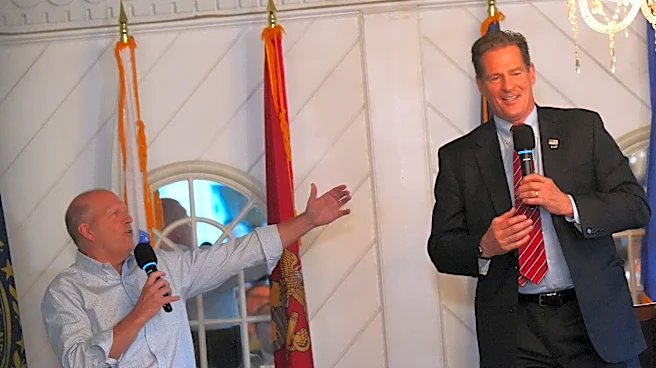
In the Republican primary, Sununu is facing former Sen. Scott
Brown, R-Massachusetts. In the Democratic primary, Pappas is facing a growing challenge from scientist and first-time candidate Karishma Manzur. Both primaries also feature several other little-known candidates.
Sununu and Pappas are considered the more “electable” candidates, and a win by either of their primary opponents could put their party’s chances of winning in jeopardy come November, according to New Hampshire political pundits.
The races are both being impacted by national politics: the Republican race by a Trump endorsement and the Democratic race by a national trend toward anti-establishment candidates. Similar dynamics are at play in New Hampshire’s 1st Congressional District too, as crowded fields of candidates vie for the spot left by Pappas.
Senate GOP primary: Sununu vs. Brown

Republicans are hoping to flip the seat to increase their narrow lead in the Senate, and GOP leaders, including President Donald Trump, seem to see Sununu as having a better chance than Brown.
The Sununu family has long been popular in New Hampshire: John H. Sununu and Chris Sununu served three and four terms as governor respectively. Even before Trump endorsed him, John E. Sununu was leading Brown in the polls by double digits. He has also raised the most money: $4.1 million compared with Brown’s $2.1 million, according to FEC filings. And Sununu has won this seat before, defeating then-Gov. Jeanne Shaheen in 2002 to serve one term before Shaheen defeated him in 2008.
The polls show that Sununu also stands a better chance against Pappas, should he be the Democratic nominee. In hypothetical matchups in an Aug. 26 University of New Hampshire Survey Center poll, Sununu and Pappas were essentially tied, while Pappas led Brown by five points. In an Aug. 20 Saint Anselm College Survey Center poll, Pappas led Sununu by seven points but Brown by 12.
If Brown were to win the primary, national Republicans might be less interested in investing money in the New Hampshire Senate race, UNH political science professor Dante Scala said.
“Compared to Sununu, I think Brown is quite lightly regarded by national Republicans,” Scala said. “I think they'd much rather invest, say, in Wisconsin, for instance, just to name one state, and try to try to flip that than to flip New Hampshire with Brown.”
Sununu leads the Republican field in the Senate primary by a wide margin, according to recent polls. In the UNH poll, he was leading by 40 percentage points, and by 30 percentage points in the Saint Anselm poll.
He also dropped out of a debate with Brown the week before the primary, signaling his confidence, UNH Survey Center Director Andy Smith said.
Still, “crazy stuff happens in primaries,” he said.
“I would be surprised if he were to lose now,” Smith said, referring to Sununu. “Not complete shocked, but I would be surprised.”
Senate Democratic primary: Pappas faces surging progressive

For much of the Democratic primary for U.S. Senate, Pappas, a popular four-term representative endorsed by Shaheen to succeed her, seemed sure to sail to an easy victory.
He still leads by double digits in the polls, but recently, Manzur, a scientist, has gained. In the August UNH poll, she had cut Pappas’s lead in half, and his lead dropped by 10 points in the Saint Anselm poll. With her support from progressives and young people, her momentum seems to mirror races around the country, where anti-establishment, more progressive candidates are capitalizing on voters’ frustrations with their party’s approach to dealing with the Trump administration.
“Does Pappas have the upper hand? Sure, right. But I think there's a good chance that people will look at the margin on primary night and say, ‘Oh,’ and be a little surprised,” Scala said. “I think Karishma is more capable of a surprise on primary night than Scott Brown is, just because there is that energy.”
In recent weeks, Pappas has seemed to recognize and respond to the challenge, New Hampshire Democratic operative Steve Marchand said, as he touted endorsements from high-profile figures like former Vice President Kamala Harris and former Transportation Secretary Pete Buttigieg and went on CNN to stress the competitiveness of the general election race.
In the UNH poll, those who support Pappas are most likely to say it is because of his past experience and because he has the best chance of winning the general election.
If Manzur won and was to face the well-known Sununu in November, "it would certainly put the seat in play," Scala said.
“I mean, arguably, it’s in play already,” Scala continued. “But if there were Manzur, who would be largely unknown to the general electorate in New Hampshire, coming from the far left of the party, I think that would change the narrative overnight.”
Manzur pushes back against the electability argument, calling it a “self-fulfilling prophecy,” as well as “fearmongering” to suggest that not voting for Pappas is essentially a vote for Sununu.
“There is no such thing as electability. Actually, I'm very electable,” she said. "Every voter gets one vote. That's it, and that person should vote based on which candidate aligns with their values.”
In a statement, Chris Pappas for Senate campaign manager Rachel Petri described Pappas as a “battle-tested candidate who has delivered for New Hampshire.”
“We are building the strongest possible campaign with support from small business owners, organized labor, and Granite Staters from across the political spectrum to take the fight to John Sununu who stands with Donald Trump and corporate special interests,” Petri continued.
Pappas is still the favorite, Scala said, but “weird things can happen in primaries, especially low-turnout primaries.”
District 1 race: Anything could happen in the open seat primaries
In both primaries for New Hampshire's 1st Congressional District, anyone could get the nomination.
Both parties are eying this historically purple district, which Vice President Kamala Harris won by just a couple of points in 2024. It is rated “Likely D” by the Cook Political Report, and Democrats have dominated the district for the past decade.
On the Democratic side, polls have found former Portsmouth City Councilor Stefany Shaheen and New Hampshire Democratic Party Vice Chair Maura Sullivan, both considered more moderate, establishment candidates, tied at the top, while Hampton Select Board Chair Carleigh Beriont, who has painted herself as the progressive alternative, is gaining.
“I think the presumption out there is that they'll keep the seat if Sullivan or Shaheen's the nominee,” Scala said.
Either way, he thinks Democrats have a strong chance at keeping the seat, but “I do think if a progressive wins the nomination, like Beriont next Tuesday, national Republicans will at least give the seat a hard look,” he said.
In the Republican primary, Trump has endorsed Anthony DiLorenzo, a businessman and first-time candidate, signaling that Republicans may think that he has the best chance to win. But that race is also too close to call. While the Saint Anselm poll found DiLorenzo leading businesswoman Hollie Noveletsky 30% to 17%, the UNH poll found Noveletsky leading 28% to 25%.
This article originally appeared on USA TODAY: Sununu, Pappas both face tests in quest for New Hampshire US Senate seat